Three questions, not twelve steps
Strip every weekly-planning system to its load-bearing walls and three questions remain: What happened? (evidence), What matters next week? (selection), Where does it live on the calendar? (commitment). Everything else — the color-coded life audit, the values re-alignment, the goal pyramid — is optional ceremony, and ceremony is what gets skipped under load, taking the walls down with it.
Minutes 0–6 · Evidence: read last week like a report
Open last week’s calendar and read it as data, not as diary. Three tallies, rough is fine: meeting hours (rising or stable?), focus blocks planned vs. held (the credibility ratio), and where the plan diverged (which day collapsed, and what did the collapsing?). The credibility ratio is the number to watch across weeks — planning more focus than you historically hold is how plans lose authority with their own author.
Minutes 6–12 · Selection: the two-rock rule
Name what next week must produce: two outcomes, phrased as deliverables ("pricing proposal reviewed by team", not "work on pricing"). Two, because rocks get protected calendar blocks, and the evidence pass just told you how many blocks you can actually hold. Everything else that clamors gets a fair trial for the shallow-batch slots or an honest deferral — a deferral decided Friday costs nothing; the same deferral discovered Thursday costs a fire drill.
Minutes 12–18 · Commitment: put it on the grid
Now the calendar work, in priority order: two rock-blocks in your best hours (estimate +25%, marked Busy, titled by output); buffers repaired after next week’s worst meeting clusters; fictions deleted (the hold that never confirmed, the optional you won’t attend — decline tonight, with notice); and one line of instruction in Monday’s first block. If the rocks don’t fit, the ritual has done its most valuable work early: renegotiate now — decline something, shrink something, or downgrade a rock — while every option is still cheap.
Minutes 18–20 · The handshake
Close with the plan’s terms of service, said once to yourself: the rocks are commitments, the rest is weather. This framing is what separates planning from prophecy — when Tuesday explodes (it will), the question is only "do the rocks survive?", not "is the plan dead?". A plan that expects turbulence doesn’t capsize in it.
Drift-checks between rituals
Two micro-habits keep consecutive weeks honest. The Wednesday pulse (60 seconds): are both rocks still alive? If one is dying, decide its fate mid-week — rescue, shrink, or officially defer — instead of letting Friday’s evidence pass find a corpse. The broken-ritual rule: a skipped week gets the 5-minute version (selection + rock placement only) on Monday morning, never a guilt-powered double session. Rituals survive on cheap re-entry.
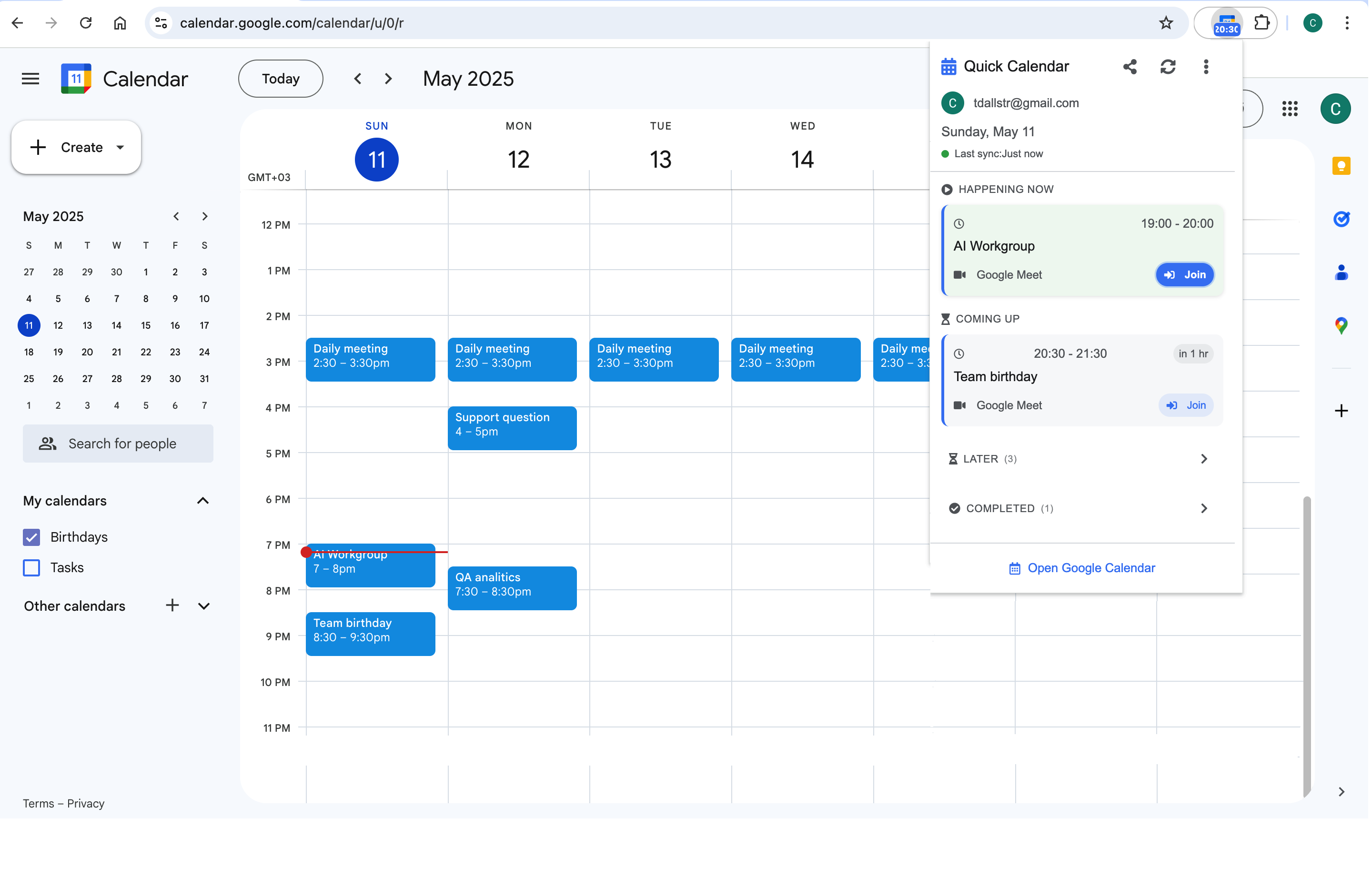
The evidence pass and the fiction-hunt are both scanning work — faster on a glance surface than in the full grid. Paging through last week and next in the toolbar timeline of Calendar Extension for Google Calendar™ keeps the whole ritual inside its 20 minutes, which is the budget that keeps it alive.
Frequently asked questions
Friday, for two mechanical reasons: declines and reschedule requests reach people while next week is still soft, and the weekend stops hosting an open loop. Monday planning works only for true larks with quiet 8:00s — and even then, the outward-facing moves (step: delete fictions) should happen Friday.
Sequence them: personal ritual after sprint planning, never before — the team’s commitments are inputs to your two rocks, not competitors. Where sprint ceremonies already produce your deliverables list, minutes 6–12 collapse to "which two carry my name?" and the ritual shrinks to fifteen minutes.
Anchors, yes: the school pickup, the gym slots, the dinner — they are load-bearing constraints and go on the grid first. Aspirations, no: "be more present" is not schedulable and its failure poisons the plan’s credibility. The calendar plans commitments; values live upstream of it.
Fix the plan first: plan half the blocks you want, hold them, and rebuild trust with yourself over three weeks. A third-held ratio usually means over-planning (too many rocks), under-defending (blocks marked Free), or both — and both are plan-side settings, not character flaws.