Why a weekly reset matters
Most scheduling stress does not come from one big mistake. It comes from accumulation: outdated holds, meetings with fuzzy intent, and focus time that never gets defended early enough. By the time the week starts moving, you are already reacting.
A weekly reset gives you a short window to decide what deserves space and what can be reshaped. It is less about building the perfect plan and more about restoring visibility before noise wins.
The 15-minute reset in five steps
1. Delete or close anything that is obviously stale
Start with the fastest wins. Remove holds you no longer need, decline meetings that no longer require your presence, and rename vague blocks so they are recognizable later. The goal is not elegance. It is signal quality.
2. Scan for collision points
Look for the moments where meetings stack too tightly, deep work is impossible, or context switches are excessive. These are the places where the week will feel expensive if you leave them untouched.
3. Protect one or two non-negotiable focus blocks
Do this before other work fills the week. Even one protected block can change the tone of the next few days. Keep it realistic. A small protected window that survives is better than an ideal one that disappears by Tuesday.
4. Identify the calls that need preparation
Some meetings only need attendance. Others need context. Mark the ones that require notes, decision-making, or follow-up, and give yourself a prep pocket ahead of them.
5. End by checking the first 48 hours
Your first two days shape the rest of the week. If Monday and Tuesday look readable, the calendar is usually in good enough shape to move forward.
How Schedule Calendar helps during the reset
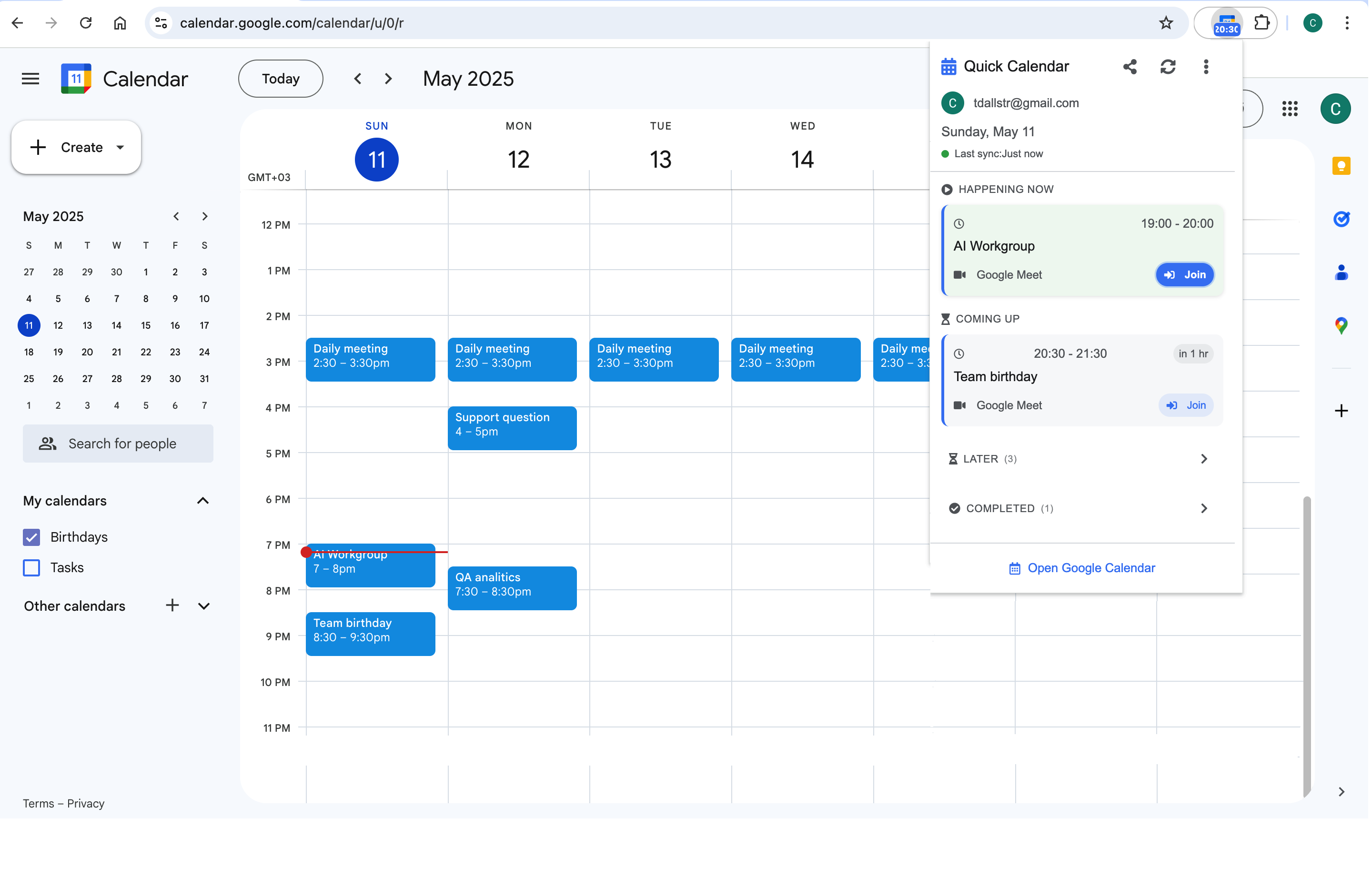
A weekly reset is easier when you do not have to fully reopen your workflow every time you want to double-check what is coming next. Schedule Calendar helps because it lets you reorient in smaller loops.
- Use the popup to scan upcoming events quickly while you are editing the week.
- Check how dense a day feels before adding another block.
- Keep meeting links close when you are reviewing call-heavy stretches.
A simple template you can reuse every week
- Clear stale events and rename ambiguous ones.
- Mark collision points and decide which ones to soften.
- Protect one or two focus blocks.
- Flag preparation time for the meetings that matter.
- Review the next 48 hours and stop there.
That is enough. A good reset does not try to answer every question about the week. It creates a workable structure so you can respond with less friction when the week becomes real.
Final thought
Calendars drift because life drifts. The reset is not a productivity flex. It is a practical way to get back in front of the week before meetings, tasks, and interruptions start making the decisions for you.