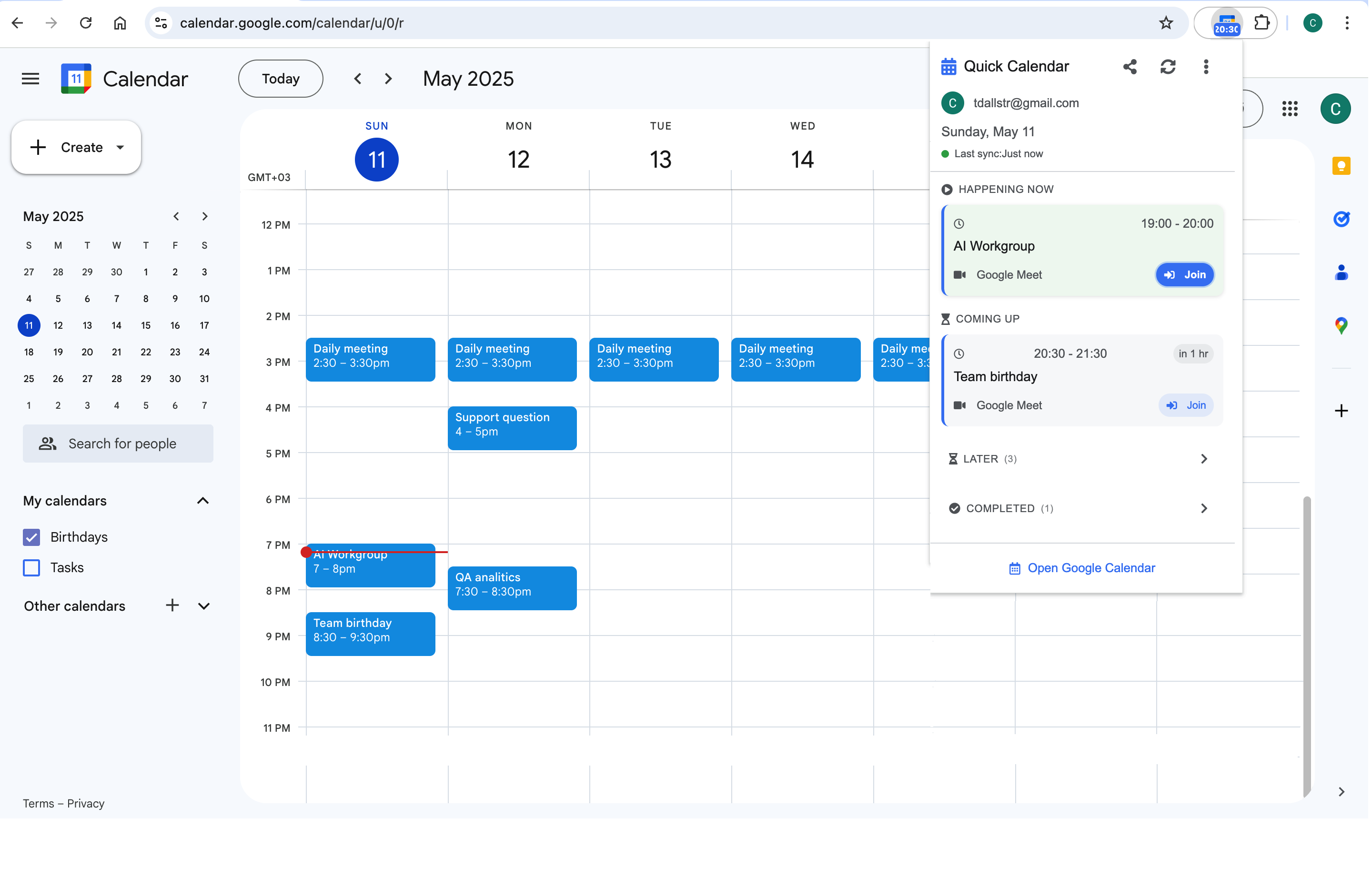
1. Check the next few hours before you check the whole week
Many users open Google Calendar and immediately zoom out too far. That is useful for planning, but not for the tiny questions that repeat during the day. Start with the next few hours: what is next, how soon does it start, and how much room is left before it.
2. Protect focus with visible buffers, not good intentions
If your calendar is meeting-heavy, productivity usually breaks in the transitions. Add small visible buffers before calls that require context, setup, or emotional energy. Even ten minutes can stop the day from collapsing into back-to-back recovery.
3. Rename vague events before they become cognitive tax
A title like “Sync” or “Catch-up” forces you to remember context every time you see it. Short, specific names reduce that retrieval cost. Good titles answer who it is with and why it matters without opening the full details.
4. Decide which meetings deserve a full-tab review
Not every event deserves a deep inspection. Use a compact calendar check for orientation, then open the full Google Calendar interface only for events that require notes, attachments, rescheduling, or guest management.
5. Make “how soon?” a first-class question
The difference between a meeting that starts in two hours and one that starts in twenty minutes changes what you should do next. A good daily workflow keeps urgency visible so you can decide whether to start another task, prepare, or wrap up.
6. Use one weekly reset to keep the daily view honest
Daily calm depends on weekly cleanup. Remove stale holds, repair collision points, and protect one or two focus windows early. Otherwise the day view keeps reflecting an outdated plan.
7. Keep the first calendar check of the day short
Morning planning expands to fill the time you give it. Try a faster first pass: scan the day, note the first risky transition, and move into the work. You can always return later if the day genuinely needs restructuring.
How Schedule Calendar helps
Schedule Calendar is built around these small moments. The day timeline helps users read spacing, the time-to-event chip answers urgency quickly, and the popup keeps fast checks separate from the heavier planning work that still belongs in Google Calendar.