Invert the method: meetings are the terrain
Classic time blocking designs the ideal week and defends it. On a meeting-heavy calendar, the meetings are the terrain — you don’t design around them, you map them and block what the map leaves. The weekly sequence: first stabilize the meeting layer (below), then place focus blocks in the largest surviving spaces, then assign the small gaps by class. Attempting it in any other order produces the classic failure — beautiful focus blocks that meetings steamroll by Tuesday.
Step 1 · Stabilize the meeting layer
Two moves shape the terrain itself. Batch what you control: drag your own recurring meetings toward two designated heavy zones (say Tue/Thu 13:00–16:00) — every meeting moved out of a morning creates contiguous space that scattered 30-minute gaps never add up to. Shrink systematically: speedy-meetings defaults plus one pass converting your 60s to 45s. On a 15-meeting week, the shrink pass alone manufactures ~2.5 hours of new terrain.
Step 2 · Claim the large spaces (90+ minutes)
Whatever contiguous spaces survive — typically 2–4 per week after batching — get the production blocks: named outputs, +25% sizing, marked Busy. These are scarce assets on a meeting-heavy calendar, so two protections apply that lighter calendars don’t need: never schedule shallow work into a 90+ minute space (it is the only place deep work can live), and defend them at meeting rank — a reschedule-with-alternative for anything that lands on them, no exceptions in the first month.
Step 3 · Assign the gap classes
Meeting-heavy days generate gaps in three sizes, each with a correct use:
- 10–15 minutes (between calls): meeting metabolism only — action-item capture from the last call, one-line prep for the next. Attempting real tasks here produces half-started work and late joins.
- 25–45 minutes: the shallow-batch zone — email passes, reviews, small tickets, scheduling admin. Keep a standing "gap list" (three pre-chosen small tasks in your task manager) so these slots never spend themselves deciding.
- The cancelled meeting (surprise 30–60): the trap slot. The reflex is email; the win is either extending an adjacent focus block or taking the recovery the day owes you. Decide the policy once — "cancellations attach to the nearest block or become breaks" — so the moment doesn’t re-litigate it.
The week this produces
Realistic shape for a 60%-meeting calendar: two mornings with 90–120 minute production blocks, meeting-dense Tuesday/Thursday afternoons, gap-list slots absorbing the shrapnel, and 10-minute seams doing meeting metabolism. Not the influencer’s color-coded utopia — but it ships two real deliverables a week from a calendar that previously shipped exhaustion.
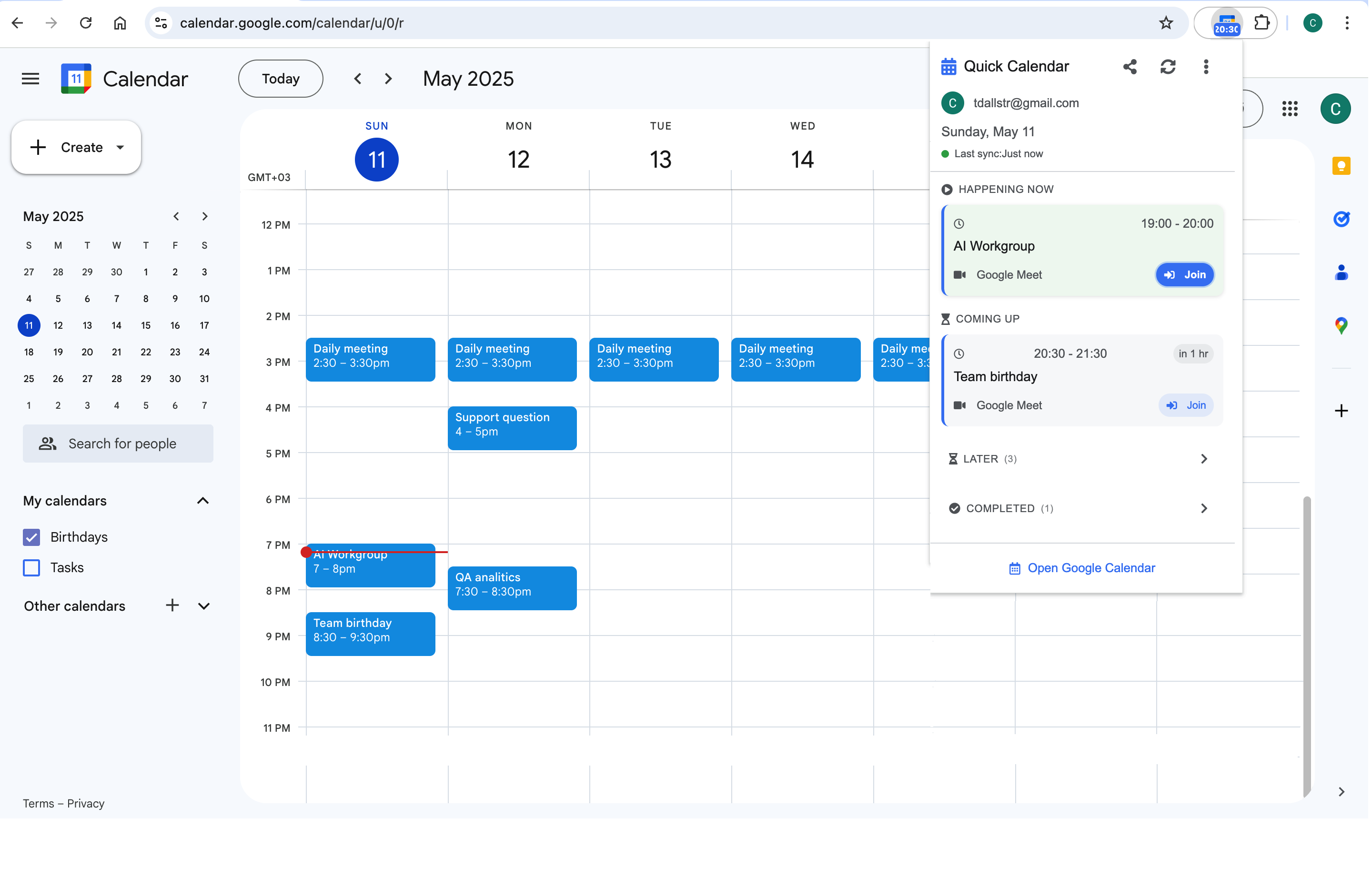
Gap-class blocking runs on knowing the gap’s exact size the moment it opens — "23 minutes until the next call" routes you to the gap list, not the inbox. That number is precisely what the time-to-event chips in Calendar Extension for Google Calendar™ keep ambient in the toolbar, which is why this system pairs so naturally with a glance surface.
Frequently asked questions
Then the negotiation is upstream: that calendar has a load problem wearing a scheduling costume. Take the map to your manager — "here is the week; where should the deep work for X live?" — because no blocking technique conjures contiguous time that management decisions have spent.
No — blocking them creates grid noise and maintenance. The seams are a policy (metabolism only), not events. Block only what others could take: the 90+ spaces and, if drive-by scheduling is rampant, the 25–45 shallow zones on your two worst days.
Ask, in bulk, once: "I’m consolidating my meeting load into Tue/Thu afternoons — could we shift ours there?" Framed as a standing preference rather than per-meeting negotiation, most organizers comply within two cycles; the few immovables become the terrain you map around.
Whatever your task manager is, plus one convention: a "≤30 min" tag or section, refilled during the weekly reset with 5–8 items. The list’s only job is making a 25-minute gap start in ten seconds — the moment you browse for a task, the gap is already spending itself.