Why scattering is the expensive part
A two-minute reply costs two minutes plus the switch: Sophie Leroy’s attention-residue research (2009) shows the previous task keeps running in the background after you leave it, degrading the next one. Fifteen shallow tasks scattered through a day mean fifteen residue events laid over your deep work. The same fifteen tasks in one 45-minute box cost one switch, total. Batching is not about doing shallow work faster; it is about making it stop taxing everything else.
Detail 1 · The container: real, recurring, sized right
The batch needs a calendar event or it dissolves back into ambient interruption: recurring, weekdays, 30–45 minutes, placed in the trough (13:30–15:00 for most people — shallow work is the one category that thrives on low energy). Two containers for heavy-input roles: a 20-minute morning box (unblocks others early) and the main afternoon one. Mark it Busy, title it honestly ("Admin batch"), and treat its edges as hard: shallow work expands into any space it is offered — the container’s walls are the whole technology.
Detail 2 · The entry list: capture without switching
Batching fails when tasks arrive live: each ping becomes a now-or-batch negotiation, which is itself a switch. The fix is a frictionless capture path — one keystroke or one tap to append to a "batch list" (Google Tasks, a pinned note, anything) without opening the source app. During deep work, "expense report" hits the list in four seconds and the head lets it go; the batch box opens with 8–12 pre-captured items and zero deciding. The list is what converts batching from discipline into plumbing.
Detail 3 · The interrupt policy: what cannot wait 3 hours?
The honest objection to batching is urgency, and the honest answer is a written test, decided once: what genuinely cannot wait until the next box? For most roles the true list is short — production incidents, a blocked teammate on a deadline, anything with "today" from a client. Everything else waits, and the policy (not per-ping judgment) is what waits it. Publish your version if the team needs it: "I do replies at 9:40 and 14:00; urgent = call me." People adapt to predictable rhythms within two weeks — what they can’t adapt to is randomness.
Running the box itself
Order matters inside: unblocking others first (replies people are waiting on), then approvals and reviews, then your own admin, then the optional dregs. Work the list top to bottom without re-deciding; anything that turns out to be deep work in disguise (the "quick reply" that needs real thought) gets promoted to the task list for a real block, not wrestled inside the box. Box ends, work stops — leftover items lead tomorrow’s list. If leftovers persist three days running, the box is undersized; grow it 15 minutes rather than letting overflow re-scatter.
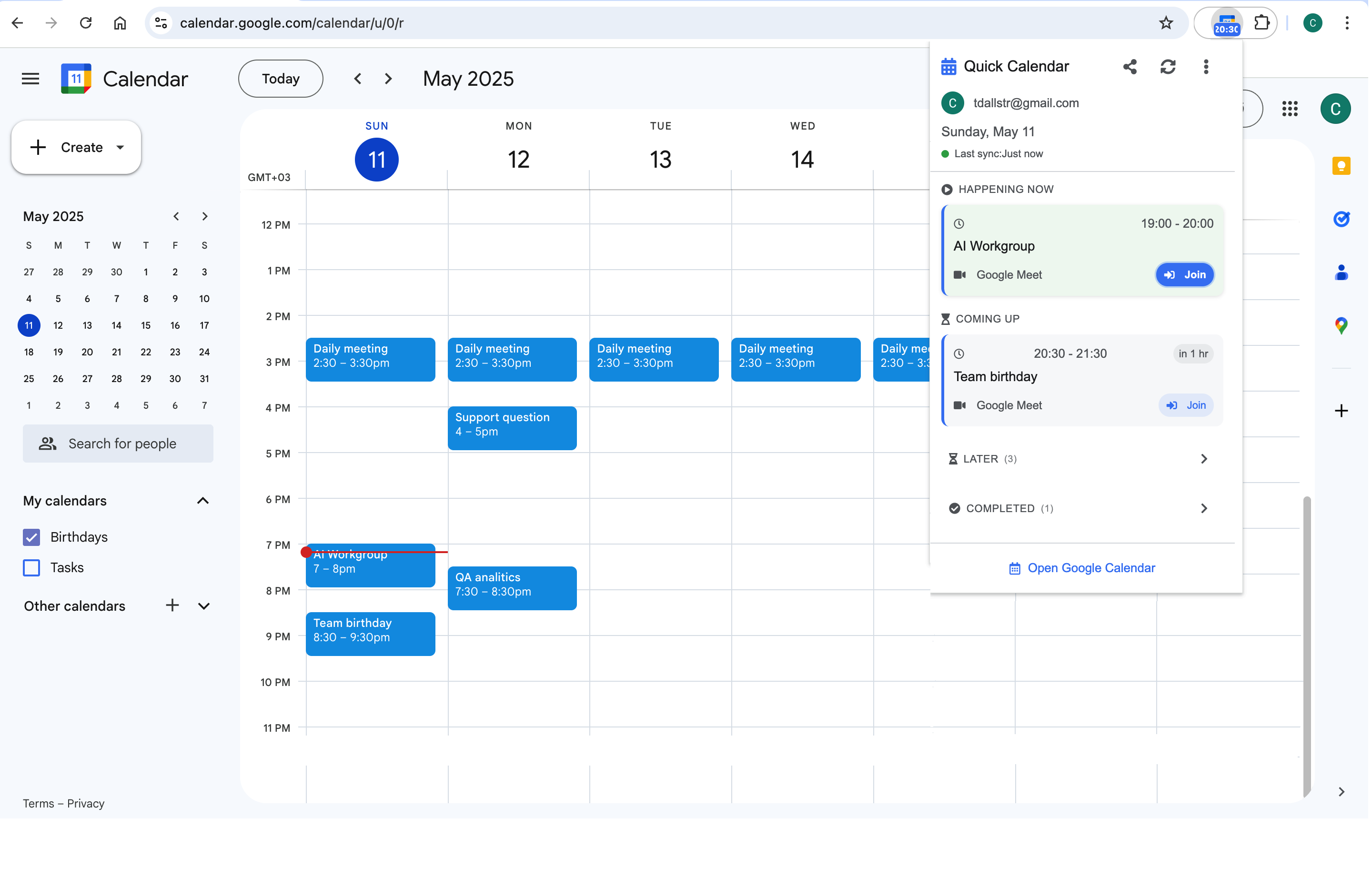
Between boxes, the discipline is remembering the next one exists: "the batch opens in 80 minutes" is what lets a ping go to the list instead of the front of your mind. The time-to-event chips in Calendar Extension for Google Calendar™ keep that countdown ambient — the batching system’s whole promise, visible in the toolbar.
Frequently asked questions
Email-checking schedules one input channel; batching schedules the work class — replies, approvals, expenses, quick reviews, wherever they arrive from. The container and list handle Slack, tickets, and drive-bys with the same mechanics. Twice-a-day email is one instance of the pattern, not the pattern.
Even more so — you are running multiple boxes (three or four daily) with deep-work islands between them, inverted proportions, same architecture. The alternative at that ratio is fully interleaved days, which is how coordination-heavy roles burn out while "never doing anything hard".
A 14:00 box meets almost every same-day deadline with hours to spare — "today" and "now" are different urgencies that pings deliberately blur. The interrupt policy names the true now-class; everything else discovering it can wait four hours is the batching insight working.
Only if it accumulates across days. The box’s contract is list-to-zero-or-carryover-led-tomorrow — a queue with a daily drain doesn’t breed dread, it breeds trust. The dread inboxes are the ones with no scheduled drain, which is exactly what the batch box is.