Why mornings specifically
Three properties stack in the morning’s favor. Energy: the majority chronotype peaks 8:30–11:00 — the cheapest deep-work fuel of the day. Silence: organizational load builds through the day; 8:30–10:00 is statistically the least-booked, least-pinged stretch. Sequence: what happens first sets the day’s register — a morning that opens with production stays proactive; one that opens with the inbox spends the day in response mode. No other slot has all three; that is why generic "schedule focus time" advice so often collapses into morning advice specifically.
The build
- Recurring, weekdays, 8:30–10:00 (or your first 90 clear minutes) — marked Busy, titled by this week’s deliverable. Recurrence claims the territory before each week’s scheduling starts.
- Instruction written the evening before in the block’s description — morning fog is real, and rails beat resolve at 8:30.
- The inbox stays shut until the block ends. This is the load-bearing rule, and it needs stating because "just a quick check" at 8:25 is how the block dies from inside: one wrong email converts peak hours into reaction hours. Anything truly on fire reaches you by the urgent channel your team already agreed on.
- A hard exit at 10:00 — 10-minute notification, then the day’s first shallow pass. Knowing the inbox has a scheduled turn is what makes not-checking sustainable.
The three morning-specific threats
The 9:00 standup. The classic block-splitter: 8:30–9:00 is too short to enter, 9:15–10:00 pays a second toll. If you can influence it, argue the standup to 9:50 or 12:45 (edges, not middles); if not, invert — block 9:15–11:00 and treat 8:30–9:00 as prep and gap-list time. The early external call. Timezone realities land 8:00 calls; protect the pattern by compensating visibly — early-call days shift the block to the first clear 90, and the block moves rather than vanishes. Your own commute-mode. WFH especially: drifting into the desk chair with coffee and a feed. The counter is a start ritual as concrete as the old commute — same trigger (coffee poured), same first action (open the named doc), every day.
Measuring whether it’s real
One month in, two numbers: hold rate (blocks that happened as placed ÷ blocks scheduled — target 70%+; below half means the defense layers need work, not the schedule) and attribution (deliverables that trace to morning blocks — the renewal currency when anyone, including you, questions the reservation). A morning block with a 75% hold rate and a visible output trail is effectively permanent; nobody argues with receipts.
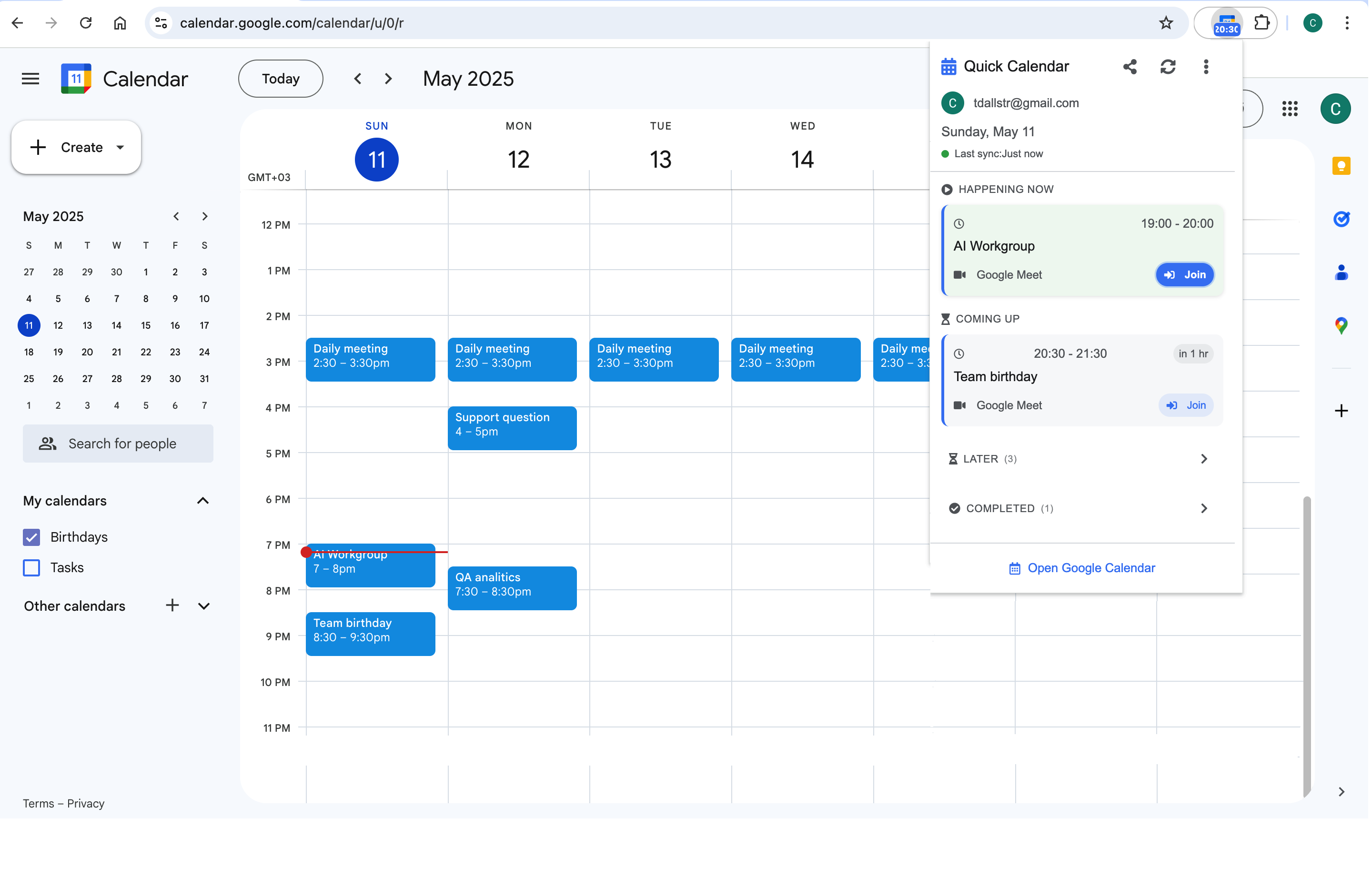
The inbox-shut rule has one legitimate exception-need: "did anything explode overnight?" A toolbar glance via Calendar Extension for Google Calendar™ answers the calendar half of that in two seconds — today’s shape, any new landmines — without opening the mail client that eats mornings. Check the day, not the inbox.
Frequently asked questions
No — the argument is alignment, and your alignment differs: evening-peaked people should build the mirror-image block (16:00–18:00) and protect it with the same machinery. What morning still offers you is silence; use it for shallow batches and admin, and spend your real peak on production.
Before it, as the ramp: the routine’s job is delivering you to 8:30 ready. Inside the block is one thing only, the named deliverable. Routines that swell to 9:15 are the commute-mode threat wearing self-care clothing — time-box them like anything else.
Define the urgent channel precisely (a phone call, a specific Slack keyword) and trust it — that is what urgent channels are for. A scan "just in case" is the inbox breach with extra justification. Global teams that actually have overnight emergencies build paging, not morning-email norms.
Usually the target, not the time: blocks aimed at vague or over-large deliverables produce motion without attribution. Shrink the named output to one honestly-finishable unit per session ("§3 draft", not "the report") — thin output at high hold rates is a naming problem in nine cases out of ten.