Settings each person should change (15 minutes)
1. Speedy meetings
Settings → Event settings → Speedy meetings. Thirty-minute meetings end at :25, hour meetings at :50. This is the single highest-value checkbox in the product: it manufactures the between-meeting seams that back-to-back days are missing.
2. Default duration: 25 minutes
Same screen — set Default duration to 25 or 30. Meetings inherit the length of the default far more often than the length of their content; make the default the short one and let genuinely big topics argue for more.
3. Working hours and location
Settings → Working hours & location. Schedulers get warned when proposing outside your hours, and hybrid teams see office/home days in "find a time". Without this, your 8am is legally anyone’s 8am.
4. Invitation gate
Settings → Event settings → Add invitations to my calendar → "Only if the sender is known" (or "When I respond"). This one setting ends both calendar spam and the phantom events you never accepted but somehow own.
Settings the team should agree on (one meeting)
5. A sharing tier, decided once
The productive default: See all event details inside the team, free/busy for the org — granted via a team Google Group so access follows membership. Deciding this once, out loud, prevents the mixed economy where half the team schedules blind.
6. Shared team calendars with narrow jobs
One calendar for leave and travel, one for milestones/releases. Two rules keep them useful: nothing that belongs on a personal calendar goes on a team one, and every team calendar has a named owner. Ownerless shared calendars converge on chaos within a quarter.
7. Focus-time norms
Agree that Focus time blocks (the Workspace event type) are real: they render distinctly, can auto-decline conflicts, and — critically — leadership uses them too. A norm the lead ignores is a suggestion.
Settings only the admin can fix (send this section to them)
8. Room and resource setup
In the Admin console → Buildings and resources, define rooms with capacity and features. Once done, the Rooms tab in event creation suggests spaces that fit the guest list — and "find a room" stops being a hallway sport. While there: enable structured resource naming; "4-Fl-Huddle-4p-TV" beats "Narnia" every week of the year.
9. External sharing ceiling
Admin console → Apps → Google Workspace → Calendar → External sharing options. The sane ceiling for most orgs: external sharing capped at free/busy, with full detail reserved for internal. Individuals can then share less than the ceiling, never more — which makes personal sharing mistakes structurally impossible to escalate.
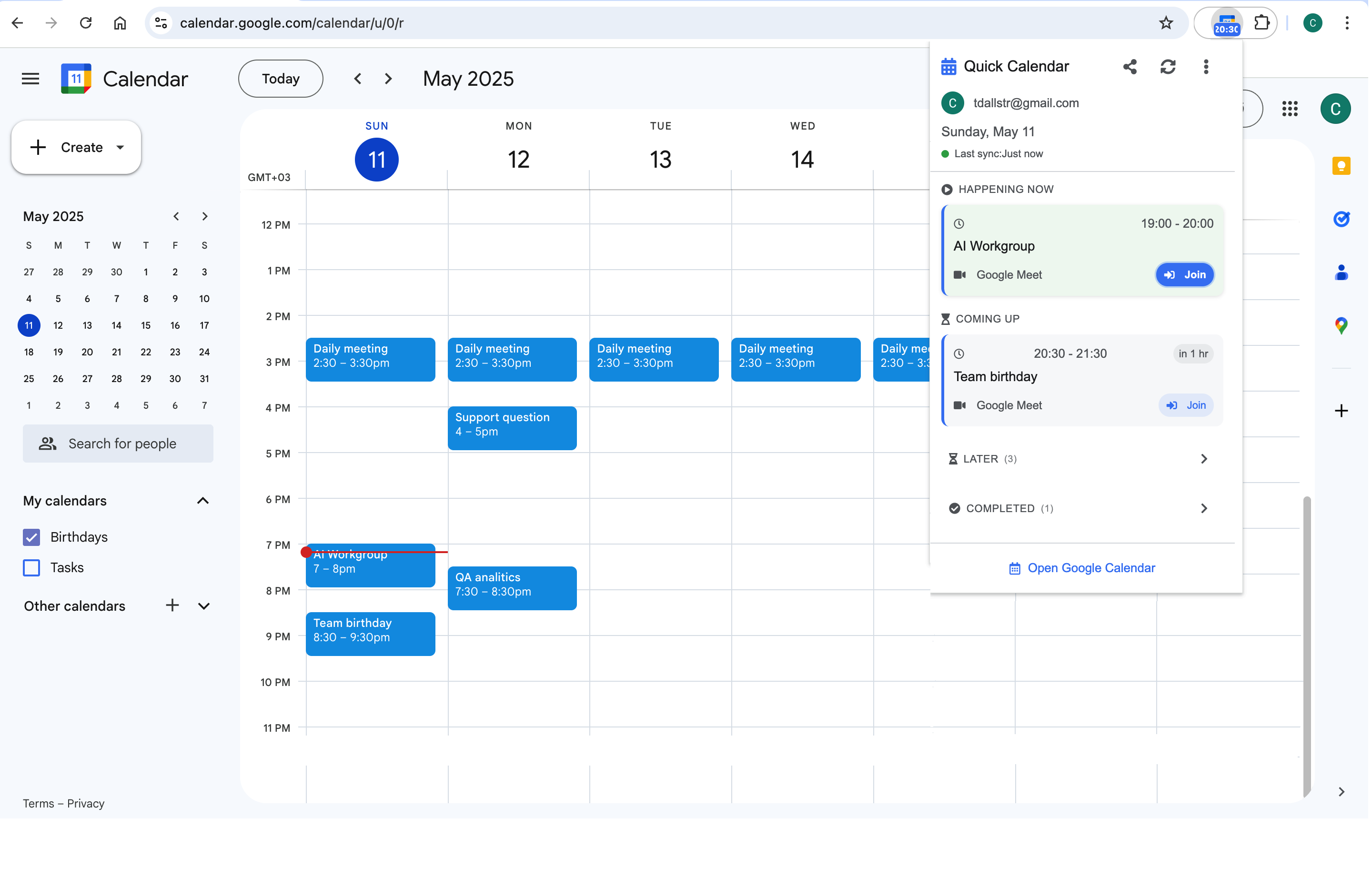
Settings shape the calendar; the day still runs on glances. For Chrome-based Workspace teams, a toolbar popup like Calendar Extension for Google Calendar™ turns the improved calendar into a two-second check — next meeting, time-to-start, join link — without another pinned tab per person.
Frequently asked questions
The checkbox changes the scheduled end; culture changes the actual one. It works when calendars are detail-visible (the next meeting’s owner can see you are due elsewhere) and when someone senior ends their own meetings at :25 for two consecutive weeks. Mechanics first, imitation does the rest.
No — these are per-user settings with no org-wide policy control. The practical rollout is a 15-minute "settings session" in a team meeting where everyone changes the four personal settings together. Adoption by calendar-invite beats adoption by memo.
The personal four (speedy meetings, short defaults, working hours, invitation gate) pay off at any size. Skip team calendars and admin ceilings until there are enough people to schedule blind against each other — usually around five.
First-time senders land in email instead of silently on the calendar — you accept once and future invites flow normally. For client-heavy roles that is a feature: the calendar stops being writable by any stranger with your address.