Editing at speed
1. Duplicate any event with one drag
Hold Ctrl (Windows) / Option (Mac) while dragging an event — you get a copy instead of a move. The fastest way to repeat an odd-cadence meeting without touching recurrence rules. Menu version: click the event → three dots → Duplicate.
2. "Copy to" a different calendar
Event → three dots → Copy to [calendar]. This is the pro move behind clean calendar architectures — the client call lives on the shared client calendar and your own, without retyping.
3. Type times, skip pickers, everywhere
Every time field accepts free text: "9p", "14:30", "next fri". Combined with pressing C for the full editor from anywhere, event creation drops under ten seconds. (Full shortcut map: press ?.)
Seeing what you need
4. The custom N-day view
Settings → View options → Set custom view → 4 days is the sleeper: enough horizon to plan, no weekend noise, denser than week view. It gets its own key — X — and most converts never go back to W.
5. Collapse mornings you never use
Nothing before 8am? Week view can hide it — the day grid scroll position persists, but better: reduce visual noise at the source with Settings → View options → Reduce brightness of past events, which fades everything already over, making "what’s left today" pop.
6. Search like it’s Gmail
The calendar search box takes operators: "budget" before:2026-05-01, or use the dropdown’s who/where fields to find "that call with Dana at the office". For recurring-meeting archaeology (when did this series start?), search beats scrolling by months.
Defaults that fix classes of problems
7. Default guest permissions
Settings → Event settings → Default guest permissions: set to "See guest list" only. Stops the modify-happy colleague class of surprises before it exists; grant edit per-event when genuinely co-organizing.
8. The 80% snippet for descriptions
Not a Calendar feature — a text-expander habit that behaves like one: a snippet holding your standing agenda template ("Goal: / Decisions needed: / Links:") pasted into every meeting you create. The meetings you organize become the well-run ones, which is how norms spread.
9. Trash is undo, for 30 days
Settings menu (gear) → Trash. Every deleted event sits there a month, restorable in two clicks — including whole recurring series a colleague "cleaned up". Knowing this converts deletion anxiety into confident pruning.
10. Event colors as a query layer
Right-click any event for instant recoloring — and treat the palette as semantics (external / internal / focus / admin), capped at five or six meanings. Squint at week view and the color mix answers "what kind of week is this?" before you read a single title.
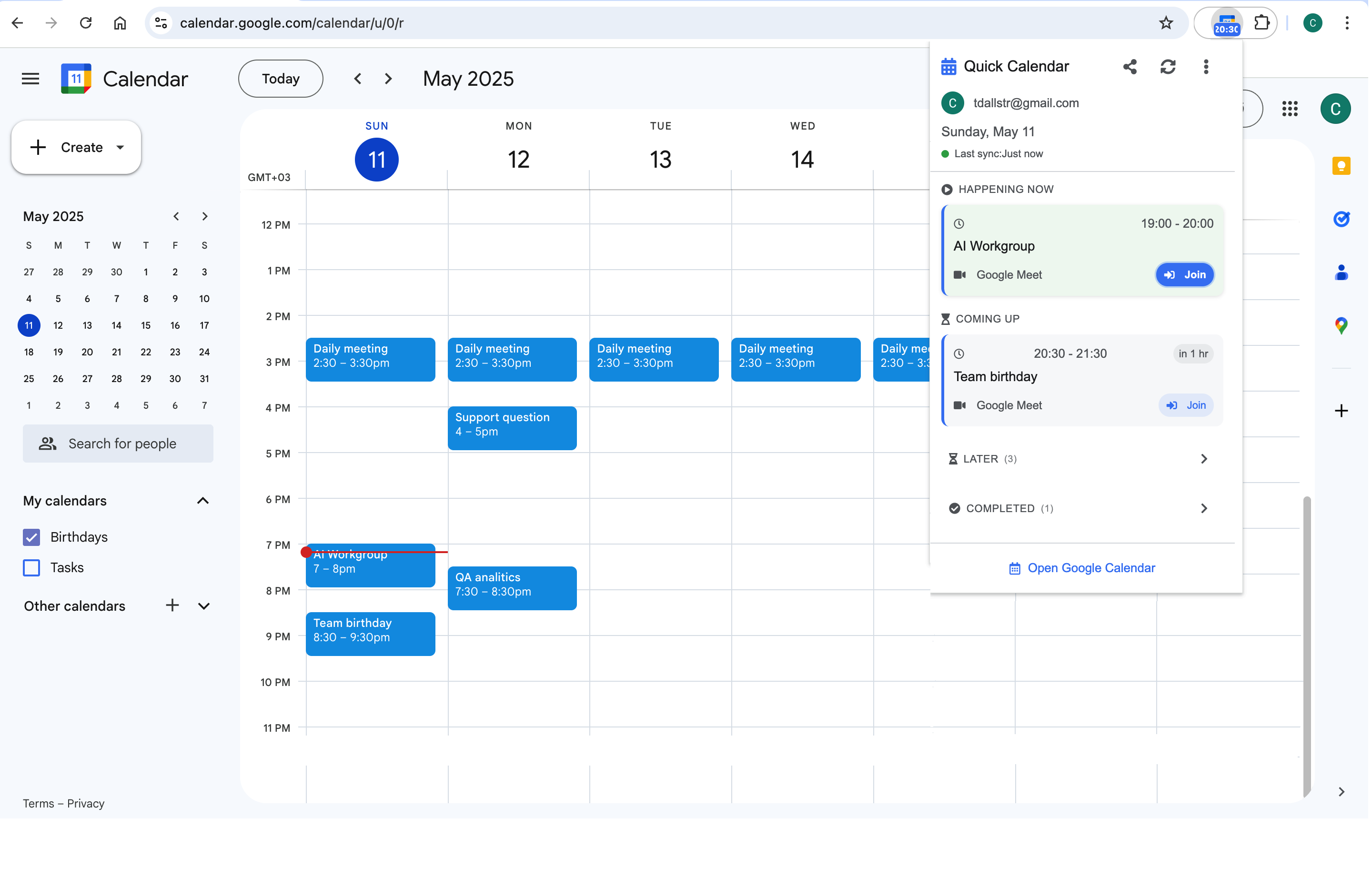
Power use has a second half: not opening the calendar at all for the thirty daily "what’s next" glances. A toolbar timeline like Calendar Extension for Google Calendar™ handles those — with time-to-event chips and join links — leaving the tab tricks above for sessions that deserve a tab.
Frequently asked questions
Five carry most of the value: C (create), T (today), D/W/M (views), and / (jump to search). Add X once you set the custom 4-day view. The rest of the map (press ?) is there when a specific friction annoys you enough.
Press Z immediately — Calendar has single-step undo for edits like moves and deletes, and a toast with Undo appears after most actions. For anything older, the event’s previous time is unrecoverable (Trash only covers deletions), so guests’ notification emails become the paper trail.
Day view splits calendars into columns when you have multiple calendars visible (the Workspace resource/schedule layout). For people-comparison, "Meet with…" search in Day view lays a colleague’s schedule beside yours — the fastest manual find-a-time that exists.
Mostly no — the app has no keyboard layer, no custom views, and limited search operators. The productive split: power techniques at the desktop, and keep mobile to its two strengths, the widget glance and notification RSVPs.