Layer 1 · Visibility: a block others can respect
The minimum viable block: a recurring event in your real focus hours, set to Busy (a Free block is a suggestion), titled with a job description — "Deep work — release prep", not "Hold". To detail-level teammates the title is the legitimacy; to free/busy viewers the Busy status is the wall. One block per day, 90–120 minutes, placed where your energy actually peaks. Five blocks a day is a siege invitation; one is a norm.
Layer 2 · Automation: the calendar declines for you
Workspace’s Focus time event type upgrades the block: distinct rendering, and — the feature that matters — auto-decline of conflicting invites with a message you write once: "This is reserved deep work; I’m free 13:00–17:00 most days. Urgent? Message me." Automation does the refusing consistently, without the per-invite social calculus that erodes willpower by Thursday. On personal accounts, the manual equivalent: decline conflicts same-day with a saved snippet — slower, same policy.
Layer 3 · Response patterns: what happens on contact
Protection is really defined the first three times someone books over the block anyway.
- The default: reschedule-with-alternative, cheerful, immediate: "That’s my build block — 14:00 works, same day?" No apology; apologies mark the block as negotiable.
- The senior override: surface the trade, once: "Can do — it moves the API review to Friday. Your call." Seniors override invisible costs, rarely named ones.
- The genuine emergency: yield fast and visibly — "taking this, moving my block to 15:00" — because a defense system with no emergency valve gets ignored entirely. The block moves; it doesn’t vanish. That distinction, practiced, is the whole game.
Layer 4 · Political cover: output does the arguing
A focus block survives long-term only if its outputs are attributable: "the migration plan came out of Tuesday’s blocks" is renewal currency. Two cheap practices build it — name blocks by deliverable (the calendar itself becomes the receipt), and mention block-produced work in standups exactly as meeting-produced work gets mentioned. Focus time with visible yield gets defended for you eventually; focus time as abstract self-care gets sacrificed first in every crunch.
The failure audit
If blocks keep dying, diagnose by layer: colonized by find-a-time → Layer 1 (marked Free, or invisible hours). Eroded by accepted invites → Layer 2 (you are hand-declining, inconsistently). Overridden by people → Layer 3 (your response taught them it moves for free). Sacrificed in planning season → Layer 4 (no attributed output to point at). The fix is always the weakest layer, not more blocks.
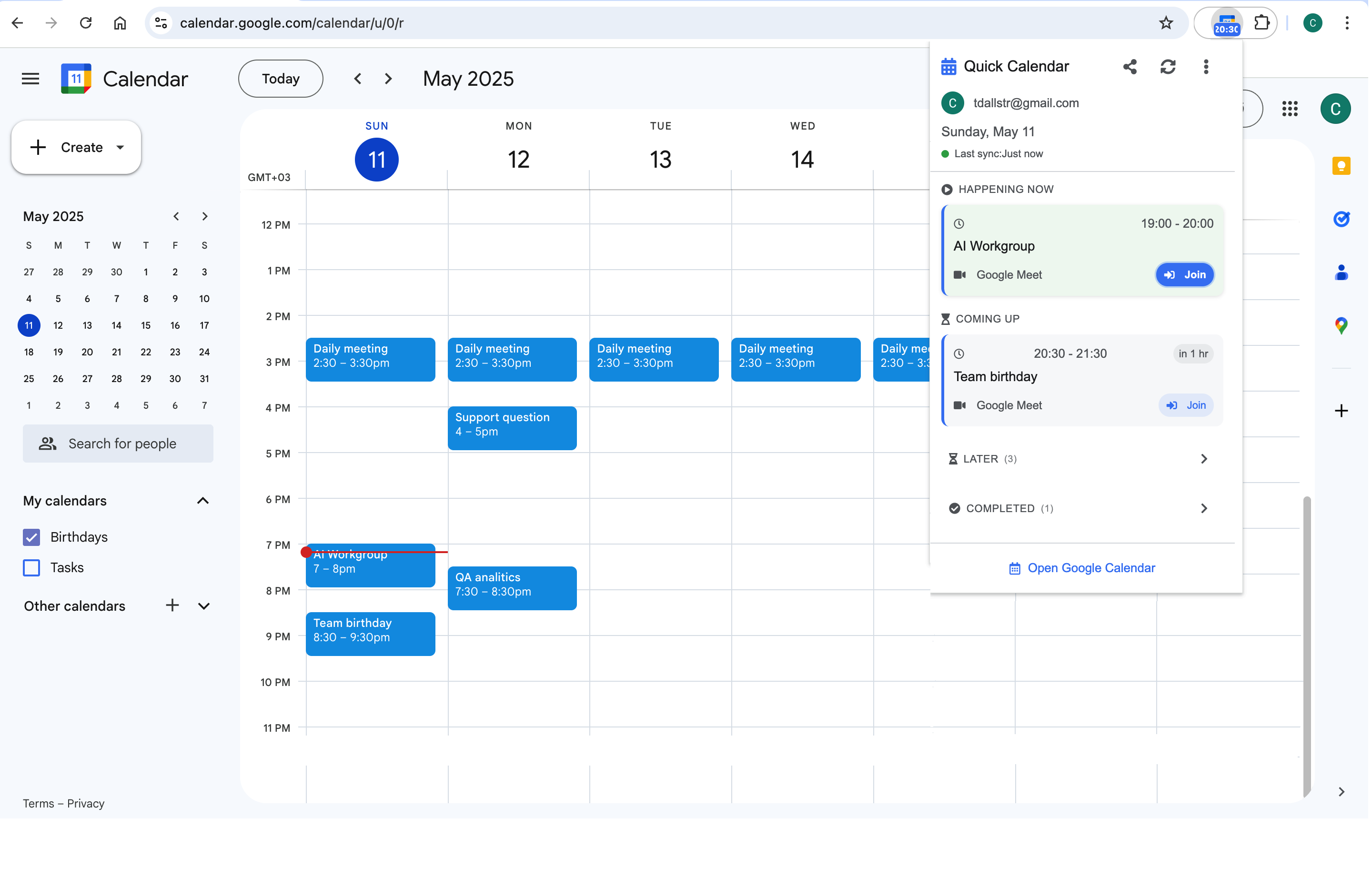
Defense also has a detection half: the booking-over lands quietly at 9:40 and settles into fact by lunch. A toolbar view like Calendar Extension for Google Calendar™ surfaces new invites against today’s blocks in the same glance — caught within the hour, the polite reschedule is still one line.
Frequently asked questions
Soften the message, not the mechanism: "I’m heads-down then — proposing 14:00 instead" reads as helpful when it arrives instantly (machines answer fast; that speed itself signals policy, not personal rejection). Cultures acclimate to consistent automation faster than to inconsistent human declines.
Second-best energy wins over first-best hours you can’t hold: a 15:00–16:30 block that survives beats a 9:00 block that dies daily. Check two weeks of history for your least-booked stretch and claim that; protection compounds only on blocks that actually happen.
Yes — meeting-free days without internal structure dissolve into shallow grazing. The block gives the day a spine, and it costs nothing: there is nothing to decline, just a commitment to keep. Protection from yourself is Layer 3 pointed inward.
Restart smaller, not guiltier: one 60-minute block, three days a week, defended perfectly for two weeks — then grow. The post-crunch mistake is re-declaring the full utopia and re-losing it publicly, which spends credibility. Small and unbroken beats ambitious and porous.