Why Weekly Planning Matters More Than Daily Planning
Daily planning happens inside a week. Weekly planning sets the shape of the week — which days have protected time, which meetings are necessary, and what the most important work is. Without a weekly view, daily planning is reactive: you are optimizing within constraints you never consciously set.
A weekly planning ritual creates the context in which each day makes sense. It is the difference between executing a plan and wondering why you are always behind.
A 20-Minute Weekly Planning Framework
- Minutes 1-3: Review last week. What was accomplished? What carried over? What does that tell you about this week?
- Minutes 4-7: Scan the upcoming week on your calendar. Identify conflicts, overly dense days, and missing prep time.
- Minutes 8-12: Name your three most important outcomes for the week. Not tasks — outcomes. Results you can point to by Friday.
- Minutes 13-16: Block time for those outcomes on the calendar. If they are not on the calendar, they are not real.
- Minutes 17-20: Identify any pre-work for meetings or deadlines and schedule or note it now, not the morning of.
The weekly planning ritual works because of consistency, not duration. Done once in a while, it has limited impact. Done every week at the same time, it compounds into a fundamentally different relationship with your calendar and your work.
Choosing When to Do It
Friday afternoon and Sunday evening are the two most common times, and both have different advantages. Friday afternoon while the week is still fresh makes the review more accurate. Sunday evening sets up Monday morning without the rush of starting the week cold.
The best time is whichever you will actually do consistently. For a more detailed Sunday-specific routine, see our guide on the Sunday planning routine for a calmer Monday.
How Schedule Calendar helps
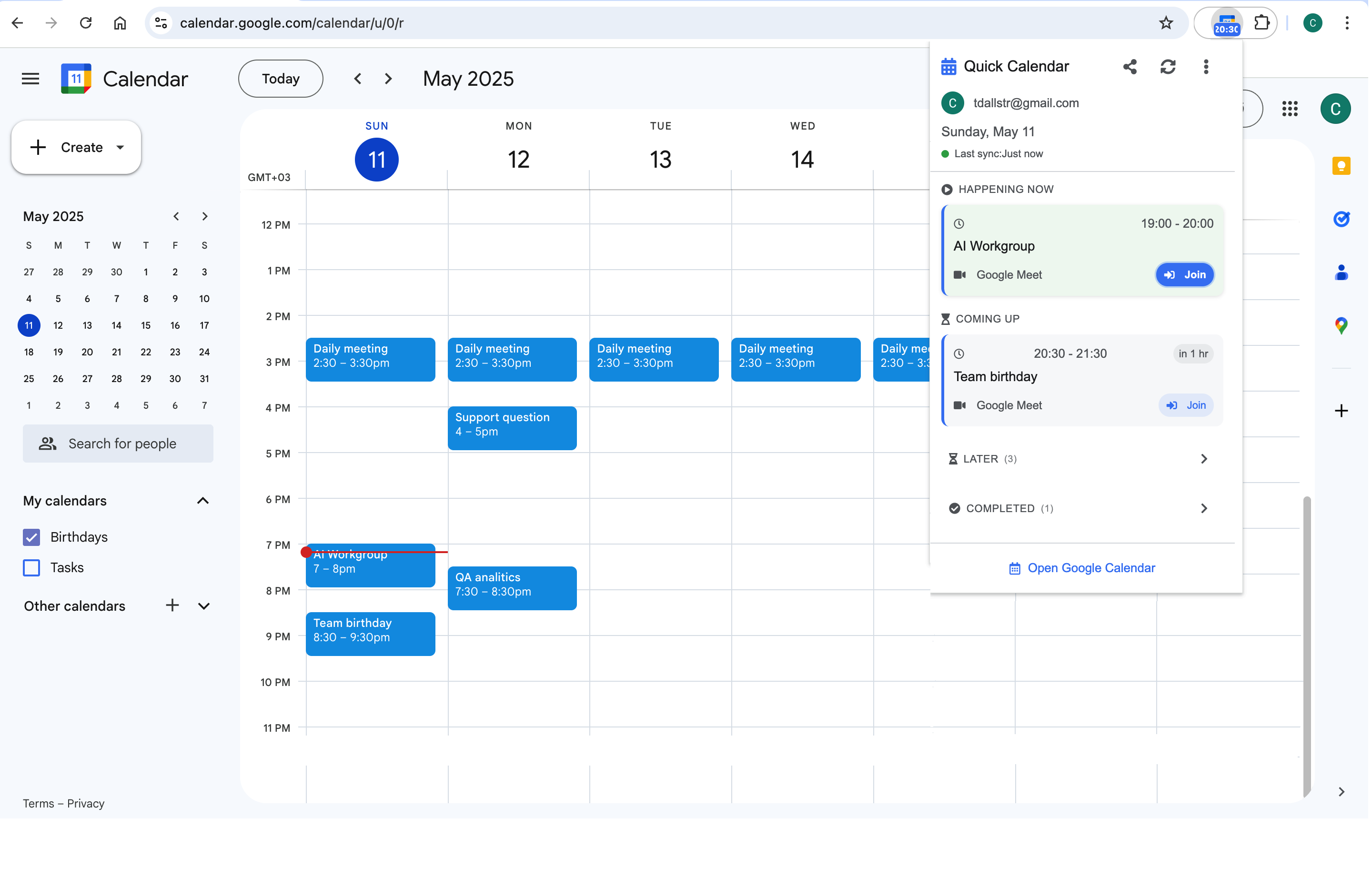
During your weekly planning ritual, checking the upcoming week's calendar is the central action. Schedule Calendar's toolbar popup shows your next events quickly, but for a full-week review, the extension's view of today and the next several days gives a fast visual scan without opening Google Calendar in a separate tab. This keeps the planning session contained and fast.
Start with the smallest viable version: pick a consistent time, review the week ahead for fifteen minutes, and identify three outcomes. Add structure gradually once the habit is established.
Frequently asked questions
A minimal effective weekly planning ritual includes: a review of last week's outcomes and carryovers, a scan of the upcoming week's calendar to identify conflicts and density, naming the three most important outcomes for the week, blocking time for those outcomes, and identifying any prep work for upcoming meetings or deadlines. The whole process can take fifteen to twenty minutes.
Friday afternoon and Sunday evening are the two most common times. Friday while the week is recent makes the review more accurate and lets you close the week cleanly. Sunday evening sets up Monday without the scramble of starting the week without a plan. The best time is whichever you will do consistently — a routine done imperfectly every week beats a perfect process done occasionally.
Attach it to an existing habit — end of the last workday, after Sunday dinner, first thing Monday morning. Keep it short enough that it does not feel like a burden. Track how often you actually do it; even a simple check mark on a paper calendar helps reinforce the habit. Lower the barrier to starting: have your planning doc or calendar open before you sit down.
Weekly planning sets the shape of the week — outcomes, calendar structure, time protection. Daily planning optimizes within that shape. Without weekly planning, daily planning is reactive: you are deciding each morning what matters, without the context of what the whole week requires. Weekly planning is the strategic layer; daily planning is tactical execution within it.
Ask: at the end of Friday, what three results would make this week feel genuinely productive, not just busy? These should be outcomes you can point to — a deliverable completed, a decision made, a conversation had — not tasks or activities. Limiting to three forces the prioritization that makes the difference between a productive week and a reactive one.
Yes. Block twenty minutes at your chosen day and time as a recurring calendar event. This makes the ritual real and reserves the time before other events claim it. Treating weekly planning as a calendar commitment rather than an intention is what distinguishes people who do it consistently from people who mean to do it.