Measure before you map
Chronotype quizzes give averages; you need your curve. For two work weeks, keep the crudest possible log — at 10:00, 13:00, and 16:00, one number, 1–5, "how sharp do I feel?" in a note or the calendar itself (30-second appointment slots titled "3" work fine). Ten days later you have something no article can supply: your actual peaks, your actual trough, and how badly meetings distort both. Most people find one 2–3 hour peak (morning for the majority, evening for a real minority) and a post-lunch trough deeper than they admitted.
The matching rules
- Peak hours → production. Writing, architecture, debugging the hard bug, anything where quality compounds. One rule with no exceptions: no recurring meetings in peak hours. A weekly sync placed at your 9:30 peak costs five peak-hours a week at your sharpest — priced honestly, it is the most expensive meeting you attend.
- Trough hours → structure. The 13:30–15:00 dip is where structured, externally-paced work belongs: meetings (they carry their own momentum), reviews with checklists, admin batches. Scheduling deep work in the trough and blaming yourself for its quality is the classic energy-blind mistake.
- Secondary peak → planning. Many people get a smaller late-afternoon lift (16:00–17:00). It is rarely enough for production, but it is ideal for tomorrow’s plan, code review, and the end-of-day close — judgment tasks without creation costs.
Building it in Google Calendar
Three mechanics make the map durable. First, a recurring peak block — 9:00–11:00 daily or whatever your log says — titled by function ("Production — no meetings"), set to Busy; this is the only block worth defending fiercely. Second, steer meetings troughward passively: when proposing times, offer trough slots first; when others use "find a time", your busy peak block does the steering for you. Third, a "trough menu" in the block description — three pre-chosen shallow tasks — because deciding what to do while foggy is itself a peak-hours task.
Honest complications
Meetings you don’t control will land on peaks; the realistic target is protecting 60–70% of peak hours, not all. Curves move — with seasons, sleep debt, age; re-run the two-week log yearly or when the map starts feeling wrong. Caffeine masks, then bills: your logged 10:00 sharpness may be borrowed from 14:00 — worth knowing, not necessarily worth changing. And teams average out: a shared "no meetings before 11" rule helps morning-peaked people and taxes the evening-peaked minority; better team policy is meeting-dense middles (11:00–13:00, 15:00–16:00) leaving both edges protectable by preference.
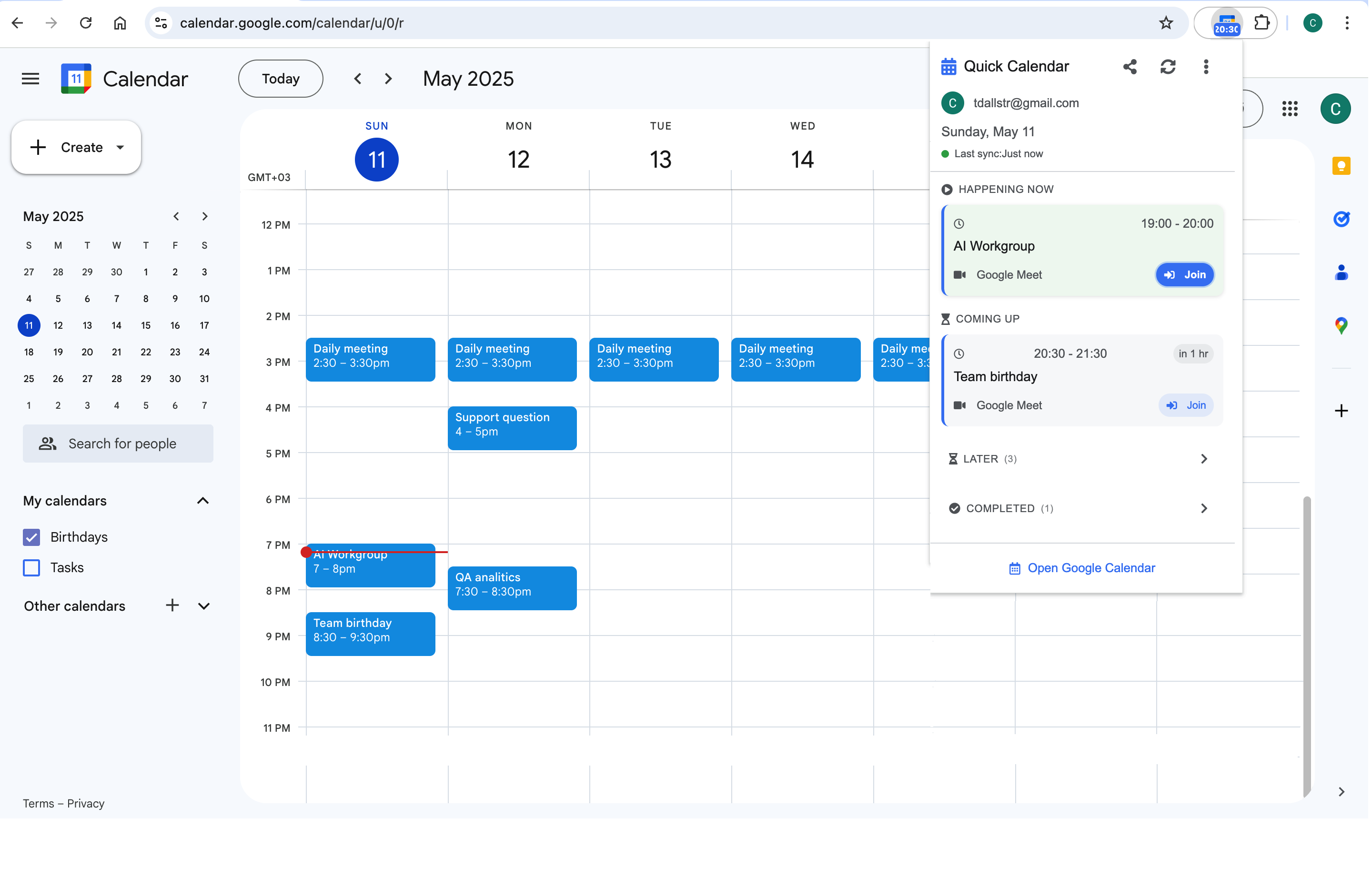
Energy scheduling adds one recurring micro-decision: "is there enough peak left for a real session, or do I switch to trough work?" That is a clock question — and a toolbar chip showing minutes to the next commitment, like Calendar Extension for Google Calendar™, answers it without a tab switch that spends the very focus you are budgeting.
Frequently asked questions
Negotiate by category, not wholesale: recurring internal syncs are the most movable meetings that exist — propose the trough alternative for two or three of them and you recover most of the peak. Client-facing and cross-timezone meetings stay; those are the 30–40% you concede.
Protect the late-afternoon block (16:00–18:00) as your production time — it is meeting-sparse in most orgs — and treat mornings as your structured/trough zone even though the org thinks of them as prime. The map is yours; the labels don’t have to match the culture’s.
Yes, because the surprises are in the details: the exact peak start (8:30 vs 10:00 changes where the block goes), the trough’s depth (schedule meetings vs. light tasks), and the secondary lift most self-labels miss entirely. Twenty numbers, one label — the numbers win.
A layer: time blocking decides that work gets dedicated slots; energy mapping decides which slots. Blockers who ignore energy put their best block at 14:00 because it looked empty. Same technique, one added constraint, disproportionate quality gain.