Why a calendar can be the PM tool
Small projects fail on three questions: when are things due, is time actually reserved to do them, and does anyone check progress on a rhythm? Those are natively calendar-shaped questions. What PM tools add — dependencies, multi-owner assignment, status workflows — only starts paying when owners multiply. One owner, one calendar: the overhead deleted is the feature.
The three-layer pattern
Layer 1 · Milestones as all-day events
Create a dedicated project calendar (sidebar → + → Create new calendar → "Project Falcon") and put every deliverable date on it as an all-day event: "Draft to reviewer", "v1 ships". All-day events float at the top of every view — deadlines stay visible without occupying hours. Color the calendar distinctly, and week view now answers "what is this month shaped like?" at a glance.
Layer 2 · Work as timed blocks, backward from milestones
For each milestone, place the working blocks that produce it — scheduled backward from the date, sized honestly (+25%), titled by output ("Falcon: draft §1–2"). Backward placement is the discipline that makes deadlines real: if the blocks between today and the milestone don’t fit, you have discovered the slip now, while renegotiating costs an email instead of an apology.
Layer 3 · The rhythm as recurrence
One recurring 25-minute weekly review, on the project calendar: what shipped, what slipped, what the next blocks are. This is the layer people skip and the layer that does the managing — without a rhythm, layers 1 and 2 decay into decoration within three weeks. End-date the recurrence at the project’s target close; a project review outliving its project is the calendar-PM version of a zombie meeting.
Two or three collaborators, still no tool
Share the project calendar (edit rights for people placing their own blocks, details-only for watchers). Conventions that keep it working: milestones are owner-only edits, each person colors or prefixes their own blocks, and the weekly review reads the calendar itself — the shared artifact is the status report. For visibility to stakeholders who ask "how’s it going", details-level access to the project calendar replaces the status meeting entirely.
The honest ceiling
Move to real PM software at any of these thresholds, without nostalgia: dependencies ("B can’t start until A lands" needs modeling once chains exceed two links), four-plus owners (assignment and status need structure), external clients needing dashboards, or recurring resource conflicts (two projects fighting for the same person’s Thursdays). The calendar pattern degrades gracefully — you’ll feel the strain as review meetings spent re-deriving state — and everything built (milestones, blocks, rhythm) exports cleanly as the new tool’s starting structure.
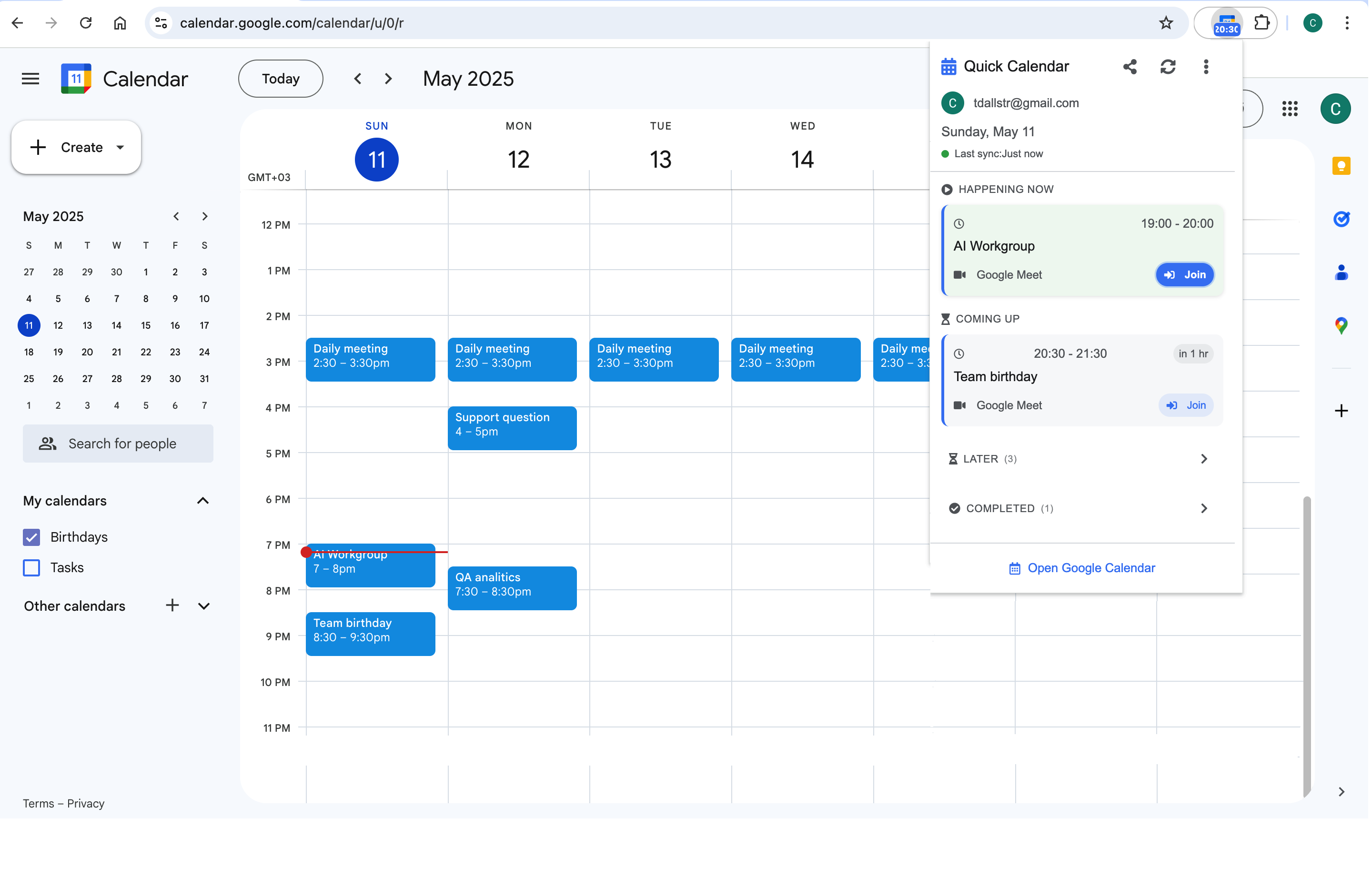
Calendar-run projects live or die on the daily glance: today’s project block, the next milestone’s distance, whether the review is tomorrow. A toolbar view like Calendar Extension for Google Calendar™ shows the project calendar merged into the day strip — the "PM dashboard" is one click, not a tab.
Frequently asked questions
Don’t — track completion by milestone, not percentage. "3 of 5 milestones shipped, next due the 14th" is more honest than any progress bar, and the weekly review note (one line in the review event’s description) is the audit trail. Percentages on one-owner projects are theater.
Sequencing by placement: dependent blocks are simply scheduled after their prerequisite’s milestone, with a buffer day. It works exactly until chains exceed two links or two people — which is the threshold in the ceiling section, on schedule.
Project calendar — the payoff is filterability: hide it and your personal week reads clean; show it and stakeholders see the whole project story in one layer. Your main calendar stays the merged view since you subscribe to both.
They arrive as immovable milestones, so the backward-placement pass becomes the negotiation tool: if honest blocks don’t fit before the client’s date, you now have the specific, visual case for scope-cutting or date-moving — in week one, when clients still say yes.