Pick the slot by overlap math, not tradition
The 9:00 standup is a habit imported from co-located offices. Remote, the right slot is computed: the earliest time inside everyone’s working hours — which Google Calendar renders directly if the team keeps Working hours & location set (Settings). For a team spanning Berlin–London–New York, that is usually 15:00–16:00 CET, not anyone’s 9:00. One placement rule beats fairness debates: the slot rotates its inconvenience annually, not weekly — predictability is worth more than symmetric suffering.
Second placement rule: edge of a block, never the middle. A 10:30 standup detonates two focus mornings (before and after); a 9:00-sharp or a 12:45 pre-lunch slot leaves the deep-work geography intact.
Calendar mechanics that carry the format
- 15 minutes, not 30. Create the series at 15; Parkinson fills whatever exists. If the team routinely needs 25, the standup has become a working meeting wearing a standup costume — split it.
- The invite holds the format, so the meeting doesn’t have to: three prompts in the description (Shipped / Shipping / Stuck), the Meet link, and the notes doc link. New joiners learn the ritual from the event itself.
- End date: eight weeks out. Standups are the most zombie-prone series in existence. Renewal takes one retro question — "still earning its fifteen minutes?" — and the end date guarantees the question gets asked.
- 1-minute notification, no more. Nobody preps for a standup; the alert’s only job is teleportation.
The async valve (this is what keeps the sync honest)
Every healthy remote standup has a written twin: a thread or doc where the same three prompts get answered by people who can’t attend — different timezone that day, deep in a spike, on the school run. Two rules make the valve work: posting async counts fully (no second-class citizenship, or people attend resentfully), and the sync meeting reads the async answers first rather than re-asking them. Teams that run the valve well often discover Tuesday/Thursday can go fully async — the calendar entry shrinks to twice a week, and nobody mourns.
Signals the setup needs surgery
Watch for three patterns on the calendar itself. The creep: 15 became 30 became "let’s just book the half hour" — split status (async) from discussion (separate slot). The audience: attendance above ~8 means it is a broadcast, not a standup — split by workstream. The silence: if the same two people speak while six listen, the six are donating fifteen minutes daily to a conversation that wanted to be a DM — shrink the invite list to the people sharing a deliverable.
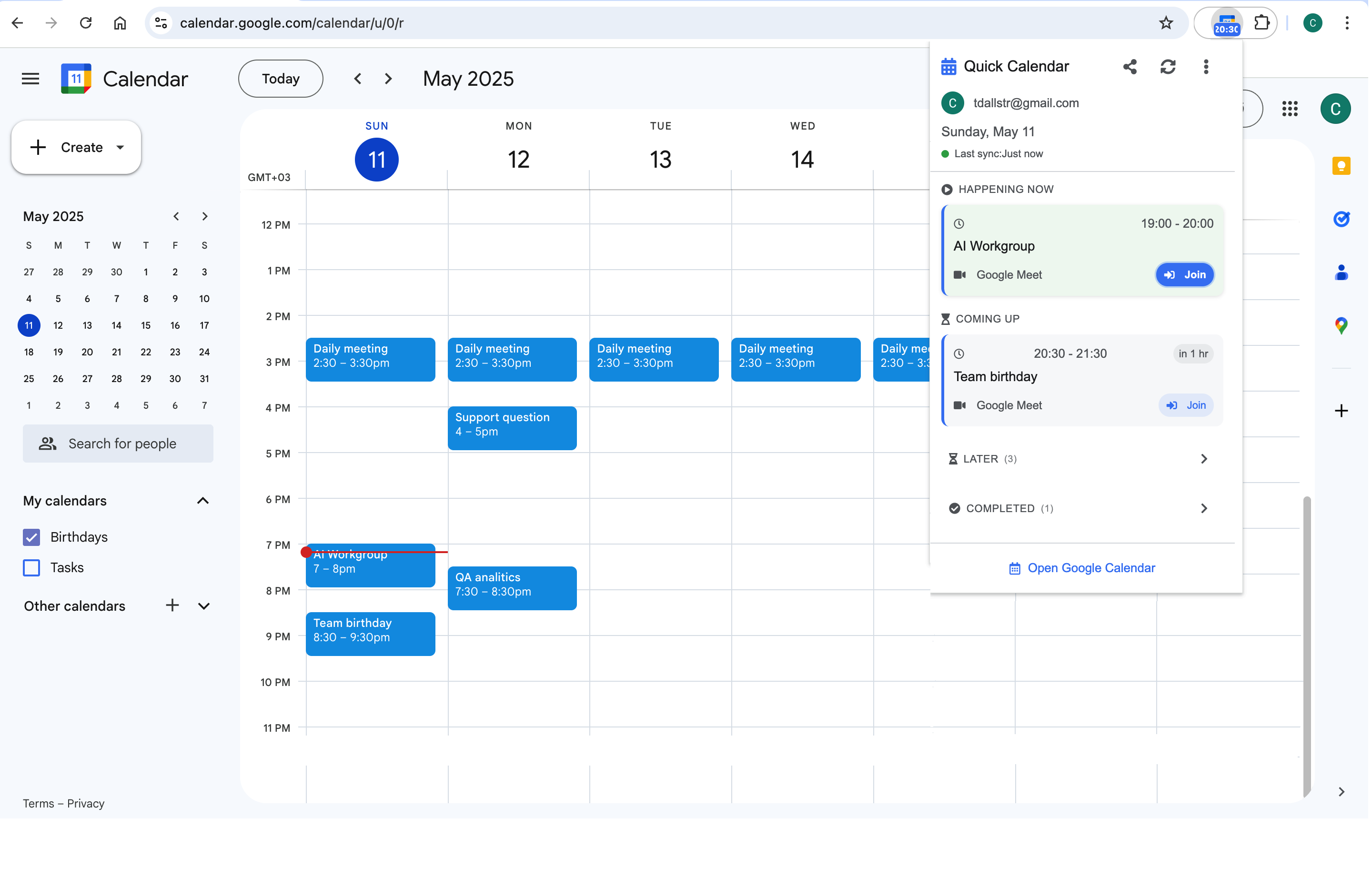
Standups punish lateness disproportionately — at fifteen minutes total, three late minutes is a fifth of the meeting. The time-to-event chip in a toolbar view like Calendar Extension for Google Calendar™ keeps the countdown ambient through the morning’s first block, and the join button turns "it started" into one click instead of a tab hunt.
Frequently asked questions
Decide once and put it in the invite description — ambiguity taxes everyone daily. Practical default: cameras optional for the standup (it is a sync ritual, not a trust exercise), cameras on for anything where reading the room matters. The stable rule beats the "right" rule.
Past ~6 hours of spread, one live slot punishes someone structurally — go async-first: the written thread is the standup, and an optional 2×/week overlap call handles what threads do badly (blockers needing conversation). The calendar entry then belongs only to the overlap call.
Teams more often skip Friday (nothing ships between Friday 9:00 and the weekend that Monday’s standup can’t cover). Monday’s standup is usually the week’s most valuable — it converts the weekly plan into today-sized commitments. Skip days by information value, not vibes.
Only the deltas: blockers raised (with owners) and commitments changed. The Shipped/Shipping lines already live in the async thread; duplicating them into prose notes is how a 15-minute ritual grows a 20-minute documentation tail.