Choose the day with data, not polls
Pull four weeks of team calendars and find the day that is already lightest — usually Wednesday or Thursday for most orgs (Mondays collect planning, Fridays collect deadlines and demos). Converting the lightest day means moving six meetings, not sixteen, and the pilot starts with momentum instead of a moving project. Announce it as an eight-week pilot with a named review date, not a policy — pilots get grace, policies get tested.
The calendar mechanics (one hour, once)
- A recurring all-day event on the team calendar: "No-Meeting Wednesday — focus day", visible to everyone who might schedule against the team. Visibility is half the enforcement: outsiders can’t respect what they can’t see.
- Individual Focus time blocks (Workspace) across the protected hours, with auto-decline switched on and a message that carries the protocol: "Wednesdays are our focus day — happy to meet Tuesday or Thursday; if it truly can’t wait, message me." The auto-decline does the awkward refusing nobody wants to type.
- Migrate, don’t delete: every meeting evicted from Wednesday gets rebooked at eviction time (drag it, don’t promise to reschedule "later"). Meetings deleted-with-intentions return as resentment.
- End-date the pilot artifacts to the review date. If the pilot fails, it cleans itself up; if it succeeds, renewing is the celebration.
The exception protocol — decide it before you need it
Exceptions kill no-meeting days only when they are undefined. Define three classes up front. Always allowed, no permission needed: external commitments you don’t control (client calls, interviews, vendor escalations) — pretending otherwise makes the policy a liar on week one. Allowed with a tax: genuinely urgent internal meetings may book Wednesday if the organizer posts one line in the team channel ("booking Wed 14:00 — release blocker"). The visibility is the tax; it converts silent erosion into countable events. Never: recurring meetings. A recurring meeting on the no-meeting day is not an exception, it is repeal.
Run the review with numbers
At week eight, three metrics decide: exception count per week (trend, from the channel posts — under two is healthy, five means the day is fictional), focus outcomes (ask each person for one thing that shipped on Wednesdays that wouldn’t have otherwise), and displacement cost (did Tuesday and Thursday become meeting sludge? — check total weekly meeting hours; a good no-meeting day reduces them slightly, because marginal meetings die instead of moving). Renew, adjust, or retire — all three are wins over zombie policy.
If a whole day is politically impossible
Take the fallback that shares the same mechanics: no-meeting mornings (9:00–12:30 daily, or Tue/Thu). Smaller prize, drastically easier adoption — and teams that hold protected mornings for a quarter usually find the full-day conversation reopens itself with sponsors it didn’t have before.
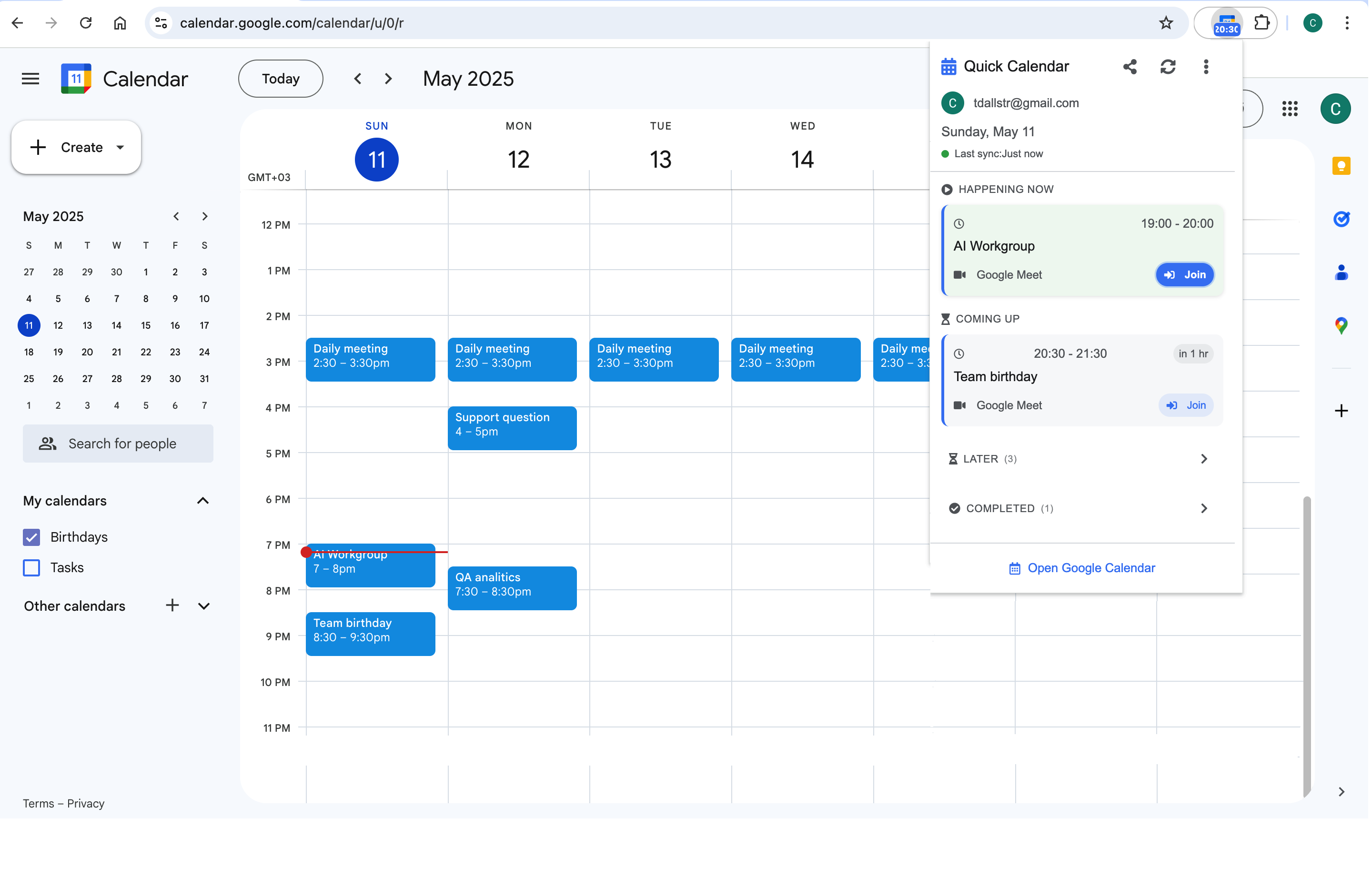
On the day itself, the discipline inverts: the risk isn’t meetings, it’s drifting through unstructured hours. A morning glance at the toolbar timeline — Calendar Extension for Google Calendar™ keeps it one click away — confirms the runway is clear and how long it really is, which is the cue to commit to one deep piece of work instead of grazing.
Frequently asked questions
Externals are class one — take the meeting. The policy protects the team from itself, not from customers. If externals start systematically landing on Wednesdays, that is a routing fix (offer Tuesday/Thursday slots first in booking pages and replies), not a policy crisis.
The exception tax is the tool: ask them to post the one-liner like everyone else. Managers who must publicly log each exception self-throttle within weeks — and a manager unwilling to log them has told you the pilot lacks sponsorship, which is better learned in week three than month six.
Include them in the protection, exempt them from the fiction: their interrupt-driven reality doesn’t pause, so give them the same auto-decline blocks plus explicit permission to break them for incidents. A policy that pretends on-call can go dark discredits itself with the people who most need focus time.
Team-first, almost always: one team’s eight-week pilot with numbers is the memo that sells the org. Company-wide mandates skip the consent-building and generate the highest exception rates — the calendar version of a diet announced for other people.