Why no-meeting days work at the team level
Individual focus blocks are easier to displace than team-level norms. When only one person protects a morning, meeting invites arrive from everyone else. When a team aligns on a shared no-meeting day, the norm enforces itself — nobody schedules across it because everybody is protecting it.
The compounding effect: a team that shares a Wednesday meeting-free day creates a reliable window for individual deep work that is protected by collective agreement rather than individual willpower.
Step 1: Choose the right day for your team
The easiest no-meeting day to implement is the one that already has the lowest meeting density. Review the past month's calendar for the day that consistently has the fewest recurring meetings.
Wednesdays are a common default because they break the week symmetrically. Fridays work for teams that use end-of-week time for individual work. The specific day matters less than the team-wide alignment on it.
Step 2: Communicate the policy before blocking
The most durable no-meeting days are declared, not just blocked. A brief team communication — a Slack message, a team meeting agenda item, or a short email — establishes the shared expectation before the calendar is changed.
The communication: 'We are protecting Wednesdays as a meeting-free day starting next week. This applies to internal meetings — external calls with clients can still happen on Wednesdays when needed. Let's try it for four weeks and review.' Setting a trial period reduces resistance by making it revisable.
One of the most common implementation failures: blocking the day without communicating it. When people discover the block without context, they interpret it as an individual preference and schedule over it. The communication makes it a team norm.
Step 3: Block and protect the day on individual calendars
Each team member blocks the full day as a recurring event marked Busy. This makes the time show as unavailable when anyone checks availability before scheduling. Name the event visibly: 'No meetings — focus day' communicates purpose to anyone looking at your calendar.
For managers: block your own calendar first and hold it consistently. Direct reports are more likely to protect their focus days when they see their manager doing the same.
Handling exceptions without eroding the norm
Exceptions will occur: a critical client who cannot meet any other day, an urgent cross-team decision, a time-sensitive hire. The rule is to handle these as genuine exceptions and immediately protect the displaced focus work elsewhere in the week.
The norm erodes when exceptions become routine — when 'just this once' becomes weekly. A good signal: if you are accepting a meeting on the no-meeting day more than once per month, the day is not protected.
How Schedule Calendar helps
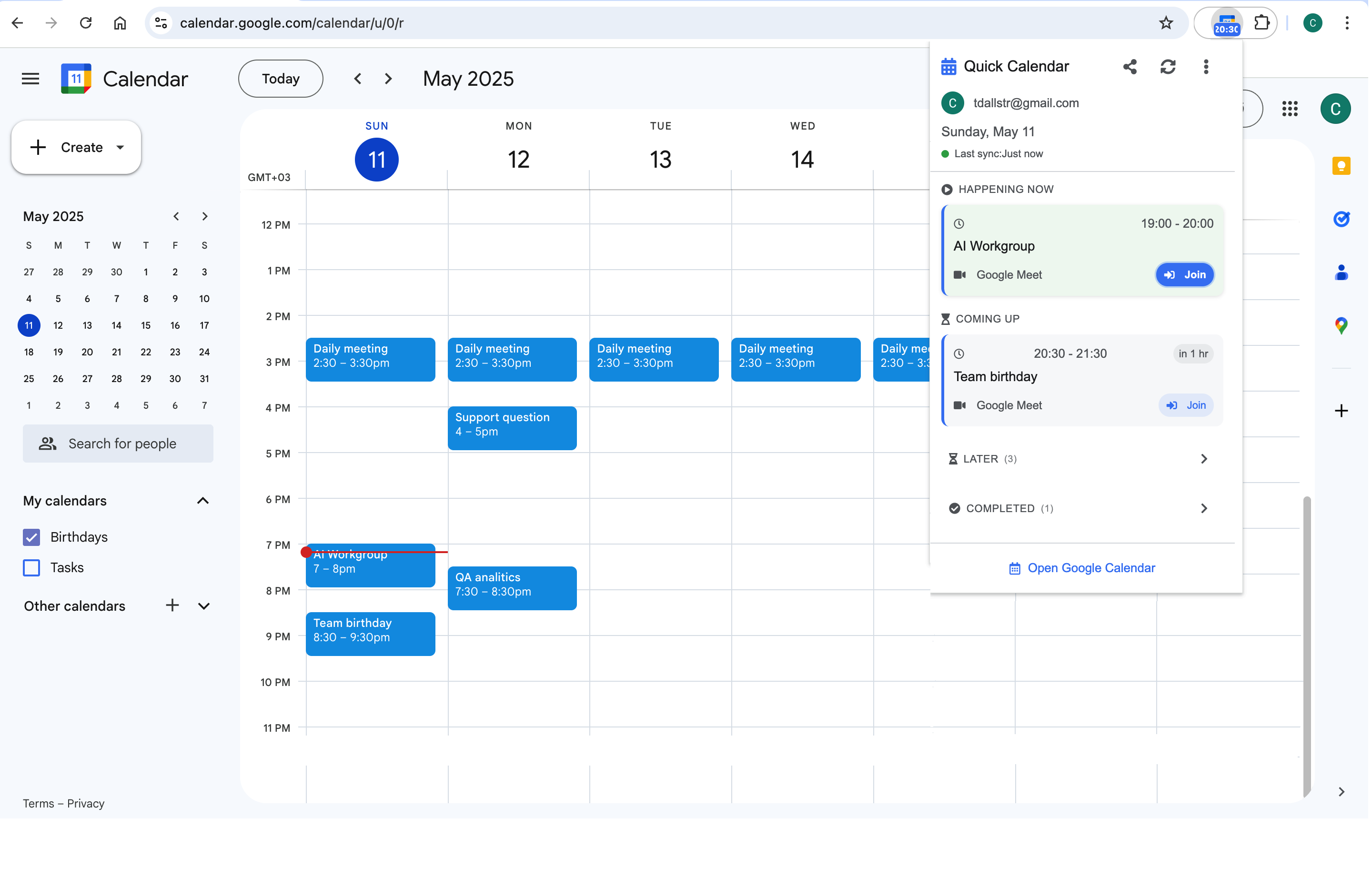
On a no-meeting day, Schedule Calendar confirms what the day holds: a glance at the toolbar shows whether the schedule is clear or whether an exception has appeared. For remote workers especially, this kind of lightweight monitoring keeps the no-meeting day intentional.
Frequently asked questions
A no-meeting day is a recurring weekly day with no scheduled internal calls or meetings, reserved for focused individual work. At the team level, it is a shared norm rather than an individual preference, which makes it more durable. It is typically used for the deep work that back-to-back meeting days crowd out.
Communicate the policy before implementing it, not after. A brief team message explaining the purpose and setting a trial period reduces resistance and establishes shared expectation. Block everyone's calendar with a visible label. The norm holds when it is treated as a team decision rather than an individual boundary.
The day with the lowest existing meeting density is the easiest to protect. Wednesdays are the most common choice because they create symmetrical meeting clusters on either side. Fridays work for end-of-week independent work. The specific day matters less than the team-wide alignment.
Treat genuine exceptions as exceptions: accept the meeting, immediately reschedule the displaced focus work to another window that week, and ensure the exception is genuinely infrequent. A useful signal: if you are meeting on the no-meeting day more than once per month, the protection has eroded and the policy needs reaffirmation.
Most teams apply it to internal meetings and make exceptions for external clients as needed. A more flexible implementation: 'no internal meetings on Wednesdays; external meetings on Wednesdays only when no other time works' balances the protection with practical constraints.
Three to four weeks of consistent protection usually establishes the norm. The first week sees the most exceptions — people forget and schedule anyway. By week three, the pattern is established and the default behavior shifts to avoiding the protected day.