Signs that a detox is needed
The calendar needs a reset when you feel perpetually behind despite working long hours. When most of your time goes to meetings and reactive tasks and the work you care about keeps slipping. When you cannot remember the last time you chose how to use a full morning.
This is not a motivation problem. It is a schedule that has accumulated without maintenance — recurring meetings that outlived their purpose, commitments that were reasonable in isolation but collectively unmanageable, and no protected time for focused work.
Step 1: The audit (one hour)
Open your calendar and list every recurring event. For each one, ask three questions: Does this meeting have a current, clear purpose? Is my attendance required? Is the frequency right?
Mark each meeting as Keep, Reduce, Convert to async, or Cancel. Do not make any changes yet — just make the list. For most people, 20–30% of recurring meetings will be marked for change.
Start with recurring meetings, not one-off events. Recurring meetings are where most calendar weight accumulates — they were added once and persist indefinitely without review.
Step 2: Execute the changes (one week)
Work through the list from step one. Cancel or decline the meetings marked for removal. Send brief messages to relevant people: 'I've been reviewing my recurring commitments and I'm removing this one — happy to reconnect if something specific comes up.' Reduce the frequency of meetings marked for reduction. Propose async alternatives for the ones that can be converted.
This step takes one to two weeks to complete because it involves other people's calendars. Do not rush it — do it properly.
Step 3: Rebuild with intentional structure
After the audit and removal, the next step is adding the structure that was missing: a morning focus block, a shallow work batch window, a buffer before heavy meeting days, and a weekly planning ritual.
Do not add these all at once. Add one recurring block per week until the structure feels stable. An overcrowded rebuilt calendar is not better than the one you just cleaned out.
Step 4: Maintenance to prevent re-accumulation
A calendar detox that does not include a maintenance routine will need to be repeated within six months. The maintenance is simple: a monthly scan of recurring meetings (15 minutes), and a filter on new meeting invites ('does my attendance change the outcome?').
See our guide on building a weekly planning ritual for a sustainable system that includes this maintenance automatically.
How Schedule Calendar helps
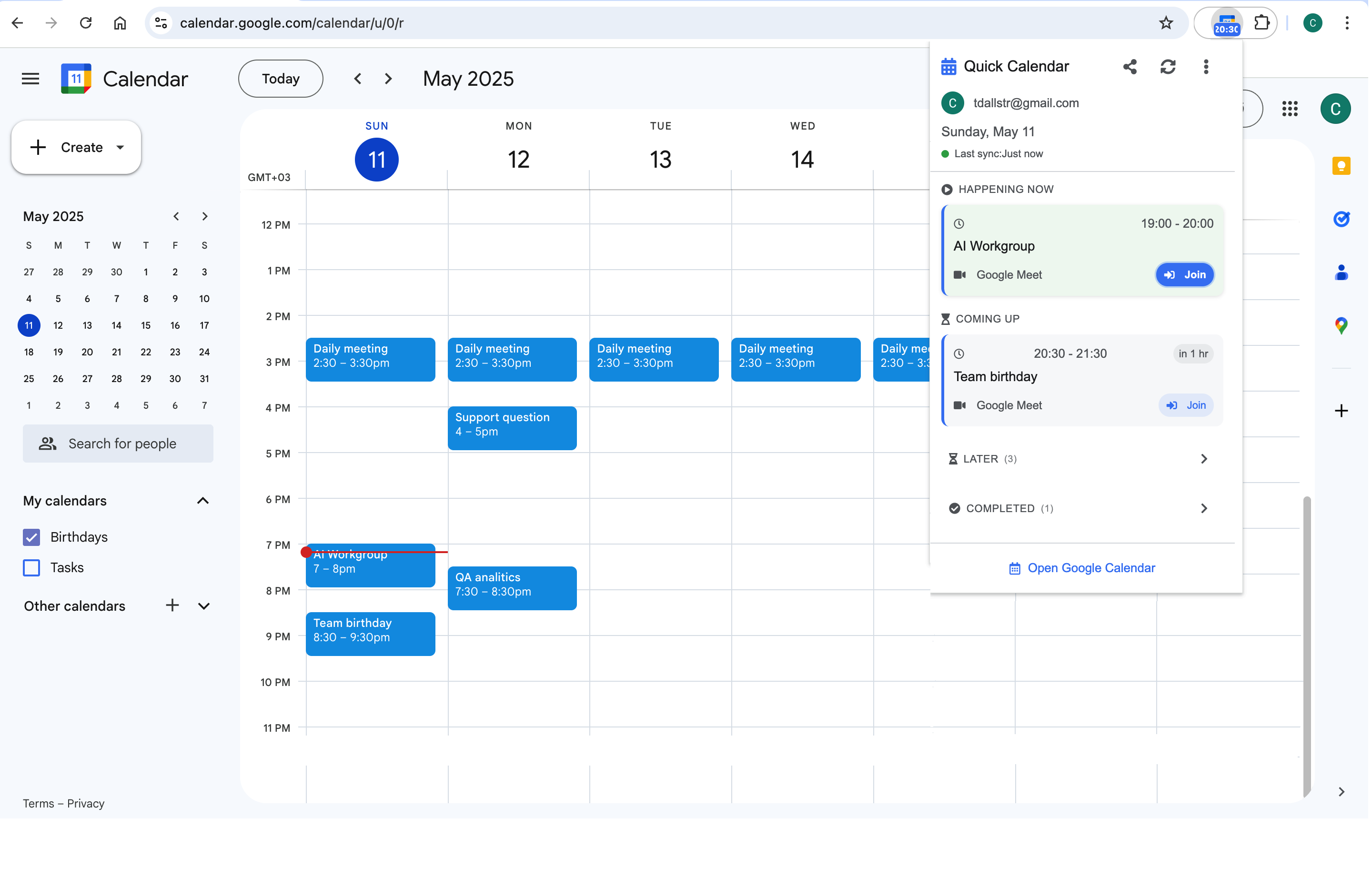
After a detox, the calendar is lighter and more intentional. Schedule Calendar makes it easier to stay oriented in this simpler schedule — showing upcoming events in the toolbar so monitoring the day requires less effort than before.
A calendar detox takes one hour to plan, one to two weeks to execute, and produces a schedule that is genuinely easier to work within. The most common mistake is waiting until burnout is severe before starting.
Frequently asked questions
A calendar detox is a structured reset of an overloaded schedule. It involves auditing existing recurring meetings, removing those that no longer serve a clear purpose, and rebuilding with intentional structure — focus blocks, batch windows, and a maintenance routine to prevent re-accumulation.
Start with a one-hour audit of all recurring meetings: mark each as Keep, Reduce, Convert to async, or Cancel. Over the following week, execute the changes — cancel or decline marked meetings, reduce frequencies, propose async alternatives. Then add intentional structure back slowly: one focus block or planning ritual per week until stable.
The audit takes one hour. Executing the changes takes one to two weeks because it involves other people's calendars. The rebuilding phase takes two to four weeks. The full reset from first audit to stable new schedule typically takes three to six weeks.
Recurring meetings whose purpose has changed since they were created. Meetings where your presence does not change the outcome. Calls that could be replaced by async updates. Commitments that were added without a corresponding removal of something else. The most impactful removals are usually recurring weekly meetings that are no longer essential.
Two maintenance habits: a monthly 15-minute scan of recurring meetings (asking whether each still serves its purpose), and a filter on incoming invites (asking whether your attendance changes the outcome before accepting). These two habits, applied consistently, prevent the gradual re-accumulation that makes another detox necessary.
No. A calendar detox is a selective audit — some meetings stay, some reduce in frequency, some convert to async, and some are removed. The goal is not to minimize meetings but to ensure each one serves a clear purpose that justifies the time it takes from everyone involved.