Rule 1 · Earn the slot: decision, or document?
Before opening the event editor, name the meeting’s output: a decision made, a conflict resolved, a plan aligned. If the honest output is "everyone hears the update", the meeting is a document with attendance — write it instead. The calendar test is brutal but fair: a meeting with no named decision is async by default.
Rule 2 · Size to the agenda, not the default
Hour-long meetings exist because the default field says 60. Invert it: set your default duration to 25 (Settings → Event settings), then size upward only when the agenda demands. Working heuristics: one decision = 15 minutes; a working session on one artifact = 50; anything claiming 90+ is a workshop and needs a facilitator and a break, not just a longer slot.
Rule 3 · Invite deciders; inform everyone else
Every attendee multiplies cost and halves candor. The cut-line: people who will change the outcome attend; people who need to know the outcome get the notes. Google Calendar supports the distinction natively — mark the second group Optional (click the person icon next to a guest) and say in the description: "Optional = notes will cover you." Meetings of four decide; meetings of ten perform deciding.
Rule 4 · Pick the slot like it costs money
It does — attendee-hours. Three placement courtesies that compound across a team: check "find a time" instead of proposing blind (it renders everyone’s day side by side); respect visible focus blocks and working-hours boundaries as hard constraints, not suggestions; and steer recurring meetings toward mid-day trough hours (13:00–15:00), leaving peak morning hours for everyone’s production work. The scheduler who books someone’s 9:00 peak for a status sync is spending the team’s best cognition on its cheapest activity.
Rule 5 · The invite is the agenda
An invite without an agenda is a calendar hold with confidence. Minimum viable description, three lines: Goal (the decision), Prep (the one link to read), Owner (who runs it). This takes ninety seconds and does two jobs: attendees arrive ready, and — more often than expected — writing the goal line reveals the meeting is unnecessary while cancellation is still free.
Rule 6 · End-date everything recurring
Recurring meetings are the only calendar objects that outlive their purpose by default. Create every new series with an end date eight weeks out (recurrence editor → Ends → On date). Renewal then requires someone to actively decide the meeting still earns its cost — a thirty-second decision that retires more zombie meetings than any audit, because it happens automatically at the moment of drift.
The thirty-second pre-save checklist
- Named decision in the description? (Or should this be a doc?)
- Length matches agenda, not default?
- Everyone non-essential marked Optional?
- Slot respects focus blocks, working hours, and peak-hour courtesy?
- Recurring? End date set.
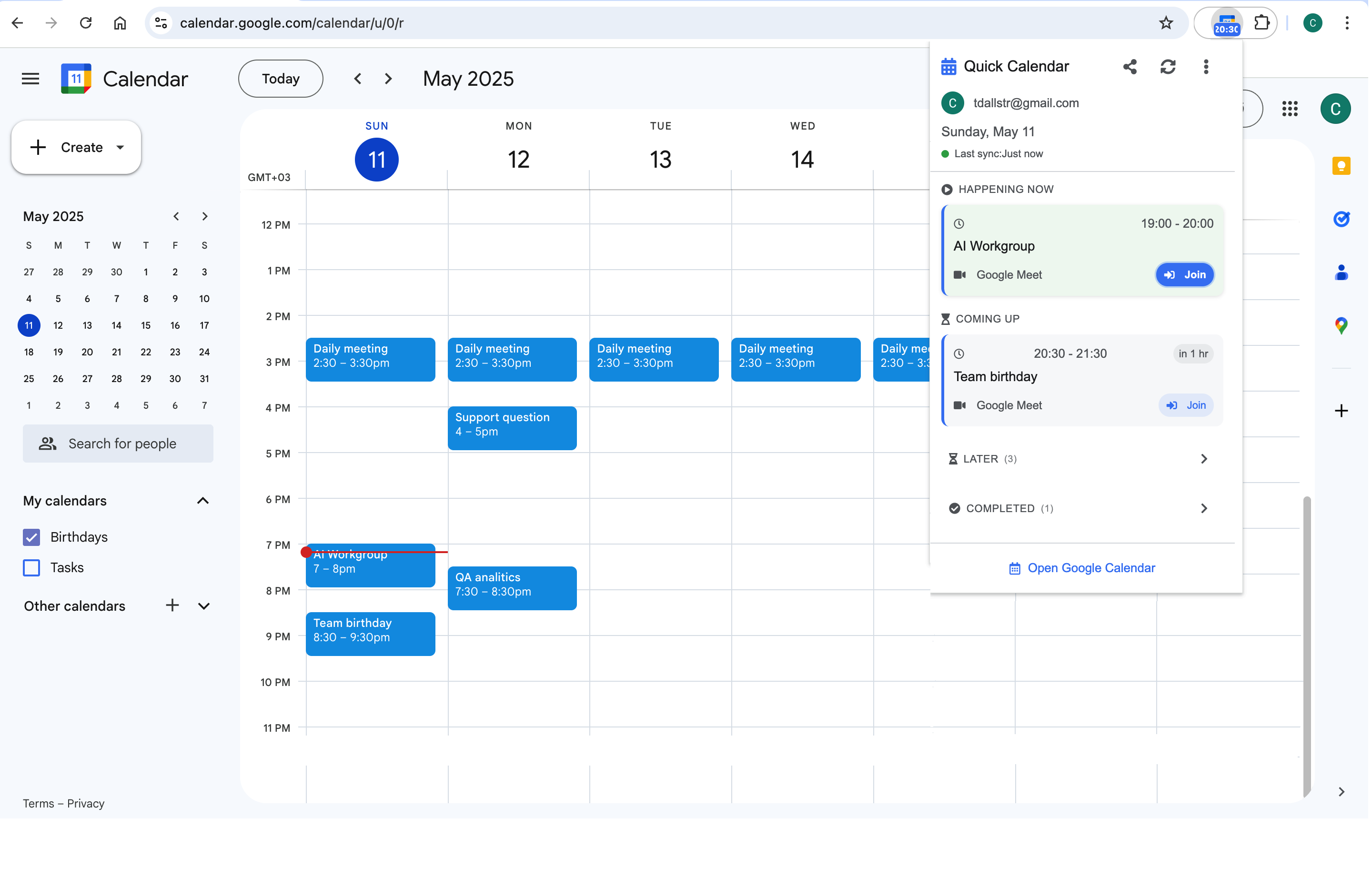
Rule 4 needs your own context to be honest — proposing times without seeing your day is how double-books happen. A toolbar timeline like Calendar Extension for Google Calendar™ keeps today and the week’s shape one click away while you write the invite, so the slot you propose is one you can actually keep.
Frequently asked questions
Model silently, announce once: run your own invites by the checklist for three weeks (people notice tight agendas and 25-minute meetings), then propose one rule — usually Optional-marking or end dates — in a retro with your results as the pitch. Norms spread by envy faster than by policy.
Reschedule-with-alternative, cheerfully: "That slot is deep work — moving us to 14:00, same day." No apology, an immediate alternative, done consistently. One person doing this reliably re-trains a surprising share of an org’s scheduling reflexes.
The three-line version shrinks to one line for a 15: "Goal: unblock the API decision." If even one line can’t be written, the sync has no goal and a Slack thread was the honest tool. Length changes the agenda’s size, not its existence.
The requester schedules, the requester absorbs the friction: they check find-a-time across both teams, propose two options inside everyone’s working hours, and write the agenda. Seniority buys you attendance decisions, not exemption from scheduling courtesy.