Why Meeting Overload Happens
Meetings multiply because they feel like the safe default. When someone is unsure whether to send an email or schedule a call, they schedule the call. There is no friction — calendar tools make it easy to claim thirty minutes of someone else's time.
The result is a calendar full of commitments that feel important individually but collectively leave no time for the work those meetings are supposed to enable. Meeting overload is rarely caused by one bad actor. It is the accumulated weight of everyone individually choosing the path of least resistance.
Reduce Meetings Without Burning Relationships
The instinct is to decline everything and protect your calendar by force. This works short-term and damages relationships long-term. A more sustainable approach is to change the conditions that generate unnecessary meetings in the first place.
One practical method: when someone schedules a meeting, reply with a quick question — 'Could this be handled by a short written update?' Many people say yes, simply because they never considered it. For recurring meetings, review the agenda from the last three occurrences. If the content could have been an email, it is a candidate for cancellation.
5 Strategies That Actually Work
- Default to async for status updates. Require meetings only for decisions and live collaboration.
- Shorten the default meeting duration from 30 to 25 minutes, or 60 to 50. Scarcity creates focus.
- Designate two or three meeting-heavy days and keep others meeting-light.
- Ask for an agenda before accepting any invite. No agenda, no commitment.
- Audit recurring meetings quarterly. Kill the ones that no longer have a clear purpose.
The goal is not a meeting-free calendar. It is a calendar where every meeting earns its place. Some collaboration requires real-time conversation — protect that, and cut the rest.
Make Your Availability Honest
One of the quietest causes of meeting overload is a calendar that shows false availability. If your calendar looks open from nine to five, every open slot is an invitation. Blocking focus time, lunch, and transition time makes your real availability visible and reduces the chance of back-to-back scheduling.
This is not about being unavailable. It is about being honest about the conditions under which you can do your best work. A calendar that reflects reality is more useful to everyone than a calendar that shows an aspirational version of your day.
How Schedule Calendar helps
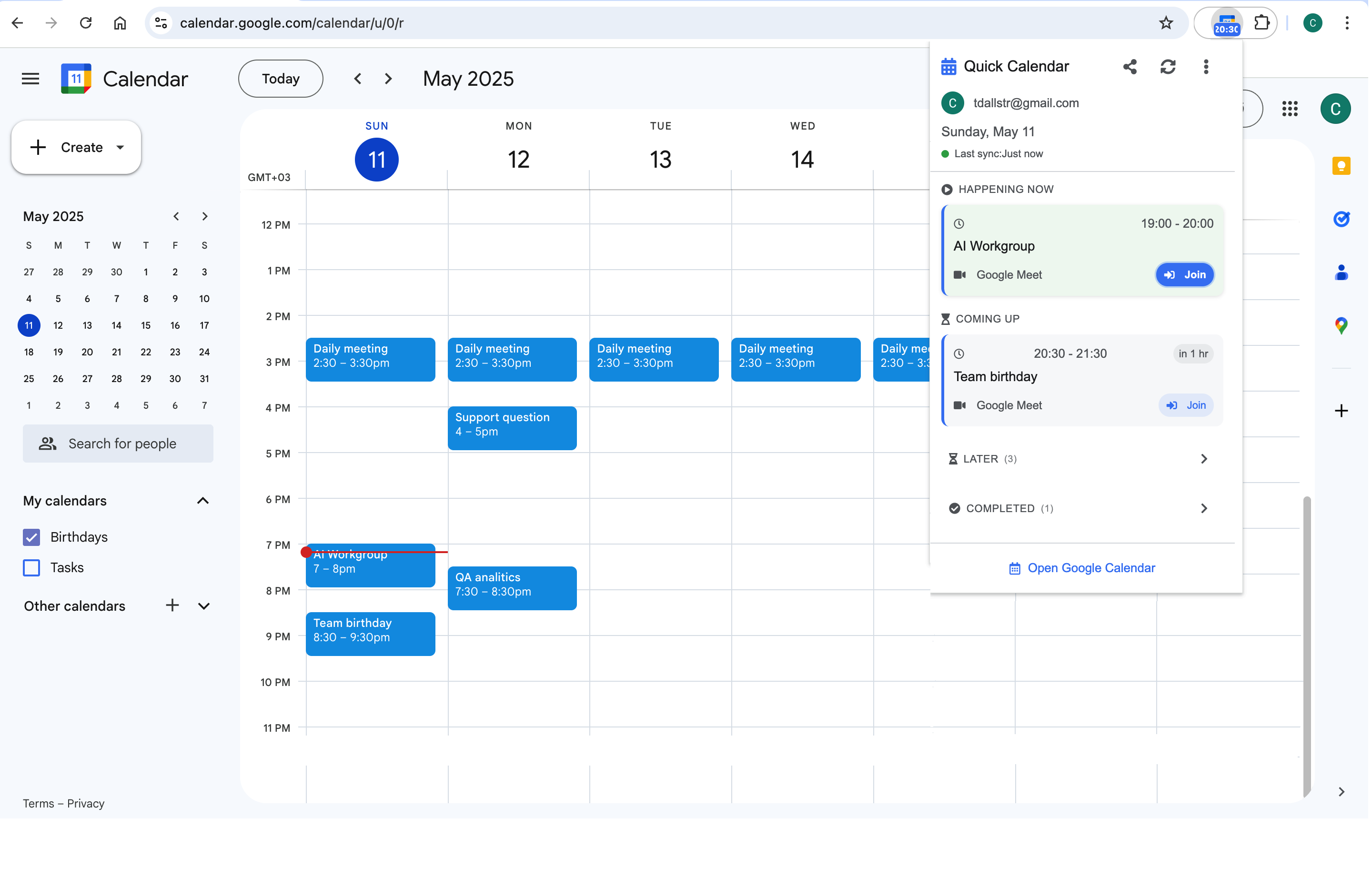
Schedule Calendar's browser popup gives you an at-a-glance view of your upcoming events without opening a full calendar tab. When you're deciding whether to accept a new invite, you can check your actual day in seconds. Seeing how full your schedule is — and how little buffer exists — makes it easier to decline or redirect meetings with confidence rather than guilt.
Start with one change: require an agenda for any meeting you own. That single shift changes the conversation from 'why are you in so many meetings' to 'what does this meeting actually need to accomplish.'
Frequently asked questions
The most effective approach is to change the defaults rather than reject meetings individually. Ask for an agenda before confirming attendance, suggest async alternatives for status updates, and be clear about which hours you protect for focused work. Framing these as process improvements rather than personal refusals keeps relationships intact.
Status updates, progress reports, information sharing, and announcements are almost always better as written updates. Decisions with straightforward options can often be handled over a shared document or message thread. Meetings that require genuine real-time collaboration — brainstorming, complex problem-solving, sensitive conversations — are harder to replace with async formats.
Have a direct, calm conversation about how meeting volume affects your output. Show concrete data — how many hours per week are in meetings versus focused work. Propose specific changes, like moving weekly status meetings to a shared written update, rather than asking for meetings to be cut without an alternative. Most managers want output, not just attendance.
A common recommendation is no more than thirty to forty percent of the workday in meetings for most knowledge workers. That leaves enough uninterrupted time for the actual work that meetings are meant to support. For roles that require deep work — engineering, writing, analysis — the ratio should skew lower, closer to twenty to twenty-five percent.
Start by checking whether anyone would notice if the meeting were cancelled. If you own the meeting, cancel it with a note explaining what it accomplished and how that will be handled going forward. If you are an attendee, ask the organizer what the meeting's current purpose is — the conversation itself often leads to productive changes.
Yes. Parkinson's Law applies to meetings — they tend to fill whatever time is scheduled. Setting a 25-minute meeting instead of a 30-minute one creates a natural sense of urgency that keeps conversation focused. The buffer between back-to-back meetings also helps people arrive mentally prepared rather than still processing the previous call.