Before: three habits that decide the meeting’s fate
1 · The goal line (owner: organizer, at creation)
One sentence in the invite: what decision or outcome ends this meeting successfully. Its absence is the root cause of half of all meeting waste — and writing it kills a surprising share of meetings at the keyboard, which is the hygiene working. Calendar mechanic: refuse your own meetings a Save until the description has its line.
2 · The right-sized container (organizer, at creation)
Default 25, upgrade only on argument. Calendar mechanics: default-duration setting plus Speedy meetings org-wide. Hygiene framing: every unneeded minute is multiplied by attendance — a 60-that-should-be-25 with six people wastes three and a half person-hours.
3 · The pre-read shipped, or the meeting converts (organizer, evening before)
Context distributed before means the meeting starts at its actual content. The enforcement half matters more than the ideal: no pre-read by the night before → convert to async or reschedule. A calendar culture learns from what organizers actually do under deadline, not from what the wiki says.
During: three habits that protect the room
4 · Start on time, into the agenda (everyone; chair enforces)
Not "start when the seniors arrive". The mechanical assist: 1-minute notifications and one-click joins make punctuality cheap; the cultural assist is a chair who begins at :00 with the goal line regardless. Two weeks of that and arrival behavior recalibrates itself.
5 · One conversation at a time (chair)
Side-threads fork the room’s attention and orphan the decision. The chair’s tool is the parking lot — named, visible (bottom of the agenda doc), and actually processed at minute-minus-five. Parked items that visibly get owners later are what make people willing to park them at all.
6 · The decision gets said out loud (chair, last two minutes)
"So we’re agreed: Tier-2 pricing ships Monday; Dana owns the comms." The sentence feels redundant and prevents the most expensive hygiene failure there is — four attendees leaving with three understandings. If the sentence can’t be said, the meeting isn’t over; it just ran out of time, which is different, and needs its own follow-up 15.
After: two habits that make it compound
7 · Notes within the hour (a rotating scribe)
Three lines — decisions, owners, dates — into the event description or the running doc, while memory is warm; notes written tomorrow are reconstructed, not recorded. The event description placement matters: it makes the calendar itself the searchable decision log.
8 · The series gets audited (organizer, every 8 weeks)
End-date every recurring meeting at creation; at renewal, ask what the last month of instances produced. Hygiene’s final form is meetings that justify their own continued existence on a schedule — because the alternative, the immortal drifting series, re-creates every problem above at compound interest.
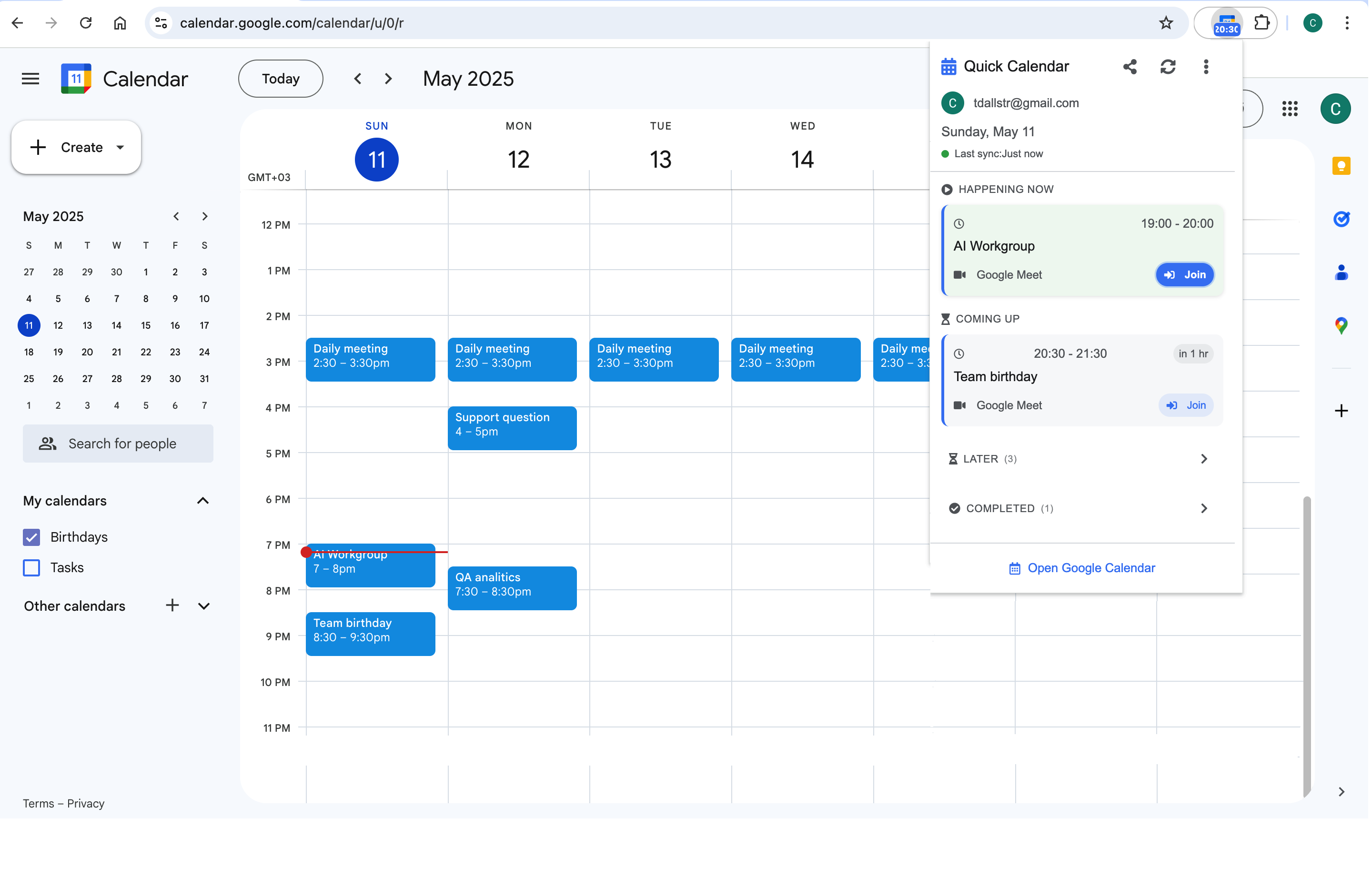
Habits 4 and 7 live in the seams — joining on time, writing notes before the next thing starts. The countdown chips and join buttons of Calendar Extension for Google Calendar™ service exactly those seams from the toolbar: the meeting starts without the scramble, and the 10-minute buffer after it is where the three lines get written.
Frequently asked questions
Hygiene decays when it has no owner-moment pairs: "we should write agendas" is a wish; "organizers write the goal line at creation, and meetings without one convert to async" is a mechanism. Re-adopt the three before-habits only, with named enforcement, and let the rest follow once those hold.
Rotate it explicitly — chair is a hygiene function (start on time, run the parking lot, say the decision), not a status. Rotation also spreads the skill and the empathy: people run tighter meetings after a month of chairing others’.
Only as a decided norm rather than an ambient guilt: pick a rule per meeting type (on for 1:1s and firsts, optional for standups) and write it in the invite. The hygiene failure isn’t cameras-off; it is every meeting renegotiating the question silently.
The goal line (#1) — it is free, it kills the worst meetings pre-birth, and it makes every surviving meeting easier to run and to end. Pair it with Speedy meetings the same week; one is quality, the other is recovery, and together they change how the week feels within a fortnight.