First, confirm it’s the meetings
Three markers distinguish meeting exhaustion from ordinary tiredness: you feel drained before the day starts, just from looking at the calendar; you can’t remember what half of yesterday’s meetings decided; and your real work has migrated to evenings. Two of three means the calendar is the problem, and the calendar is where the fix goes.
Week one: triage
Day 1 — count, don’t judge (20 minutes)
Open week view and count three numbers for last week: total meeting hours, meetings where you spoke for under two minutes, and recurring meetings you’d cancel if cancelling were free. Write the three numbers down — recovery needs a baseline, and "too many" is not a number.
Day 2 — the silent-attendee purge
Every meeting where you were an audience member gets one of two treatments: decline the series with a note ("stepping out to cut my meeting load — notes are enough for me, ping me if my part comes up"), or downgrade yourself to optional and stop attending by default. This step alone typically recovers 2–4 hours a week, and nobody resents it — audiences are invisible.
Day 3 — shrink what remains
Change your Calendar defaults so the diet sticks: Settings → Event settings → Speedy meetings, which makes 30-minute meetings end at :25 and hour meetings at :50. Then re-time your own recurring meetings down one notch: 60 → 45, 30 → 25. The content survives; the padding doesn’t.
Days 4–5 — install the gaps
Block 25 minutes after your two heaviest meeting clusters and title the blocks honestly: "Recovery — no booking". These are not focus blocks; they are for the walk, the water, writing down the three decisions before they evaporate. Exhaustion is mostly the absence of these seams, not the meetings themselves.
Week two: rebuild
With the load cut, put structure where the exhaustion came from. One meeting-free morning (not a whole day yet — mornings are winnable), defended for the full week. One batching pass: drag your surviving recurring meetings toward two designated meeting-heavy afternoons, so context-switching stops shredding the other three. And one re-count on Friday: compare against Day 1’s numbers. Seeing "14 hours → 9 hours" in your own handwriting is what makes the protocol feel like recovery instead of rearranging furniture.
The guardrails that keep it cut
- New recurring meetings start with an end date. Eight weeks, then the series expires and must justify renewal. Immortal meetings are how the load regrows.
- Your two heaviest days stay visible. If Tuesday crosses five meeting-hours again, something gets moved that week — not endured for a quarter.
- Protect the recovery gaps like client calls. The first time you give one away, you have announced they’re free.
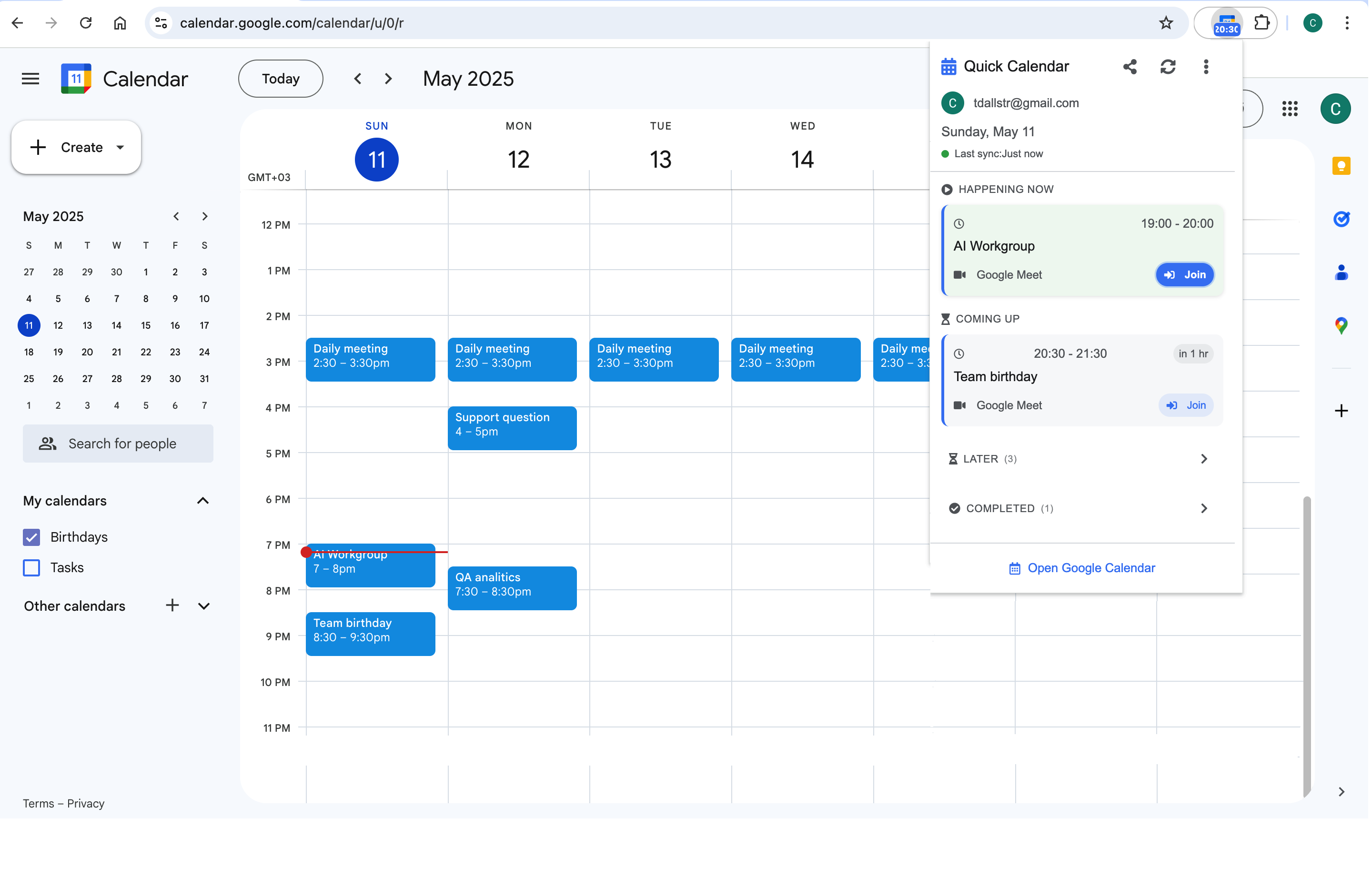
During recovery weeks the day changes constantly — declines land, meetings shrink, gaps move. A toolbar timeline like Calendar Extension for Google Calendar™ keeps the reshuffled day visible between meetings, so checking "what’s next and how long do I have" stops being another small tax.
Frequently asked questions
Less rude than attending resentfully with your camera off. The decline note carries the tone: name the reason (cutting meeting load), offer the async path (notes, ping me if needed), and leave the door open for one-off invites. Most organizers quietly envy it.
Bring the Day 1 numbers, not feelings: "I’m at 14 meeting-hours a week and my project work has moved to evenings — which two of these should I drop or delegate?" Numbers convert the conversation from complaint to staffing decision, which is a manager’s home turf.
Yes — an unscheduled gap is just the next meeting’s parking spot. The block’s job is to be visible to the "find a time" algorithm and to colleagues. Fifteen minutes works; twenty-five is better after double-headers.
The schedule improves in week one; the felt exhaustion usually lags by two to three weeks, because you are also repaying a sleep-and-evenings debt. If nothing lifts after a month at visibly lower load, the problem may be the meetings’ content — conflict, unclear ownership — rather than their count.