The recurrence engine, beyond "Weekly"
The dropdown’s presets hide the real tool: Custom… opens an engine that handles almost any real-world cadence — every 2 weeks on Tue/Thu, monthly on the first Friday, annually. The patterns worth knowing:
- Fortnightly: Custom → repeat every 2 weeks, tick the weekday. The single most under-used cadence — half the weekly meetings in existence want to be this.
- "First Monday" vs "the 3rd": monthly recurrence offers both day-of-month and ordinal-weekday forms; pick from the dropdown after choosing Monthly. Retro on the first Monday survives; retro on the 3rd lands on weekends and dies.
- Weekday-only dailies: "Every weekday (Mon–Fri)" is a preset — the right shape for standups and focus blocks, sparing your weekend view.
The three-way edit prompt (where series get corrupted)
Editing any instance triggers the choice that confuses everyone: This event / This and following / All events. The mental model: This event creates an exception (one instance moved or changed; the series is untouched); This and following splits the series at this date (old rules before, new rules after — the right tool for "from March we meet at 10:00"); All events rewrites history and future both. Corruption almost always comes from answering "All events" to a one-off question — moving next Tuesday’s sync to Wednesday forever because a dialog was dismissed too fast.
Exceptions are sturdier than people fear: skip one instance (delete → This event), move one instance, change one instance’s guests — the series carries on around the scar. But exceptions don’t survive series-level rewrites: an "All events" time change discards prior single-instance moves, which is why December’s carefully re-arranged meetings snap back after a January "small adjustment".
End dates: the discipline half
The recurrence dialog’s Ends section (Never / On date / After N occurrences) is where calendar hygiene is won. "Never" is the default and the disease — it is how orgs accumulate meetings whose purpose nobody remembers. The rule that fixes it forward: every new series ends after 8 weeks or ~10 occurrences. Renewal takes thirty seconds when the series expires; the expiry is what forces the "does this still earn its slot?" question that standing meetings otherwise never face. For your existing "Never" series, one quarterly audit pass — open each, add an end date — converts the legacy stock.
Recurring ≠ meetings only
The same engine runs personal infrastructure: the daily focus block (weekday recurrence, Busy, no start notification), the Friday 15-minute weekly reset, the monthly "calendar audit" slot, the fortnightly 1:1 prep buffer. These series are exempt from the end-date rule — they are systems, not meetings — but they benefit from the same annual review: a recurring block you have ignored for two months is teaching you to ignore blocks.
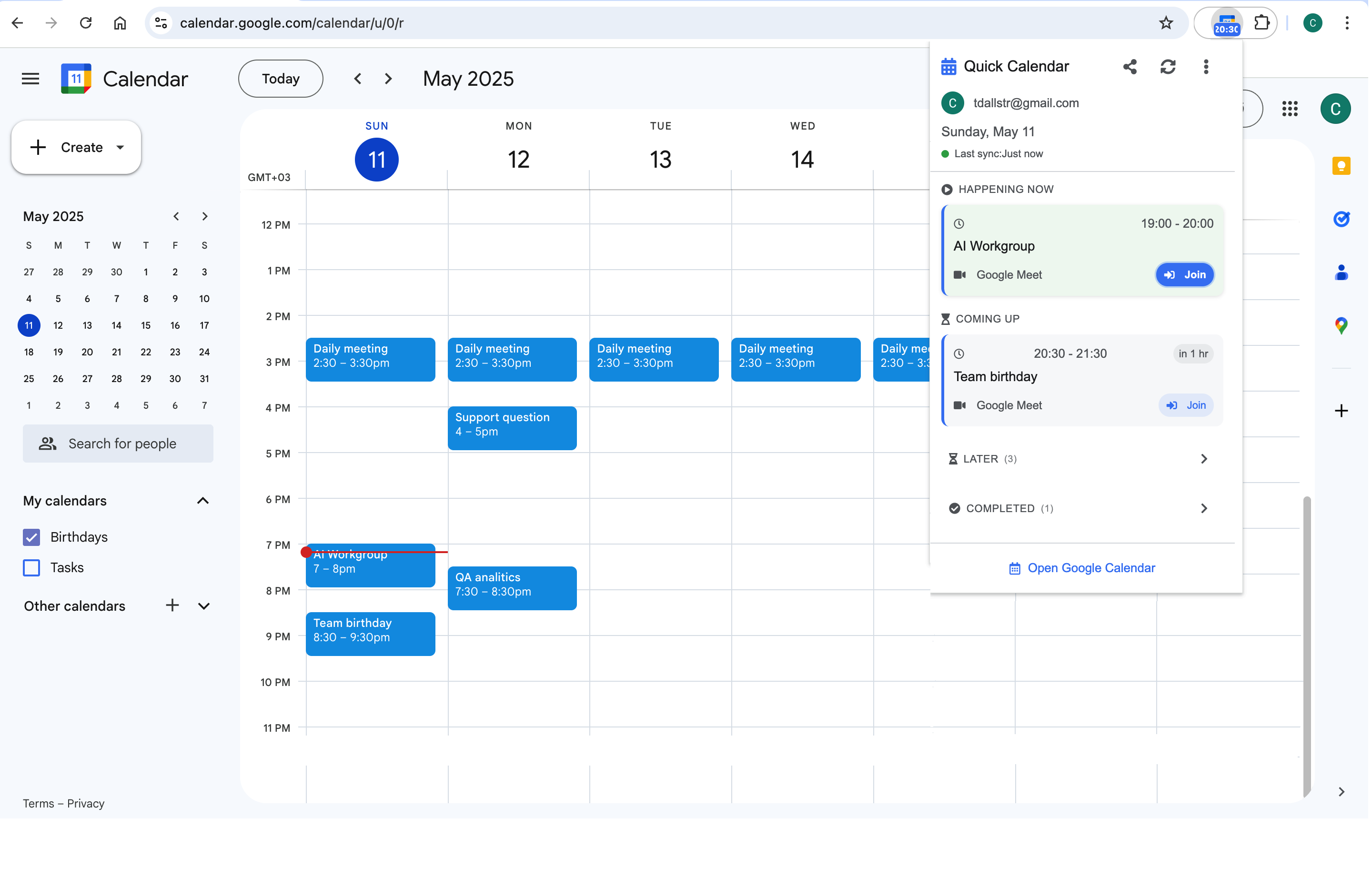
A well-built recurring layer means your default week is already drawn — the daily question is only what changed. That question is a glance: a toolbar view like Calendar Extension for Google Calendar™ shows today’s actual shape (series, exceptions, and all) in one click, which is how the recurring machinery stays ambient instead of demanding a tab.
Frequently asked questions
A classic split-brain: you (or they) modified one instance while an "All events" edit later rewrote the series, discarding exceptions on one side only. Fix by re-issuing the authoritative time with "This event" on the affected date and telling guests to take the update; prevention is respecting the three-way prompt.
Yes — open the series → three-dot menu → "Change owner", enter the new owner’s address. They accept, and the whole series (history, guests, exceptions) transfers. This beats delete-and-recreate, which orphans every exception and re-invites everyone.
It keeps firing from the ghost account until the account is deleted — then it vanishes for everyone, sometimes mid-quarter. Offboarding checklists should include transferring owned series (see above); if you attend a ghost-owned meeting that matters, flag ownership now, not the week it disappears.
Occurrences for cadence-defined commitments ("10 sessions of onboarding"), date for calendar-defined ones ("through end of quarter"). Teams mostly want the date form — it aligns the renewal question with planning rhythms instead of arithmetic.