The babysitting test
Before connecting anything, ask: when this sync breaks silently, what is the blast radius? A conferencing integration that fails is obvious (no link in the invite) and self-announcing. A task-sync that fails is invisible until the missed deadline. Integrations whose failures are loud and cheap are keepers; integrations whose failures are quiet and expensive need a strong weekly payoff to justify themselves.
Tier 1: connect these once, forget them
Video conferencing (Zoom / Teams / Webex → Calendar)
If your org is not Meet-native, install the conferencing add-on from Google Workspace Marketplace so every event gets a join link at creation. Loud failure mode, daily payoff — the definitive Tier 1 integration. Meet users have this built in.
Chat status (Slack / Teams ← Calendar)
Slack’s Google Calendar app syncs your status ("In a meeting") and auto-DNDs during events, killing the "you there?" pings mid-call. Read-only from the calendar’s perspective, so nothing can corrupt; the failure mode is a stale status, embarrassing at worst.
Booking (Google appointment schedules / Calendly → Calendar)
If outsiders book time with you more than twice a month, a booking layer that writes into Calendar and honors your busy time replaces the worst email genre ever invented. Native appointment schedules cover most solo needs; dedicated tools pay off at recruiter/sales volume.
Tier 2: valuable, but mind the direction
Tasks (Google Tasks, Todoist, TickTick)
The productive direction is list → calendar: dragging chosen tasks into real time slots (Google Tasks does this natively in the side panel). The dangerous direction is auto-scheduling everything, which fills your week with machine-placed obligations you feel no ownership of. Choose tools that let you place tasks deliberately.
Notes (Notion / Obsidian / Docs ← Calendar)
Meeting-notes templates that attach a doc per event are genuinely useful for recurring calls — the agenda accumulates in one place. Keep the flow one-way (calendar feeds notes); tools that want to write pages back into your schedule fail the babysitting test.
Tier 3: usually not worth the sync
Two-way syncs between multiple calendar systems (Google ↔ Outlook ↔ Apple) are the classic quiet-failure integration — duplicate events, ghost declines, timezone drift. If you live across ecosystems, prefer one-way subscriptions (ICS feeds render read-only) or consolidate. Same verdict for most "AI scheduling assistants" that rewrite your calendar autonomously: when their model of your priorities is wrong, the failure is silent and the blast radius is your week.
The integration that is actually a surface
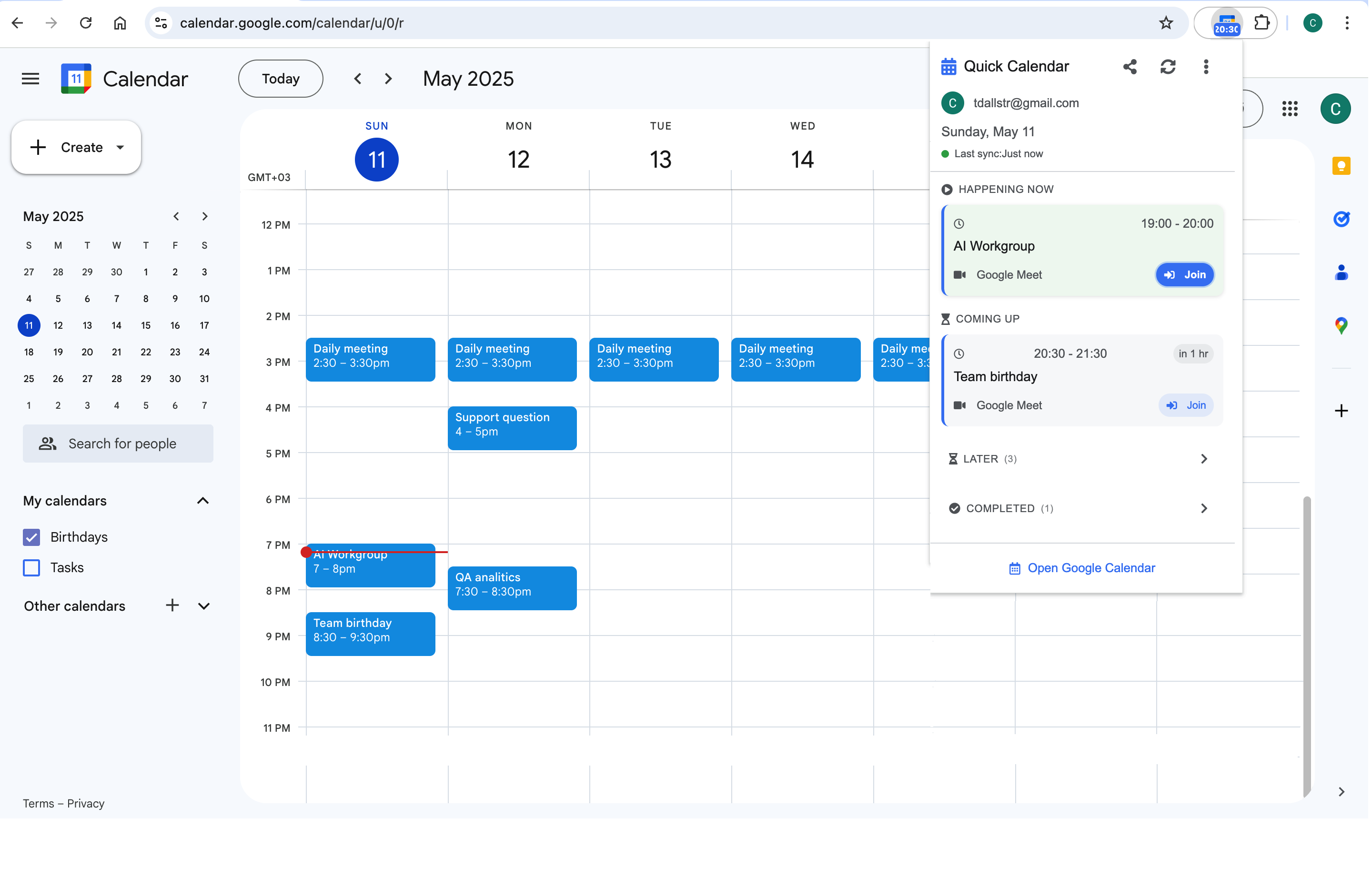
One category adds zero syncs because it reads what already exists: browser-level surfaces. Calendar Extension for Google Calendar™ connects to nothing new — it renders your existing Google Calendar as a toolbar timeline with time-to-event chips and join links. No second database, no babysitting, which by the test above makes it the cheapest "integration" on this page: all payoff, no failure mode beyond a popup that you reload.
Frequently asked questions
Two places: Google Account → Security → Third-party apps with account access (OAuth grants), and Calendar’s own Settings and sharing per calendar for direct shares. Quarterly pruning of the first list is basic hygiene — revoking is instant and nothing breaks silently except the app you just decided not to trust.
Marginally — Marketplace listing requires a review and admin controls exist for org-wide policies. The real questions are the same everywhere: scope requested (read-only vs. edit), where data is processed, and whether the vendor names a privacy policy. Edit-scope for a tool that only displays data is the red flag.
Usually the add-on’s auth token expired — the integration is installed but silently signed out. Open the add-on’s settings and re-authenticate. This is the loud-failure property working as intended: the missing link tells you before the meeting does.
Native and reliable: publish an ICS feed (Settings → your calendar → Integrate calendar → Secret address) and subscribe from the other side — one-way, read-only, unbreakable. True two-way sync requires third-party middleware, which reintroduces the quiet-failure class you were trying to avoid.