Interview loops: the scheduling operation
A single onsite loop is 4–6 interviewers × candidate availability × room/video logistics — HR’s daily Tetris. The mechanics that scale it: interviewer availability as infrastructure (interviewers keep working hours honest and publish interview-friendly windows — recruiting negotiates once for the quarter, not per loop); loop templates as duplicable event sets (the 4-slot pattern with prep buffers built in, Ctrl-dragged onto each new candidate day); candidate-facing hygiene — each event titled with stage and interviewer role, agenda in the description, join links tested, because the loop’s calendar quality is the candidate’s first experience of how the company runs. And the meta-rule: debrief slots are booked with the loop, same day — undebriefed loops decay into hallway impressions within 48 hours.
The privacy architecture (non-negotiable)
HR’s calendar leaks are career-enders — "Exit conversation: [name]" visible to a curious org, comp-review blocks that telegraph timing. The architecture: a separate confidential calendar, shared with no one, for anything case-related — rendered as bare busy time to the org; neutral titling even there ("ER-2024-031", never names — calendars get screen-shared by accident); event-level Private as the fallback when confidential items must live on the main calendar; and the screen-share reflex — HR presents with the calendar closed, always, because week view in a meeting is the leak nobody logs. Audit quarterly: who has what access tier to which of your calendars — the answer drifts.
Cyclical seasons: HR’s year is a calendar shape
HR load is seasonal by design — review cycles, comp planning, enrollment, engagement surveys — and each season is schedulable months out. The move: at year-start, block the season skeletons forward ("Comp planning: heavy weeks Mar 3–21" as all-day markers plus protected work blocks inside them), and decline into them — the seasons are why HR says yes to everything in February and drowns in March. A season visible on the calendar in January is a season you can pre-negotiate around; one discovered in-week is a fire.
Recurring rituals with teeth
Three standing blocks: case-work time (daily 60–90 minutes, confidential-calendar, for the documentation and follow-through that ER work actually is — case work done in scraps produces scrap-quality records, and records are the job); manager office hours (two posted windows weekly — the "quick HR question" stream gets a home, and you get pattern-visibility on what managers are struggling with); and the pipeline sync with recruiting kept to 25 minutes with the dashboard pre-read, because HR-recruiting syncs are the classic meeting that doubles annually without gaining content.
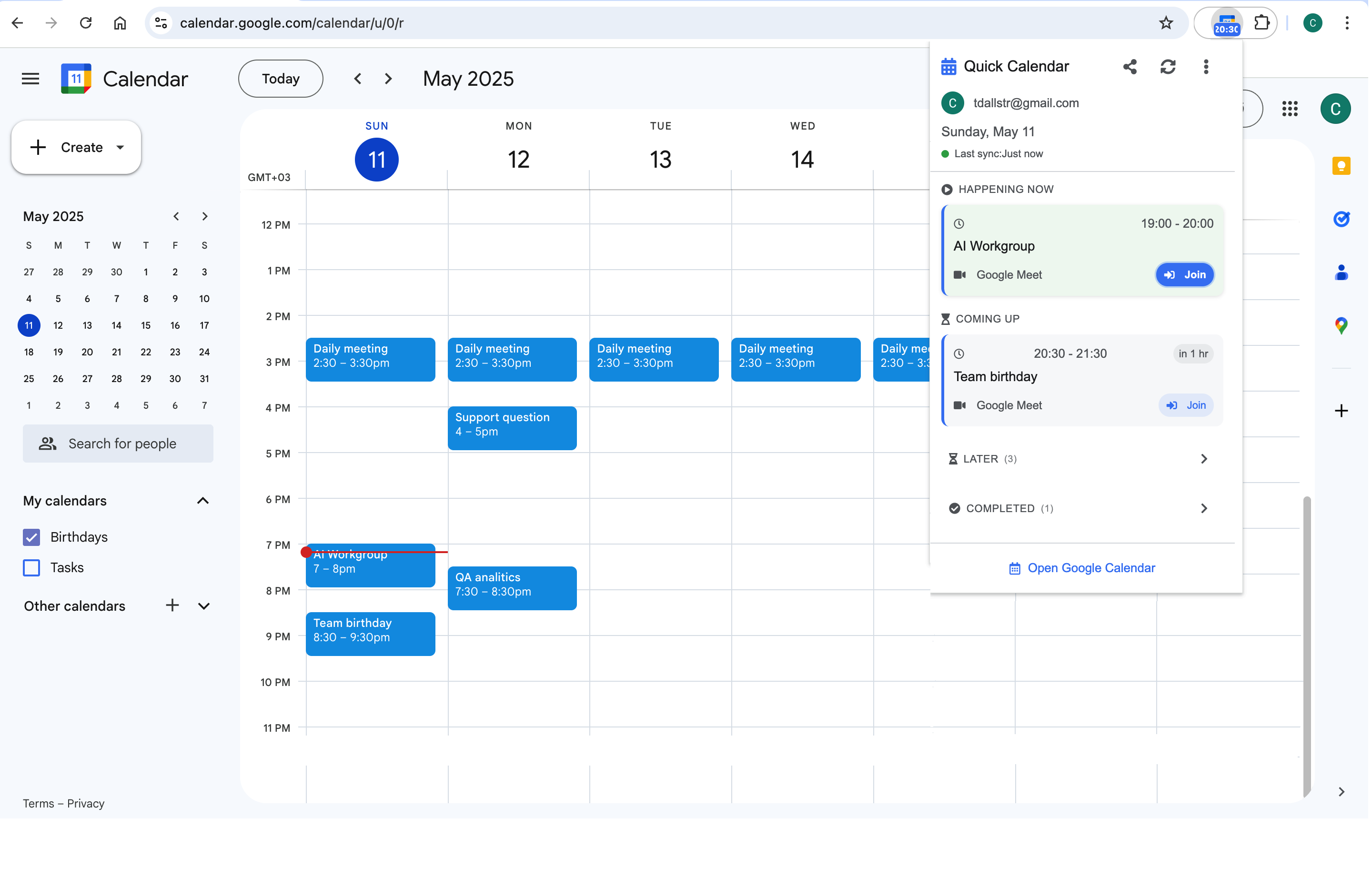
Loop-heavy days are seam-storms — candidate, debrief, case block, manager window — with confidentiality riding on every transition. A toolbar glance via Calendar Extension for Google Calendar™ shows what’s next and its countdown without opening the full grid in front of anyone, which for HR is not convenience but hygiene: the day’s state, one click, no screen full of names.
Frequently asked questions
Two mechanisms: quarterly-negotiated interview windows (declines drop when slots land inside pre-agreed capacity), and a visible loop-health metric shared with hiring managers — decline rates by team make the cost visible where it can be managed. Individual nagging scales at zero; infrastructure scales.
Confidential calendar, neutral title ("Meeting — 1:1"), and you send the invite so the event exists on your terms. The employee’s own calendar shows a plain meeting with you, which is deniable ambiguity by design — the org reads a leadership check-in, not an escalation.
Free/busy only, including to the CHRO’s EA — with the confidential calendar excluded from any delegation. Leadership needs your availability, never your case-load shape; even busy-block patterns can telegraph an active investigation, which is why case work lives in consistent daily blocks rather than reactive clusters.
The highest-stakes version of everything above: a dedicated confidential calendar for the project (deleted after), code-named events, no attendee lists that reconstruct the org chart, notification-silent, and the communications-day schedule built as a minute-by-minute run-of-show event set. If it feels like over-caution, it is calibrated correctly.