A sorting rule for calendar futurism
One question separates durable trends from demo-ware: does it reduce the number of decisions a human makes about time, or just relocate them? Features that genuinely absorb decisions (auto-declining focus time, working-hours warnings) stick. Features that generate new decisions to babysit (review the AI’s proposed reshuffle, approve the sync conflict) churn users and fade.
Adopt now: already past the hype
Calendars that say no for you
The quiet revolution is defensive automation: Out of office auto-declines, Focus time with decline messages, working-hours warnings. This class works because refusing is the decision humans systematically avoid — delegating it to the calendar removes a real cost. Expect defaults to keep shifting from "calendar as open parking lot" toward "calendar as guarded budget".
Glanceable surfaces
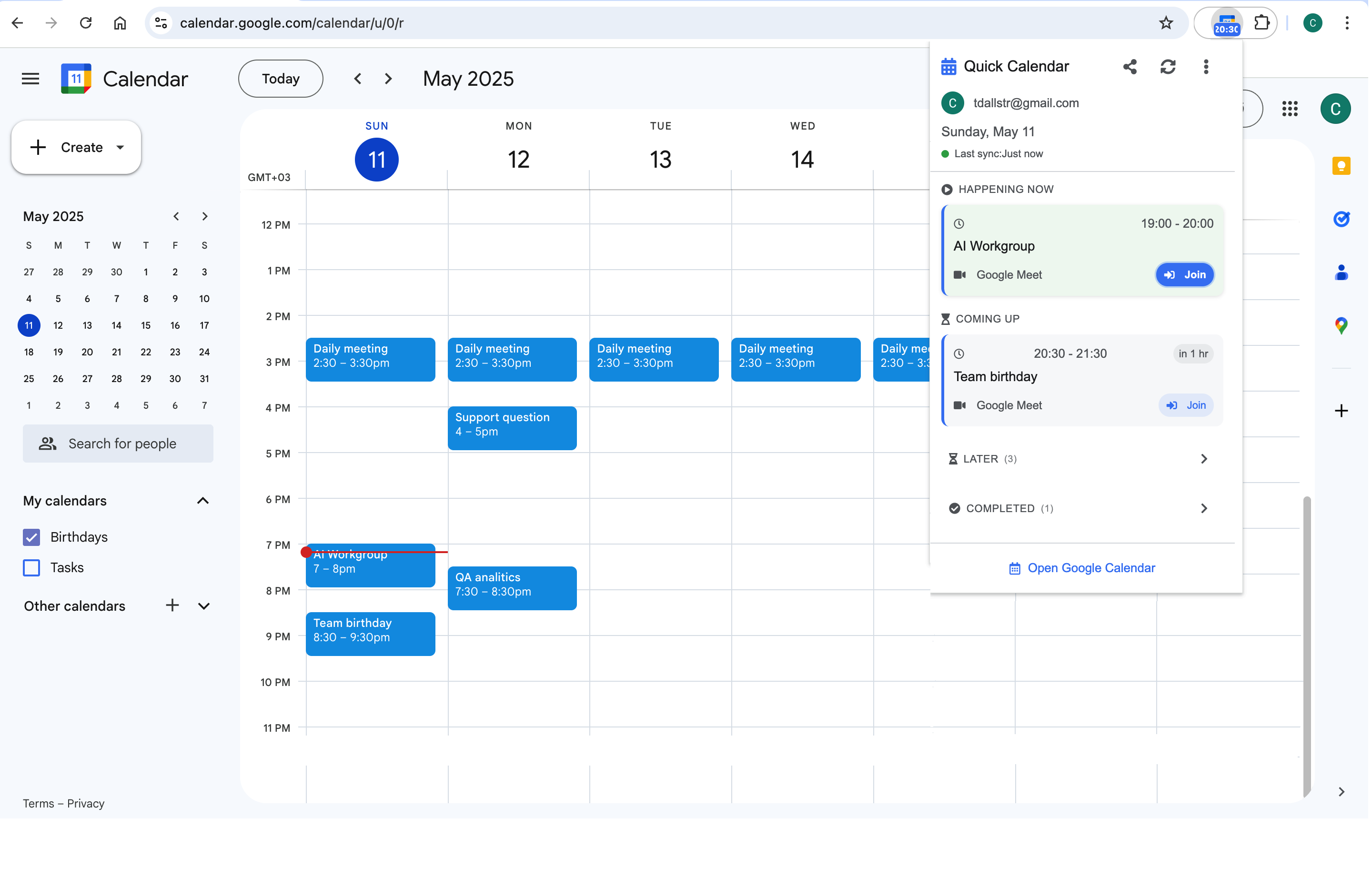
The calendar is escaping its tab: phone widgets, watch faces, menu-bar countdowns, toolbar popups. The insight behind the trend — most calendar interactions are three-second reads, not planning sessions — is permanent, so the surfaces are too. This one you can adopt today for free; it is a browser extension, not a platform shift.
Watch: real, but the shape is unsettled
AI placement, not AI planning
Scheduling assistants that place constrained items well ("find 3 hours for this before Friday, mornings preferred") are converging on genuinely useful. Full-week AI planning — hand over the calendar, receive a life — keeps failing the sorting rule: reviewing the machine’s week costs more than planning your own. Bet on copilots for placement, skepticism for autonomy.
Meeting-cost visibility
Tools increasingly price meetings in attendee-hours (and sometimes salary). The data layer is trivial; the open question is social — whether orgs can look at "this weekly costs 260 hours a year" and act. Where leadership engages, this becomes the strongest anti-meeting-bloat force available; where it doesn’t, it is a dashboard.
Calendars merging with tasks
Every major player is folding to-dos into the time grid. The durable version keeps the human in the drag-and-drop loop (tasks earn slots deliberately); the fragile version auto-schedules forty tasks and calls the resulting wall a plan.
Ignore: repeatedly promised, structurally stuck
Universal frictionless cross-platform sync — two-way sync across Google/Outlook/Apple has been "next year" for a decade; the incentives (platform lock-in) point the wrong way, and ICS one-way feeds remain the honest tool. Calendar as social network — public calendars, event feeds, follower models: repeatedly launched, repeatedly abandoned, because a calendar is a budget, and budgets are private. Fully autonomous negotiation agents — two AIs haggling over your lunch slot demos beautifully and fails the trust test in production.
What stays true regardless
Every durable trend above serves the same three-second questions people have asked since paper planners: what’s next, when, how much room before it. Tools will keep changing; the questions won’t. A setup that answers them instantly — tuned notifications, a glanceable surface like Calendar Extension for Google Calendar™ in the toolbar, a calendar quiet enough to read — is future-proof in the only sense that matters: it serves the invariant, not the fashion.
Frequently asked questions
No — the opposite. AI placement tools work on top of exactly the fundamentals that pay off today: honest events, tiered notifications, visible working hours. A messy calendar plus AI is a messy calendar with confident mistakes.
Defensive automation, because it fires without your attention: enable Focus time auto-decline (Workspace) or use Out of office blocks for protected days. It is the rare feature class where the benefit arrives while you are not looking.
In pockets — teams that review the numbers in retros kill or shrink standing meetings measurably. The tool is inert without a ritual attached; if you adopt one, pair it with a quarterly recurring-meeting audit, or it becomes wallpaper.
Move your daily checks off the full calendar tab onto a glanceable surface (widget, menu bar, toolbar popup). It is the trend with zero downside risk, works with every future tool, and pays back thirty times a day starting immediately.