The ecosystem question
The choice between Google Calendar and Apple Calendar is often determined by which ecosystem you live in. Apple Calendar is best-in-class on iPhone, Mac, and iPad — it is deeply integrated with Apple's native apps, iCloud sync is seamless, and Siri integration works naturally for voice-based scheduling.
Google Calendar works on every platform equally — Android, iOS, Windows, Mac, Chromebook. It does not have the native integration depth of Apple Calendar on Apple devices, but it is consistent across all of them.
Sharing and collaboration
Google Calendar's sharing capabilities are significantly more flexible than Apple Calendar's. You can share specific calendars with anyone who has a Google account, control what level of detail they can see, and embed calendars on websites. Public event sharing is simpler.
Apple Calendar's sharing works within iCloud and relies on invitations to Apple ID accounts. For families or close collaborators all on Apple devices, this is frictionless. For teams or collaborators who use non-Apple accounts, it is more limited.
Cross-platform access
Google Calendar has full-featured apps on all major platforms. It works equally well in Chrome on Windows and Safari on Mac. The web version is feature-complete.
Apple Calendar is primarily excellent on Apple devices. The web version (via iCloud.com) is functional but not as capable as the native apps. Windows users and Android users have limited options for accessing Apple Calendar.
Practical choice: if you use only Apple devices (iPhone, Mac, iPad) and share primarily with people who do the same, Apple Calendar's native integration produces a better experience. If you work on any non-Apple devices or need to share calendars with a broader group, Google Calendar is more practical.
Using both together
Many people use both: Google Calendar for work scheduling and external collaboration, Apple Calendar as the native aggregator on iPhone and Mac that displays all calendars including the Google ones. Apple Calendar can subscribe to Google Calendar feeds and display them natively.
How Schedule Calendar helps
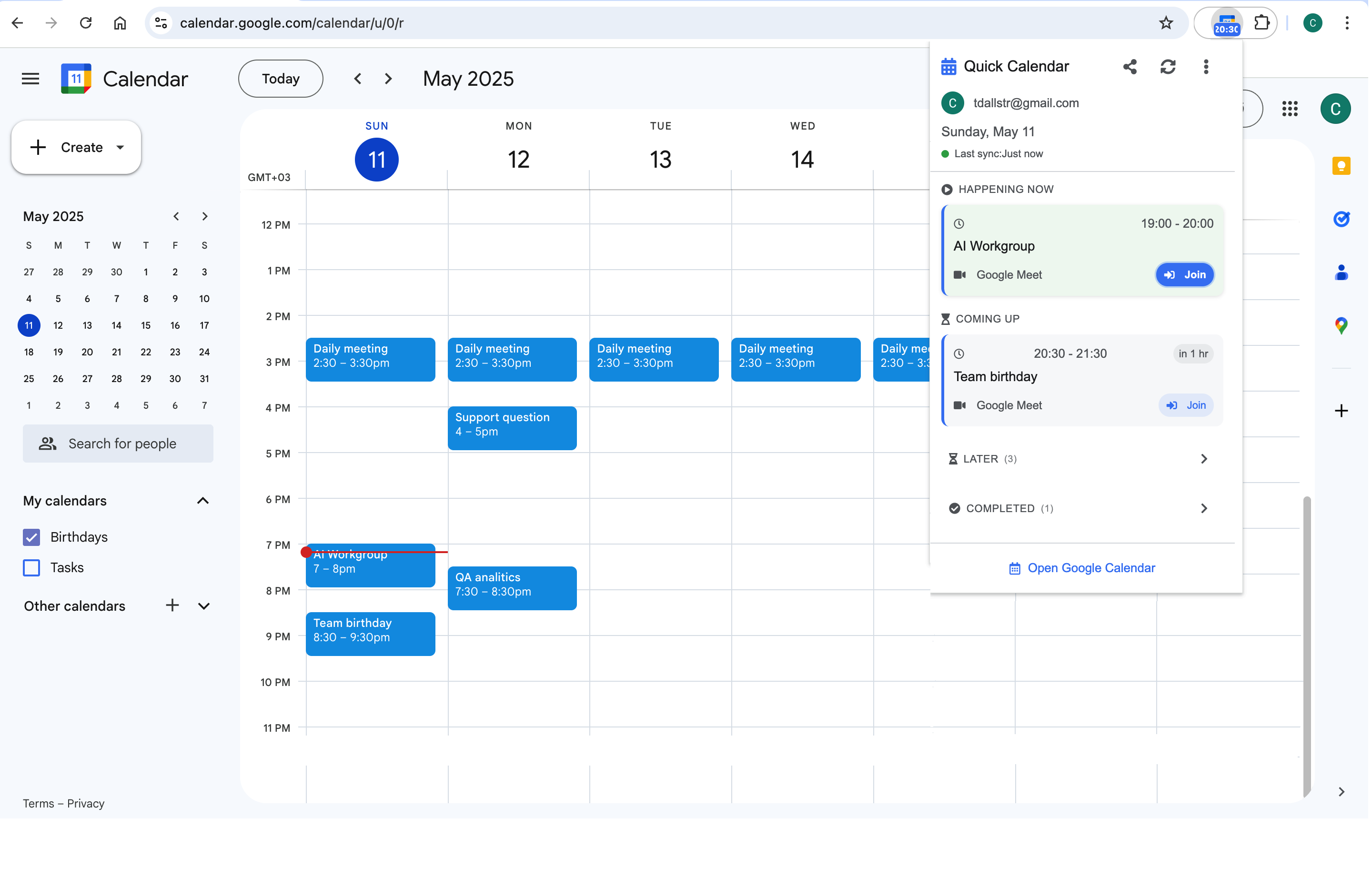
Schedule Calendar is a Chrome extension that works with Google Calendar specifically. It provides a compact popup view and time-to-next-event display in the browser toolbar — useful for people who use Google Calendar for work scheduling and spend much of their day in Chrome.
Frequently asked questions
Google Calendar is cross-platform with strong sharing and collaboration features, best integrated with Google Workspace. Apple Calendar is native to Apple devices with deep iOS/macOS integration and Siri support, best for users who primarily use Apple hardware and share with other Apple users.
Apple Calendar is better for users who exclusively use Apple devices and want native integration with iPhone, Mac, and iCloud. Google Calendar is better for cross-platform use, external collaboration, and teams. Many people use both: Google Calendar for work and external sharing, Apple Calendar as the native display on iPhone and Mac.
Yes. Apple Calendar can subscribe to Google Calendar feeds via CalDAV or iCal subscription links. Once connected, Google Calendar events appear natively in Apple Calendar on iPhone and Mac. Events still need to be edited in Google Calendar — Apple Calendar displays them but does not sync edits back.
Yes, accessible at iCloud.com. The web version is functional for basic event management but less capable than the native Mac and iPhone apps. It lacks some features available in the native apps and is generally considered secondary to the native experience.
Sharing Apple Calendar with non-Apple users is more limited than Google Calendar sharing. iCloud calendar sharing requires the recipient to have an Apple ID or access via iCloud.com. For sharing with Android users or non-Apple collaborators, Google Calendar's sharing is more practical.
Google Calendar works best with Chrome extensions. Most calendar extensions for Chrome — including Schedule Calendar — are built specifically for Google Calendar, providing toolbar access, time-to-next-event display, and compact popup views. Apple Calendar does not have equivalent Chrome extension support.