Anchors and water
Think of the flexible week as a harbor: anchors are the few commitments that do not move (client calls, school pickup, the team sync), and water is everything else — work that flows around the anchors differently every day. Rigid calendars fail flexible lives by scheduling the water; chaotic calendars fail by forgetting the anchors. The craft is in scheduling exactly one of the two.
Build the anchor layer (30 minutes, once)
- List commitments that are truly fixed. For most flexible workers it is 4–8 items a week. Be strict: "I like mornings for writing" is not an anchor; "Thursday 14:00 client call" is.
- Enter them as recurring events with real notifications. These are the only events that deserve alerts in a flexible system — everything else is ambient.
- Set working hours generously wide (Settings → Working hours & location) — say 8:00–18:00 across your working days. This is your availability envelope for others, inside which you flex privately. Flexibility works best when the outside world sees a stable shell.
- Add one recurring "planning anchor": 15 minutes each morning (or the prior evening) where the day’s water gets shaped. This meta-anchor is what makes the rest safe to leave unscheduled.
Shape the water daily, not weekly
In the 15-minute planning anchor, place two or three soft blocks for the day — deep work in your best energy window, admin in the trough, errands where they fit. Two rules keep them honestly soft: they are created for today only (never recurring — recurrence is for anchors), and moving them is a zero-guilt operation. The calendar entry is a sketch of intent, not a contract; on a flexible schedule, re-drawing the sketch daily beats defending a weekly masterplan that reality shredded by Tuesday.
Guard the two failure modes
Drift: flexibility becomes formlessness
The tell is anchors starting to slide — "I’ll move my planning block, just today." Anchors are the 10% that is rigid so the 90% can flex; when they move, the system has no skeleton. If an anchor keeps needing to move, re-negotiate it once, properly, to a time that holds.
Creep: the water quietly freezes
The opposite tell: your soft blocks have become recurring, your days look identical, and you have rebuilt a 9-to-5 with extra steps. Audit monthly: count recurring events. If the number grew without a new external commitment, thaw something — flexibility you never use is just rigidity with good branding.
Flexibility with other people in it
Flexible schedules meet the world at two seams. For colleagues: publish two or three standing availability windows ("reachable 11–12 and 15–17 most days") instead of broadcasting your whole fluid day — predictable windows in an unpredictable schedule is what earns trust. For household logistics: shared anchors (pickup, dinner) go on a shared calendar, so re-flowing your work water never silently swallows a family fixed point.
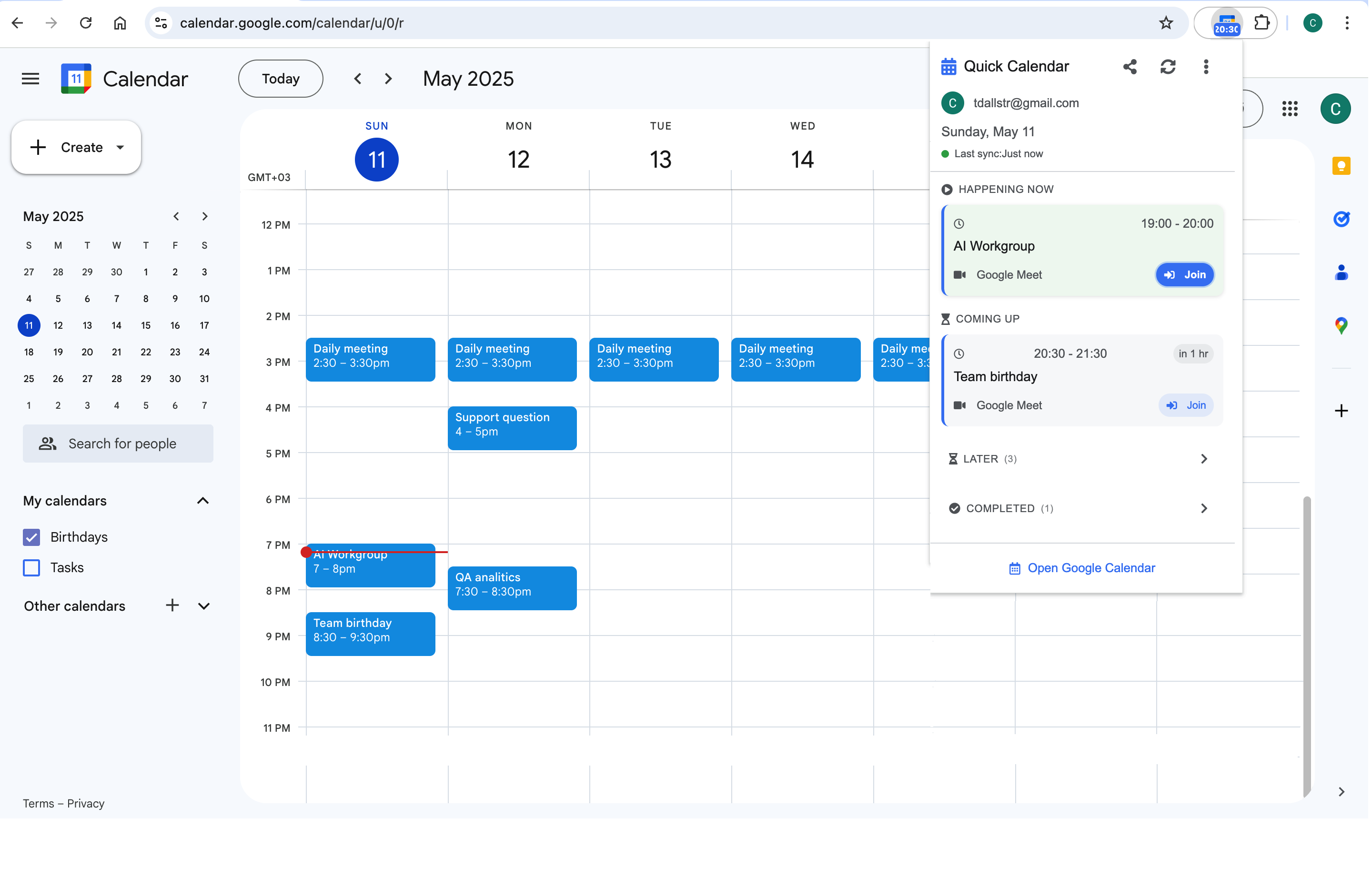
A day of soft blocks lives and dies by the mid-day reshuffle — "the call ran long; where does the writing block land now?" A toolbar timeline like Calendar Extension for Google Calendar™ makes that re-flow a ten-second glance-and-drag rather than a full calendar session, which is what keeps daily re-planning cheap enough to actually do.
Frequently asked questions
Time blocking schedules the work; the anchor model schedules the skeleton and deliberately leaves the work fluid. Blockers plan a week ahead; anchor-and-water plans 15 minutes ahead each day. If your days are self-similar, block. If no two days match, anchor.
A stable shell: wide working hours, your anchors as busy time, and (if you take bookings) an appointment schedule limited to your availability windows. Clients need predictable ways in — they never need to see that Tuesday’s writing block became Thursday’s.
Put them on: placing work in actual hours forces the budget question a list dodges ("these three things do not fit around today’s anchors"). The difference from rigid blocking is the zero-guilt move rule, not the absence of entries.
That is exactly why the water is shaped daily: at the morning planning anchor you know today’s sleep, mood, and meeting load. Place the deep block in today’s best remaining window rather than an averaged "peak hours" slot chosen last month.