The default: titles for your team, shape for everyone else
Transparency is not one dial; Google Calendar gives you tiers, and remote teams work best on a two-tier default: "See all event details" for your immediate team, "See only free/busy" for the rest of the org. Your team gets context — they can tell a customer escalation from a haircut and make good judgment calls about interrupting. Everyone else gets shape: enough to schedule around you, nothing to gossip about.
The mechanics live in Settings and sharing: org-wide free/busy under Access permissions for events, per-person detail access under Share with specific people or groups — ideally granted to a team Google Group rather than five individuals, so the access list survives reorgs.
What transparency buys a remote team
- Fewer "quick question — you free?" pings. When the calendar answers availability, chat stops being the availability protocol. Teams that share detail typically see scheduling threads collapse from five messages to zero.
- Interruptions land better. A teammate who can see "Deep work — release prep" chooses the 15:00 gap instead of the 10:00 one. Shape alone can’t teach that judgment; titles can.
- Timezone empathy becomes automatic. Visible working hours (Settings → Working hours & location) let a colleague in another zone see that their 14:00 is your 22:00 — before they propose it.
When more visibility makes things worse
1. When the calendar becomes a performance
If people learn that a full calendar reads as diligence, the calendar fills — with padding. Blocks appear whose real purpose is being seen. The tell: week view looks heroic while output is flat. The fix is cultural and blunt: leaders keep visible gaps in their own calendars and say out loud that empty space is where the work happens.
2. When detail-sharing exposes other people
Your calendar contains other people’s information: candidate names in interview slots, "prep for conversation with legal", a teammate’s 1:1 about a struggling project. Detail-level sharing broadcasts all of it. The event-level fix is marking sensitive entries Private (visibility dropdown in the event editor) — they render as "busy" even to detail-level viewers. If more than a handful of your events need this, you are one tier too transparent.
A one-line policy that actually gets followed
Team calendar policies fail when they are documents. The version that survives is one sentence in the team readme: "Calendars are detail-visible within the team; block focus time openly; mark anything sensitive Private instead of vague." That last clause matters — a calendar full of "Busy / Hold / Private appt" is transparency theater, worse for trust than clean free/busy sharing.
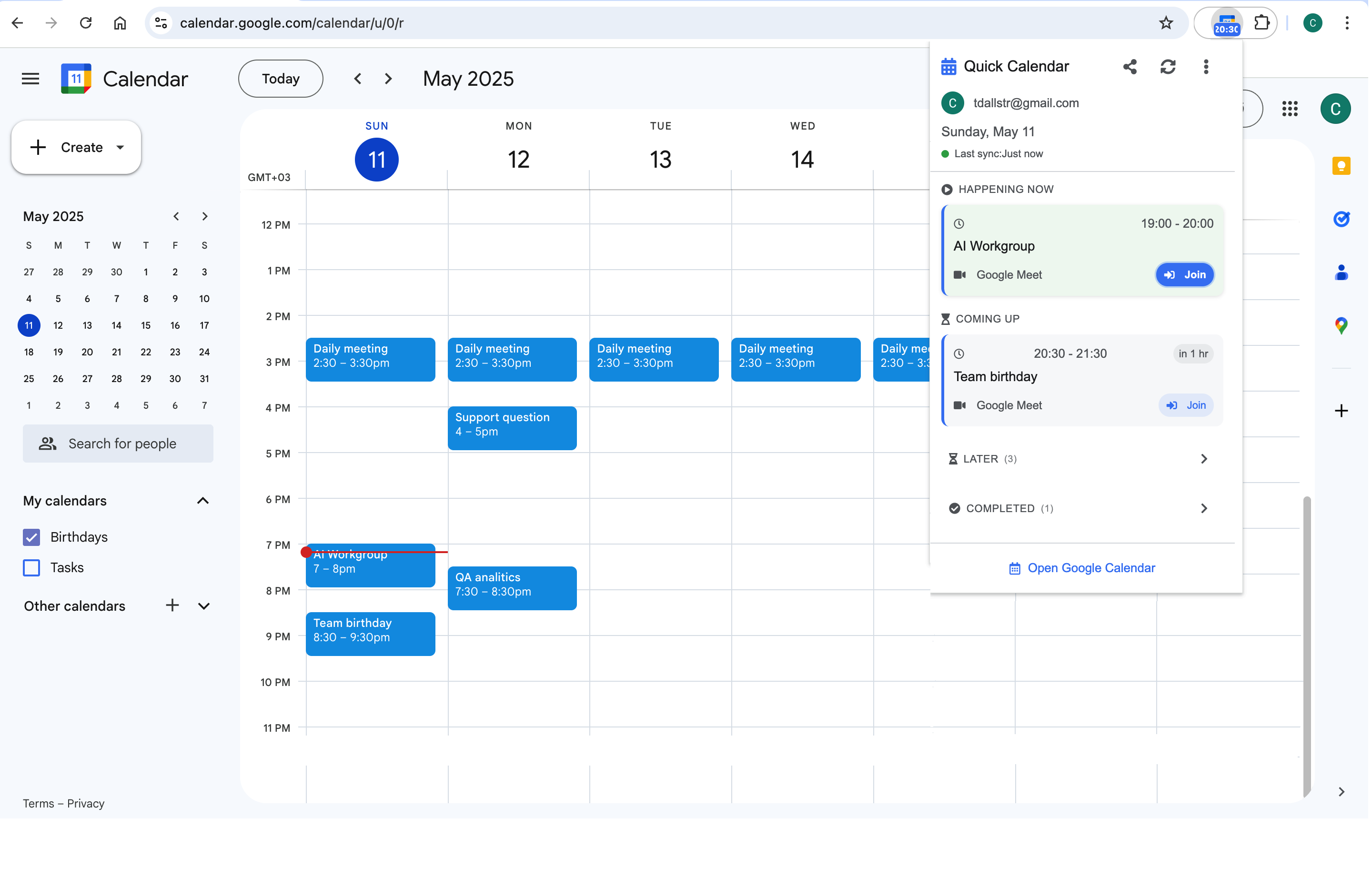
Transparency also changes how often you check your own calendar — teammates schedule into your visible gaps, so the day shifts under you. A toolbar view like Calendar Extension for Google Calendar™ makes those mid-day changes visible at a glance, without keeping the full tab open as a nervous habit.
Frequently asked questions
Usually the same tier is right: detail access. Granting a manager edit access ("Make changes") is where problems start — availability negotiations belong in conversation, not in silent calendar edits. Reserve edit rights for a genuine assistant relationship.
Set Working hours & location in Settings — colleagues see your hours when scheduling regardless of event visibility, and Google warns them when proposing outside those hours. This works even with org-wide sharing set to free/busy only.
First check what they can actually see: if they have free/busy access only, your "Focus — do not book" title is invisible to them and the block just looks like any busy slot. Either grant the team detail access, or accept invites landing there and decline with a note. The problem is usually the tier, not the teammate.
Settings and sharing → Share with specific people or groups lists every grant on your calendar with its level. It is worth a quarterly glance — access granted for a project two reorgs ago does not clean itself up.