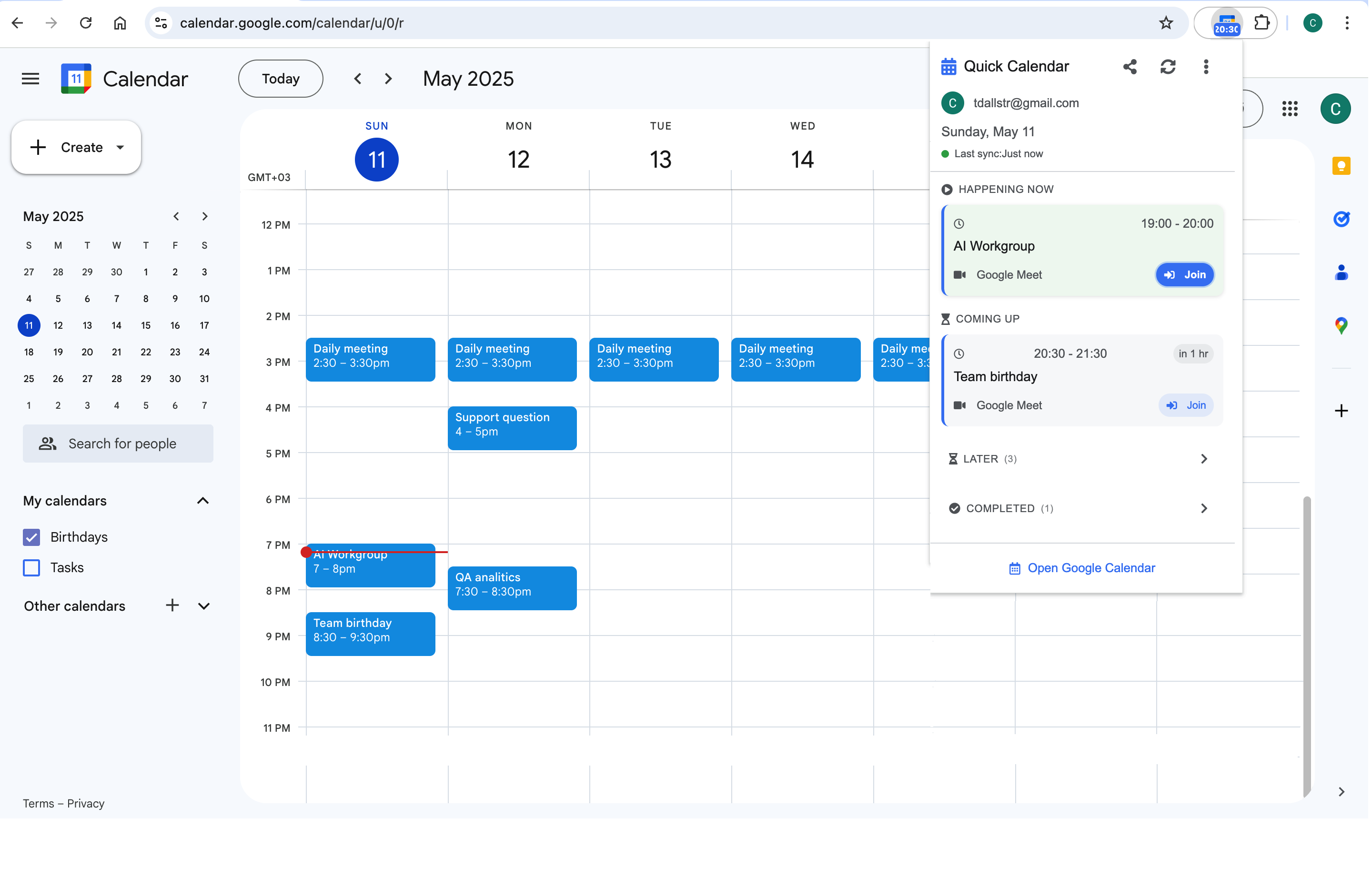
Key takeaways: weekly meeting time for the average Microsoft Teams user rose 252% between February 2020 and early 2022 (Microsoft Work Trend Index); 65% of senior managers say meetings keep them from their own work (Perlow et al., HBR, 2017); and in Microsoft’s EEG study, four back-to-back meetings raised stress-linked brain activity while 10-minute breaks kept it flat. The calendar lesson: fewer meetings, batched together, with buffers between them.
Meeting load: the dose–response curve
Microsoft’s 2022 Work Trend Index, built on aggregated Microsoft 365 productivity signals, found a 252% increase in weekly time spent in meetings for the average Teams user since February 2020, while after-hours work grew 28% and weekend work 14%. The meetings didn’t replace work; they displaced it into evenings.
Earlier survey work points the same way. In “Stop the Meeting Madness” (Harvard Business Review, 2017), Leslie Perlow, Constance Noonan Hadley, and Eunice Eun surveyed 182 senior managers: 65% said meetings keep them from completing their own work, and 71% called meetings unproductive and inefficient.
Calendar decision: meeting reduction is not a preference; it is reclaiming displaced production time. Count your weekly meeting hours once, from the calendar rather than from memory, before deciding what to cut.
Context switching: the attention residue tax
Sophie Leroy’s 2009 study in Organizational Behavior and Human Decision Processes introduced “attention residue”: thoughts about an unfinished task linger after you switch, leaving fewer resources for the next one and lowering performance on it.
Gloria Mark (UC Irvine) and colleagues shadowed 36 managers, financial analysts, software developers, engineers, and project leaders for three days. Describing that fieldwork to the Gallup Business Journal in 2006, Mark said interrupted work “was resumed, on average, in 23 minutes and 15 seconds,” usually after about two intervening tasks. A controlled follow-up, “The Cost of Interrupted Work: More Speed and Stress” (Mark, Gudith, and Klocke, CHI 2008), found people compensate for interruptions by working faster, at the price of more stress, frustration, time pressure, and effort.
Calendar decision: the gap between meetings matters as much as their count. Three meetings scattered across a morning destroy it; the same three stacked back-to-back-to-back leave the afternoon whole. Batching is not aesthetic; it is residue management.
Back-to-backs: the stress you can see on an EEG
In March 2021, Microsoft’s Human Factors Lab fitted 14 participants with EEG caps. In one session they sat through four consecutive 30-minute video meetings; in the other, the same meetings were separated by 10-minute meditation breaks. Without breaks, beta-wave activity (associated with stress) climbed over the two hours; with breaks, it stayed steady.
“Our research shows breaks are important, not just to make us less exhausted by the end of the day, but to actually improve our ability to focus and engage while in those meetings,” said Michael Bohan, senior director of Microsoft’s Human Factors Engineering group.
Calendar decision: the 10-minute buffer is physiologically load-bearing. Speedy-meetings defaults (:25/:50 endings) implement it automatically; the EEG study is the citation to send anyone who calls buffers slack.
Focus fragmentation: why longer blocks win
In an earlier field study, “Constant, Constant, Multi-tasking Craziness” (González and Mark, CHI 2004), information workers spent about three minutes on a task before switching, and a little over two minutes in any single tool or document.
No study we know of directly compares one 2-hour block with four scattered 30-minute blocks. The recommendation below is an inference from the findings above: every fragment pays the re-entry cost separately, so fewer, longer blocks waste less of the time you protect.
Calendar decision: when protecting focus time, protect it in units of 90–120 minutes. Ten fragmented "focus" half-hours a week photograph well and produce little.
What the data does not say
Honesty about limits: the Work Trend Index measures Microsoft 365 users, not all workers; the HBR figures are self-reported by senior managers; the EEG study had 14 participants; and “23 minutes 15 seconds” is an average quoted in an interview, not a constant from a peer-reviewed table. No study validates any specific system (time blocking included) as universally superior. The durable finding is that fragmentation is expensive and recovery is real, which many systems can implement. Beware any tool citing "science proves our method"; the science proves the constraints, not the brand.
One recurring finding across this literature: checking behavior itself fragments attention, and the calendar is a frequent check target. Moving the "what’s next" glance to a toolbar surface like Calendar Extension for Google Calendar™ is a direct application: the same information without switching tabs.
Sources
- Microsoft WorkLab, “Great Expectations: Making Hybrid Work Work”, Work Trend Index, March 16, 2022.
- Leslie A. Perlow, Constance Noonan Hadley, Eunice Eun, “Stop the Meeting Madness”, Harvard Business Review, July–August 2017.
- Sophie Leroy, “Why Is It So Hard to Do My Work? The Challenge of Attention Residue When Switching Between Work Tasks”, Organizational Behavior and Human Decision Processes 109(2), 2009.
- Gallup Business Journal, “Too Many Interruptions at Work?” (interview with Gloria Mark), June 8, 2006.
- Gloria Mark, Daniela Gudith, Ulrich Klocke, “The Cost of Interrupted Work: More Speed and Stress”, CHI 2008.
- Microsoft WorkLab, “Research Proves Your Brain Needs Breaks”, April 20, 2021.
- Victor M. González, Gloria Mark, “Constant, Constant, Multi-tasking Craziness: Managing Multiple Working Spheres”, CHI 2004.
- Benjamin Laker, Vijay Pereira, Pawan Budhwar, Ashish Malik, “The Surprising Impact of Meeting-Free Days”, MIT Sloan Management Review, January 18, 2022.
Frequently asked questions
The EEG back-to-back study — it is visual (stress curves rising vs. flat), intuitive, and implies a cheap fix (10-minute breaks) nobody can call radical. Teams adopt speedy meetings after seeing it more readily than after any productivity argument.
Partly. It comes from Gloria Mark (UC Irvine) describing her fieldwork with 36 workers in a 2006 Gallup interview, not from a table in a peer-reviewed paper. Her peer-reviewed work does show that interruptions carry real costs in stress and effort. Treat it as "recovery is measured in tens of minutes, not seconds" rather than a precise constant.
Yes, with caveats. Laker, Pereira, Budhwar, and Malik surveyed 76 companies with more than 1,000 employees that introduced one to five meeting-free days a week (MIT Sloan Management Review, 2022). With one meeting-free day, they reported productivity up 35% and stress down 26%, with benefits peaking around three days. The data is self-reported by cooperating companies: suggestive, not proof.
Two weeks, three numbers: weekly meeting hours (Time Insights computes it on Workspace), count of gaps shorter than 30 minutes (fragmentation proxy), and after-hours events. Your trend against your baseline beats any published average for driving your own calendar decisions.