Phase 1 · Inside the gauntlet (damage control)
Once a back-to-back day starts, optimization is over; the goal is exiting with decisions captured and dignity intact.
- Steal the 90-second seam. Between calls, before opening anything else: three bullet lines from the meeting that just ended — decisions, your action items, one thing to follow up. Ninety seconds per meeting preserves what the evening triage needs; skipping it is how six meetings blur into anxiety soup.
- Downgrade your role deliberately. In meetings where you are audience, say so early: "I’m listening today, will follow up async." Setting expectations lets you conserve attention legally instead of performing engagement six times in a row.
- Protect the biology basics. Water before every call, stand while joining, camera-optional where culture allows. Microsoft’s 2021 EEG study of 14 people in four back-to-back 30-minute meetings found stress-linked beta-wave activity climbing without breaks — you cannot willpower past physiology, only budget it.
- Do not fill a cancelled slot. If a meeting drops mid-gauntlet, that half hour is recovery, pre-paid. Backfilling it with email converts the day’s only seam into more wall.
Phase 2 · Same evening (15 minutes, non-negotiable)
The gauntlet’s real damage lands tomorrow if today’s outputs evaporate. Before closing the laptop: consolidate the 90-second notes into one list of action items with owners, send the two follow-ups that were promised "today", and — this is the recovery part — write tomorrow’s first block as a concrete instruction ("Draft §2, outline in doc") because post-gauntlet mornings start foggy and need rails. Then stop. Working late after a six-meeting day feels productive and is mostly cortisol; the evening’s job is conversion, not continuation.
Phase 3 · Structural (so the walls get rarer)
A back-to-back day is data about upstream defaults. Within the week, while it stings:
- Find the wall’s builder. Was it drive-by scheduling into visible gaps? (Fix: recurring buffer blocks marked Busy after your heavy clusters.) A day others treat as "your meeting day"? (Fine — then make it official and defend the others.) Your own yes-reflex? (Fix: decline-or-shrink at invite arrival.)
- Turn on the automatic seams: Speedy meetings ends your 30/60s at :25/:50 — on a six-meeting day that manufactures 30–50 minutes of recovery you didn’t have to negotiate.
- Set a personal ceiling and a tripwire: e.g., four meeting-hours per day; when a fifth invite lands on a full day, the answer is a reschedule offer by default. Ceilings only work decided in advance — during the week, everything feels like the exception.
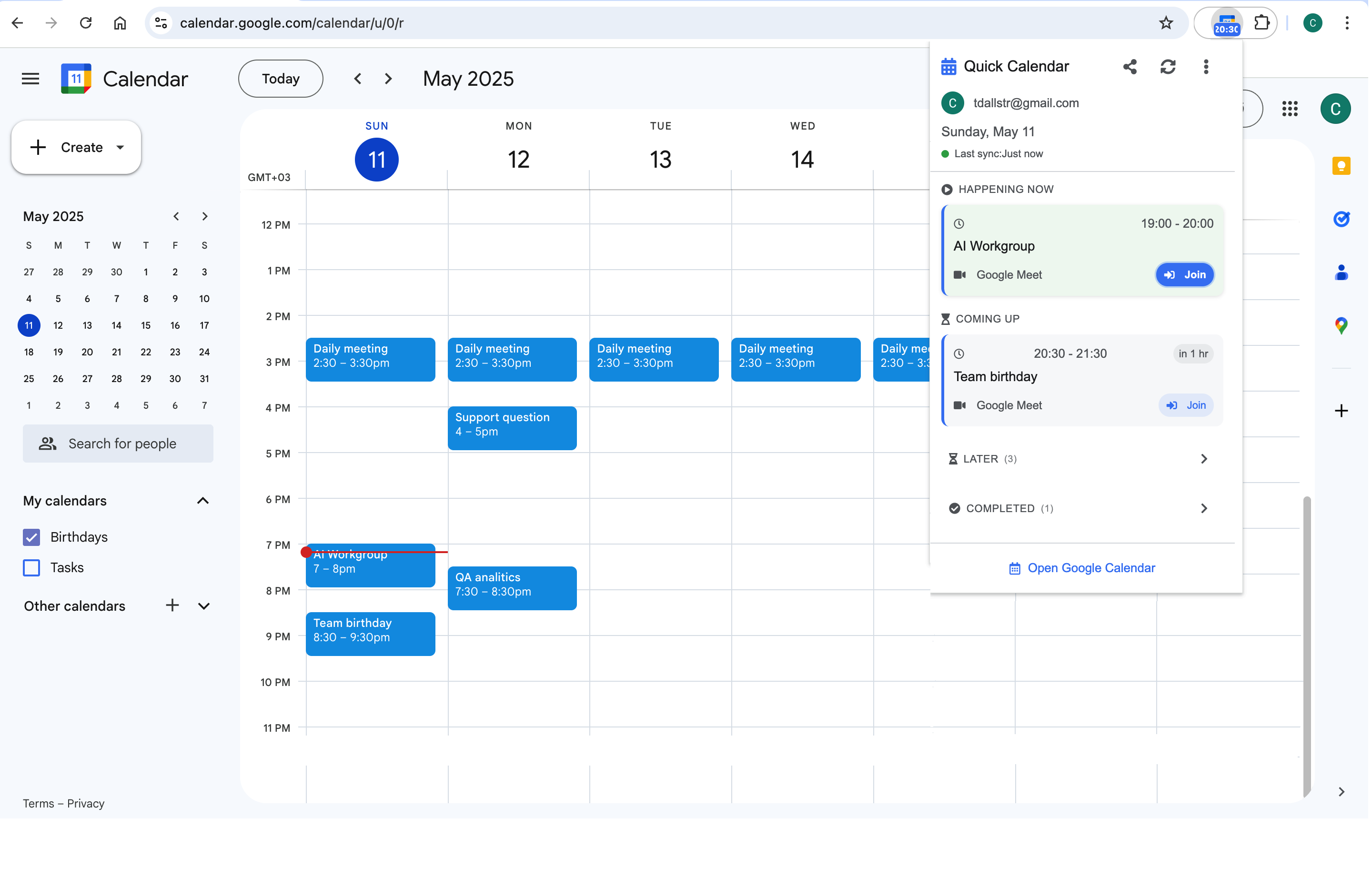
Gauntlet days are when a glanceable calendar earns its keep: mid-call, "how long until the next one" is the difference between finishing a thought and being ambushed. The time-to-event chips in Calendar Extension for Google Calendar™ keep that countdown ambient — and the join buttons make the transitions one click instead of a tab scramble that eats the seam.
Frequently asked questions
Culture varies, but the professional pattern is announce-and-mute: "no lunch gap today, so I’ll be eating off-camera for the first bit." Nearly everyone accommodates it — and its normalization is healthier than the alternative, which is teams silently skipping meals to perform attentiveness.
It doesn’t — so it moves: the day before gets a 30-minute "gauntlet prep" block where all three get their outcome sentence and materials check. On the day itself, prep is reduced to re-reading your own one-liners in the 90-second seams. Walls are survivable exactly to the degree the day before knew they were coming.
Yes, and title it as real work, not recovery: the pre-written first block from Phase 2 doubles as it. A gentle first 90 minutes doing one concrete thing restores more capacity than an empty morning labeled "recharge", which tends to fill with the follow-ups you didn’t send last night.
Phases 1 and 2 become daily practice, and Phase 3’s ceiling becomes the negotiation with your org: roles genuinely requiring 6+ meeting-hours daily (some PM, sales, exec jobs) need structural support — an EA, rotating coverage, or official no-meeting mornings — because individual technique alone doesn’t survive that base rate.