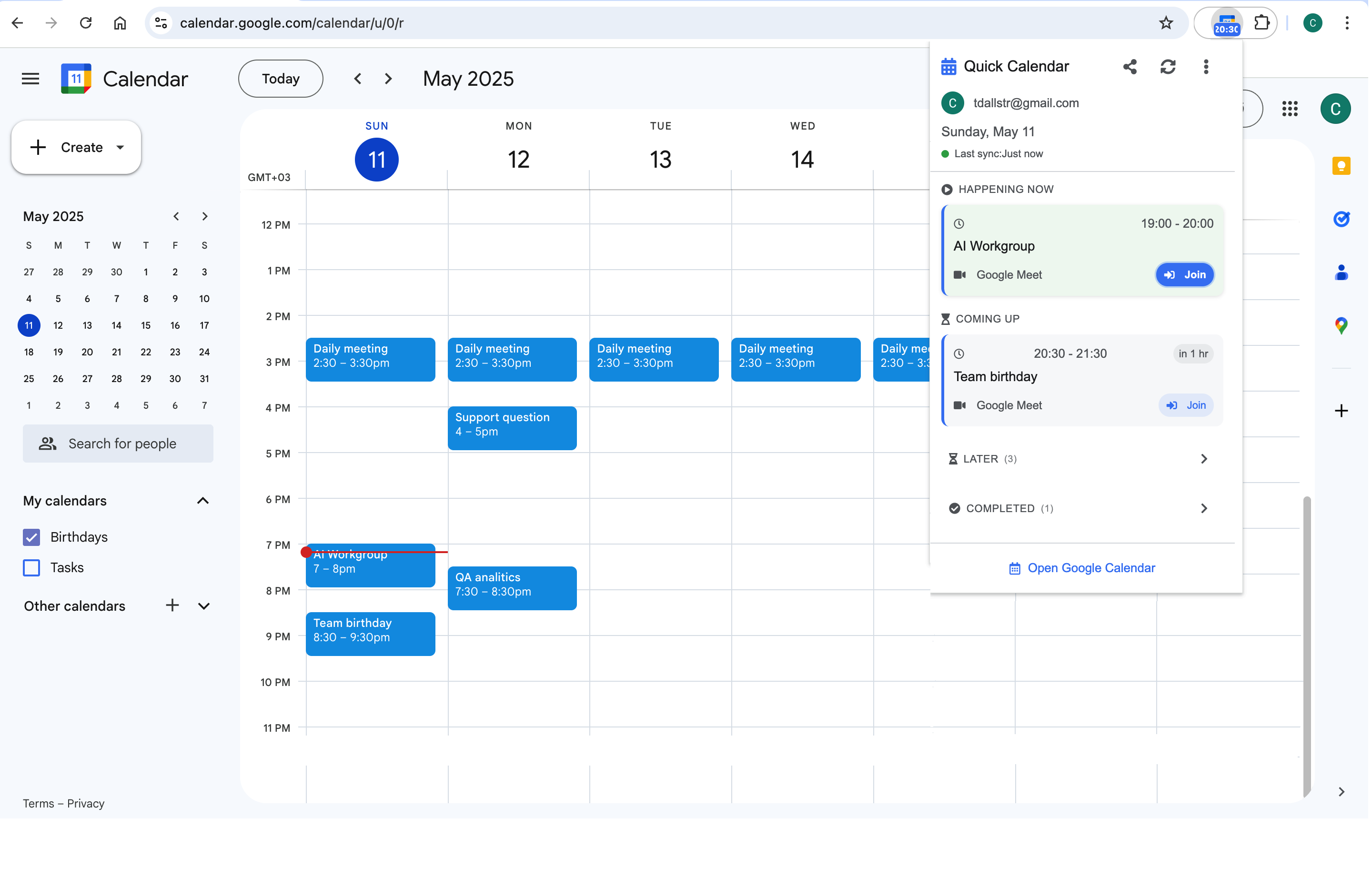
The structural change: pull becomes glance
Tab-based calendar use is a pull model: information lives somewhere else, and each retrieval costs navigation (find the tab, reorient, avoid the inbox’s gravity, return). A popup inverts it to a glance model: the day strip is one click from any page, opens in under a second, and closes when read. Same data, different physics — and since calendar consultation happens 20–40 times a day, the physics is the product.
The five moments, before and after
Morning orientation
Tab: open browser → calendar tab → week view wall → squint for today → get caught by Gmail. Popup: one click, today’s strip with countdown chips, twenty seconds, done — coffee still hot. The orientation happens before the inbox gets a vote in the day’s agenda.
The mid-work "how long do I have?"
Tab: the question interrupts the work it was meant to serve — switch, load, read, return, re-enter. Popup: the chip says "in 47 min" without leaving the page; deep work keeps its state. This moment repeats a dozen times daily and is where most of the recovered time actually comes from.
Meeting joins
Tab: notification → hunt → event → link archaeology → lobby, 40–70 seconds late-ish. Popup: countdown visible in advance, join button at minus-two-minutes, one correct tab opens. Punctuality stops being a virtue and becomes a default.
The quick add
Tab: "block 30 minutes at 15:00" costs the full editor round-trip, so half the time it doesn’t happen and the intention evaporates. Popup: quick-add captures it in ten seconds; the full editor stays reserved for events with guests and rooms, opened deliberately.
The day’s close
Tab: the review happens next to the inbox, and the five-minute close becomes a forty-minute relapse. Popup: today-then-tomorrow paged in the strip, first-block instruction written, laptop shut — with no ambush surface between you and the door.
What the tab is still for
The popup workflow is a division of labor, not a replacement: weekly planning, invite-writing with guests and rooms, drag-surgery on broken days — session work — belongs in the full calendar, opened on purpose about twice a day. The workflow’s tell that it’s working is precisely that the tab visits become deliberate: you go there to do something, do it, and leave, instead of living there to occasionally read something.
Two weeks in: the texture change
Users describe the same arc: week one feels like a shortcut collection; week two the background changes — the "should I check the calendar?" hum quiets (the answer is ambient now), meetings stop ambushing, gaps get spent on purpose. Calendar Extension for Google Calendar™ is built as exactly this workflow’s surface — day strip, countdown chips, join buttons, quick add, and a deliberate "Open Google Calendar" handoff at the bottom for everything session-shaped. The popup is small; the reorganization isn’t.
Frequently asked questions
The wall-calendar setup solves glance-cost differently and validly — if you have the permanent screen real estate. The popup still adds the join buttons and quick-add, and wins entirely on laptops and anywhere the second monitor isn’t. Many two-monitor people end up popup-first anyway when they notice the wall calendar mostly displays month-view anxiety.
The glance-model logic holds but the surface should follow your attention: menu-bar calendar apps are the IDE-dweller’s popup. The workflow transfers wholesale; only the pixel location changes. Browser-dwellers get the extension version because that is where their eyes already are.
It is a legitimate check: read-scope permissions, a stated privacy policy, local processing, and a sub-second popup are the standards to hold any candidate to. The risk profile of a read-only view surface is categorically smaller than tools that write or sync — but verify rather than assume, once, before installing.
Two weeks, two rules: every "what/when/how-long" question goes to the popup first, and the calendar tab only opens for deliberate sessions (count them). At the end, check three numbers — tab opens per day, late joins, and evening close completion. The workflow argues its own case or it doesn’t.