Week zero: build the skeleton once
First hour of the semester: enter the fixed layer — lectures, labs, seminars as recurring events (end-dated at term’s end), work shifts, training, the immovables. Then two university-specific moves: subscribe to official ICS feeds where offered (timetables, academic dates — they update themselves), and create one "Deadlines" calendar where every assessment lands as an all-day event the day it’s due, entered from each syllabus in one batch pass. The skeleton takes an hour and answers the semester’s most common question — "can I actually take that shift/trip/society role?" — with a look instead of a guess.
Back-planning: deadlines become scheduled work
A deadline on the calendar is a fact; only blocks make it a plan. For every major assessment, work backward at entry time: the essay due week 9 gets "research" blocks in week 7, "draft" in week 8, "revise" in week 9 — sized honestly (+25%, and double whatever your optimism proposes for anything involving writing). The mechanics matter less than the moment: back-planning happens when the deadline is entered, while it is emotionally distant — week-8-you will not calmly allocate; syllabus-week-you can. Deadline panic is mostly an allocation failure committed months earlier by omission.
Study blocks that follow the memory research
Two findings worth building around. Spacing beats massing: a 2006 meta-analysis of 317 experiments (Cepeda et al., Psychological Bulletin) found spreading study sessions out improves long-term retention over cramming the same hours — so each course gets a weekly recurring review block (50 minutes, "PSY201 review: this week’s lectures") from week one, which quietly converts exam season from re-learning into confirming. Retrieval beats re-reading: in Roediger and Karpicke’s 2006 experiments, students who tested themselves remembered more after 2 days and 1 week than students who re-studied. Title the blocks by practice, not coverage ("attempt past-paper Q3–5", not "go over notes") — the block name pre-decides the method, and method is where study hours actually differ. Exam season then adds intensity to an existing system rather than inventing one under stress.
The student-specific traps
Three patterns to design against. The fake-free afternoon: a 14:00 lecture makes 9:00–14:00 feel like leisure-by-default; claim one morning block before lectures on those days or the day donates itself to drift. The society/work creep: commitments that arrive weekly ("can you cover Thursday?") get answered from the calendar’s blocks, not from politeness — the Deadlines layer is the visible reason "no" that costs no social capital. The all-nighter myth: the calendar’s version of self-care is enforcing the last block ending by 23:00 in deadline weeks — sleep is when the day’s learning consolidates; trading it for hours is borrowing retention from the exam itself.
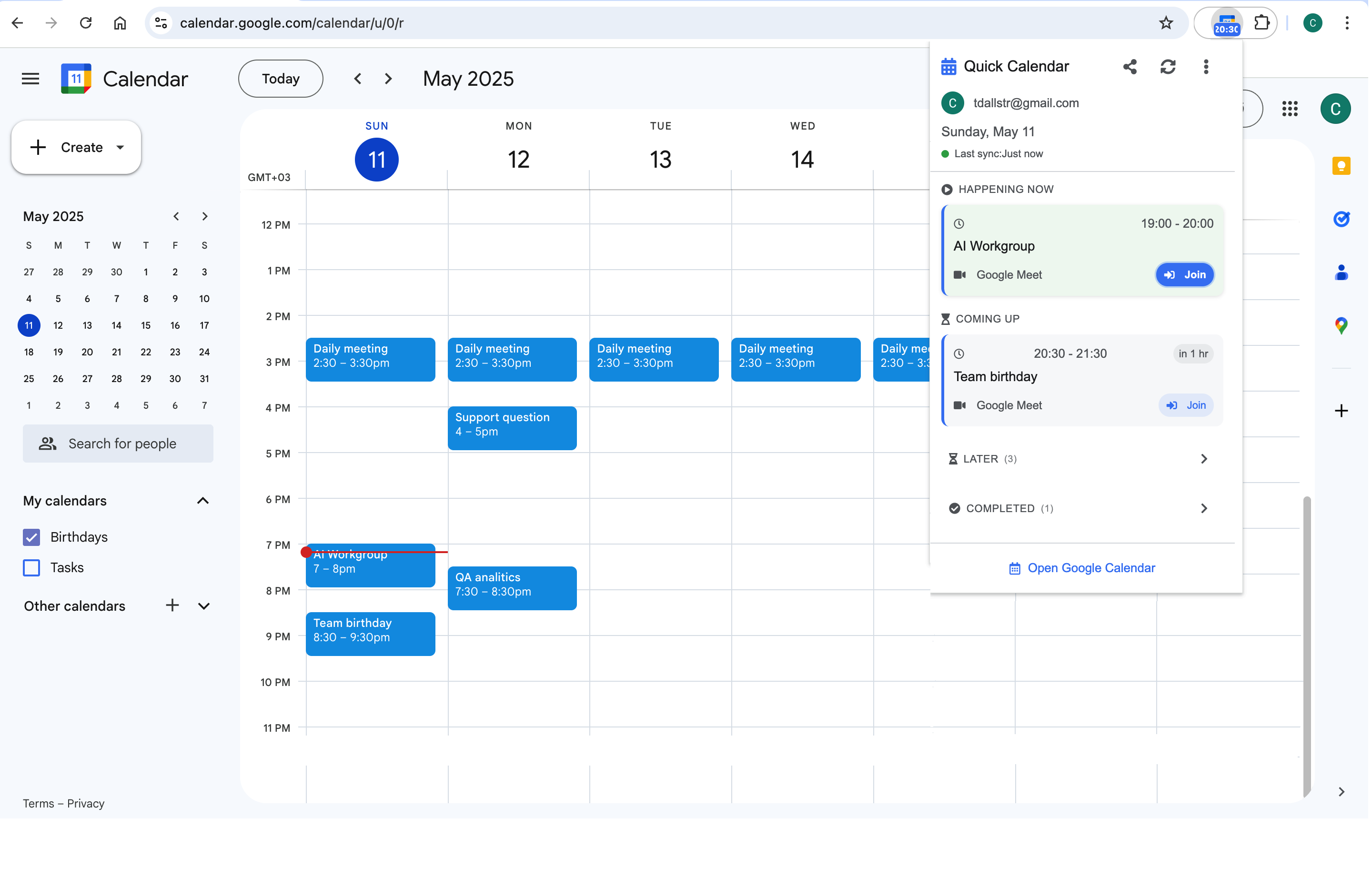
Student days run on campus geography plus a phone: the widget answers "which building, when" between classes, and on the laptop a toolbar strip like Calendar Extension for Google Calendar™ shows the day’s remaining blocks while you work — the review block’s countdown quietly doing what willpower was supposed to.
Frequently asked questions
The old 2–3 hours per credit-hour rule overshoots for most; the honest floor that works: one 50-minute review block per course weekly, plus back-planned assessment blocks as deadlines approach. Start at the floor and let the module’s actual demands argue for more — sustainable-and-real beats aspirational-and-skipped.
Import the workplace toolkit wholesale: 25-minute default, an agenda line in the invite ("decide: division of §2"), and a shared project calendar with the milestone back-plan visible to all members. Group chaos is usually invisible-deadline chaos; the shared back-plan is the cure.
Anchors yes, everything no: the standing Wednesday game, the gym slots, one protected free evening — as real events. The rest stays open; a fully-scheduled student life collapses on first contact with spontaneity. The anchors exist so the fun survives deadline weeks, not to bureaucratize it.
Three thin layers in one account: Timetable (or the ICS feed), Deadlines, and personal — color-distinct. The payoff is the merged view for every "can I?" decision, with the ability to hide layers during focus. Separate accounts only if a job forces one; account-switching friction kills student systems fast.