Selling hours are inventory — count them like it
The core sales-calendar discipline is separating revenue hours (live prospect/customer contact plus the prep around it) from everything else, and defending the ratio. Weekly count, thirty seconds with color-coded events: reps typically discover 12–15 nominal selling hours shrunk to 6–8 by CRM hygiene, internal syncs, and "quick" forecast reviews. The fix is structural: internal meetings get pushed to the edges (8:30, 16:30 — prospects rarely book there), admin gets one daily batch box, and the 10:00–12:00 / 14:00–16:00 corridors — when buyers actually take calls — stay clear for the job.
The booking layer: your link is your SDR
Every "what time works for you?" email adds a day of pipeline latency and a drop-off risk. The booking-page setup that pays: windows only in the buyer corridors, 15-minute buffers after every slot (notes + CRM while warm — see no-show defense), lead-time minimum of 4 working hours (prep matters more than speed past that), and a daily cap that protects two prep-and-follow-up hours. Two pages, not one: a 25-minute "intro" and a 50-minute "demo/working session" — letting prospects self-select stage saves a qualification email per deal.
No-show defense: the sequence that halves it
No-shows are calendar-mechanics failures more than intent failures. The defense stack: invite hygiene (the event goes to their calendar with agenda and value line — "30 min: pricing options for your Q3 rollout" — a titled meeting survives where "Sync — Alex" gets deprioritized); the day-before touch (a one-line reschedule-friendly confirm: "still good for 14:00 tomorrow? If the week blew up, grab a new slot here" — offering the out reduces ghosting because reschedules replace silent skips); and the 10-minute rule — at no-show +10, one message with the booking link, then release the slot to follow-up work. Reps running the full sequence report no-show rates dropping by a third to a half; the day-before touch does most of it.
Prep and debrief: the seams are the craft
The difference between a calendar full of calls and a pipeline that moves is what happens in the 15 minutes around each call. Make both structural: the booking buffer after handles debrief (three lines to CRM: outcome, next step, date — while memory is real); prep gets batched each morning — 20 minutes reviewing the day’s calls with one line each ("Acme: land the security answer, push for pilot dates"). The event description is the natural home for both — the call’s history rides with the call.
Recurring revenue rituals
Three standing blocks with direct pipeline yield: the follow-up hour (daily, post-lunch — the deals lost to "I meant to circle back" exceed the deals lost to competitors), pipeline review with yourself (weekly 25 minutes before the team forecast call — walking your own calendar’s last week against the CRM catches the drift the dashboard hides), and the prospecting block — cold outreach dies unless it owns calendar territory, because it is the most deferrable revenue activity and the only compounding one.
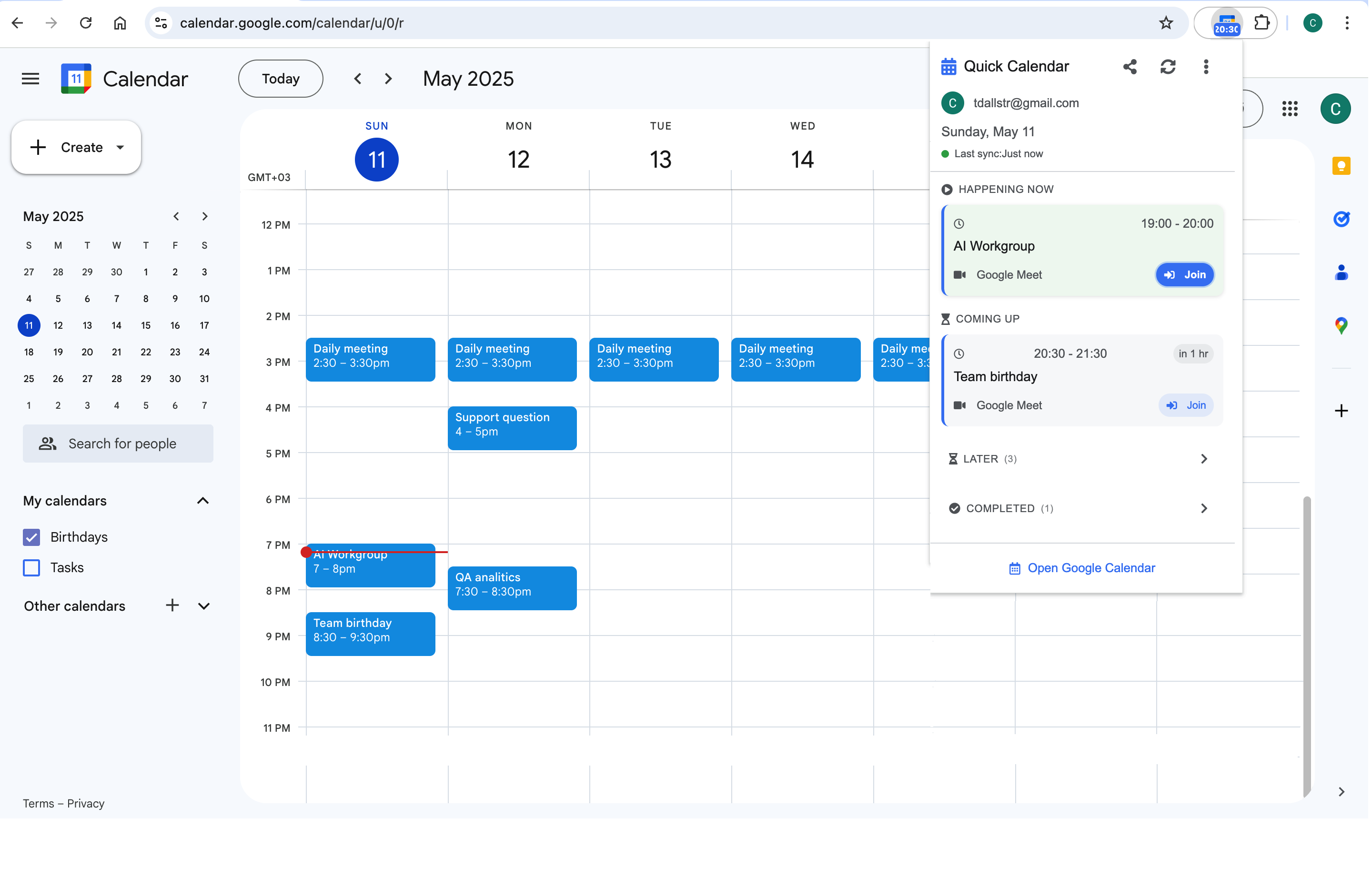
Sales days are transition-storms — call, debrief, prep, call — and every seam asks "who’s next and how long do I have". A toolbar strip like Calendar Extension for Google Calendar™ keeps the answer ambient with countdown chips and one-click joins, which across an eight-call day is measurable pipeline hygiene, not convenience.
Frequently asked questions
Detail-share with your manager, free/busy for the org — forecast conversations go better when the manager can see the pipeline’s calendar shape (and your defended prospecting block explains itself). What stays off the shared layer: personal events, marked Private, which render as busy and are nobody’s pipeline.
Native covers solo needs (windows, buffers, caps, two page types) free. The paid tier earns itself at routing — round-robin across a team, territory rules, CRM-triggered sequences. Rule of thumb: if the booking link is personal, native; if it is a team surface, buy the router.
Reframe the block as pipeline mechanics, not admin: prospecting is meetings, sixty days early. The math to defend it with: your conversion rate says N outreach hours become M meetings next month — trading the block for one extra meeting today starves four next quarter. Managers accept arithmetic faster than boundaries.
Buyer-corridor logic per zone: your booking windows should render as 10:00–16:00 in the prospect’s zone, which means split corridors for you (early East-coast block, late West-coast block) with your admin batch in the dead middle. Secondary timezone display plus zone-explicit confirms ("14:00 ET") kill the off-by-three-hours no-show class entirely.