Flow blocks: longer ramps, warmer starts
Creative entry cost is real and lumpy — the first 20–30 minutes of a design session are warm-up whether you schedule them or not. Build for it: 2.5–3 hour flow blocks (shorter sessions spend themselves ramping), at most one per day, placed in your peak; and a scripted warm start — the block opens with 15 scheduled minutes of low-stakes contact (yesterday’s frames at 50% zoom, reference gathering, sketching the problem in a notebook) before the real work. The warm-up being inside the block, on purpose, removes the guilt that otherwise converts it into procrastination. Exit ramp matters double for visual work: screenshot the state, one line of "next move" pinned to the canvas — tomorrow’s ramp starts from an image, not a memory.
The feedback structure: critique is a calendar object
Design’s meeting load is mostly feedback, and unstructured feedback is the flow-killer — the "quick look?" ping mid-session costs an hour of state. Containerize it: standing critique slots (two per week, 45 minutes, work posted to the thread the evening before — pre-viewing makes critique specific instead of reactive), async-first for small rounds (Figma comments with a "resolved by Thursday noon" window beat a meeting for copy tweaks and spacing calls), and a posted drop-in window for the genuinely quick questions, so "got a sec?" has a legitimate home that isn’t the middle of your deepest hour.
Stakeholder reviews: stage-named, decision-scoped
The review meeting that goes wrong was mis-scoped at booking: executives giving pixel feedback on a concept round, or concept feedback on a ship-week round. Fix it in the invite — reviews are titled by stage and decision: "Concept review: pick direction A/B (not visual polish)", "Final review: ship/no-ship on v3". The event description carries what feedback is in-scope, and the pre-read link shows the work in context. This one habit — scoping reviews on the calendar object itself — eliminates the majority of design-review pain, because most of it was scope ambiguity wearing opinion’s clothes.
The visual-work extras
Two designer-specific calendar moves. Inspiration is a real block: 45 weekly minutes of deliberate input (not scrolling — galleries, type foundries, one museum site) titled and kept; input-starved designers produce derivative work on schedule. Print/dev handoff days get buffers on both sides: handoffs generate same-day question storms, and a handoff scheduled against a packed afternoon converts every question into a flow interruption for the next project. Ship, then absorb — on the calendar.
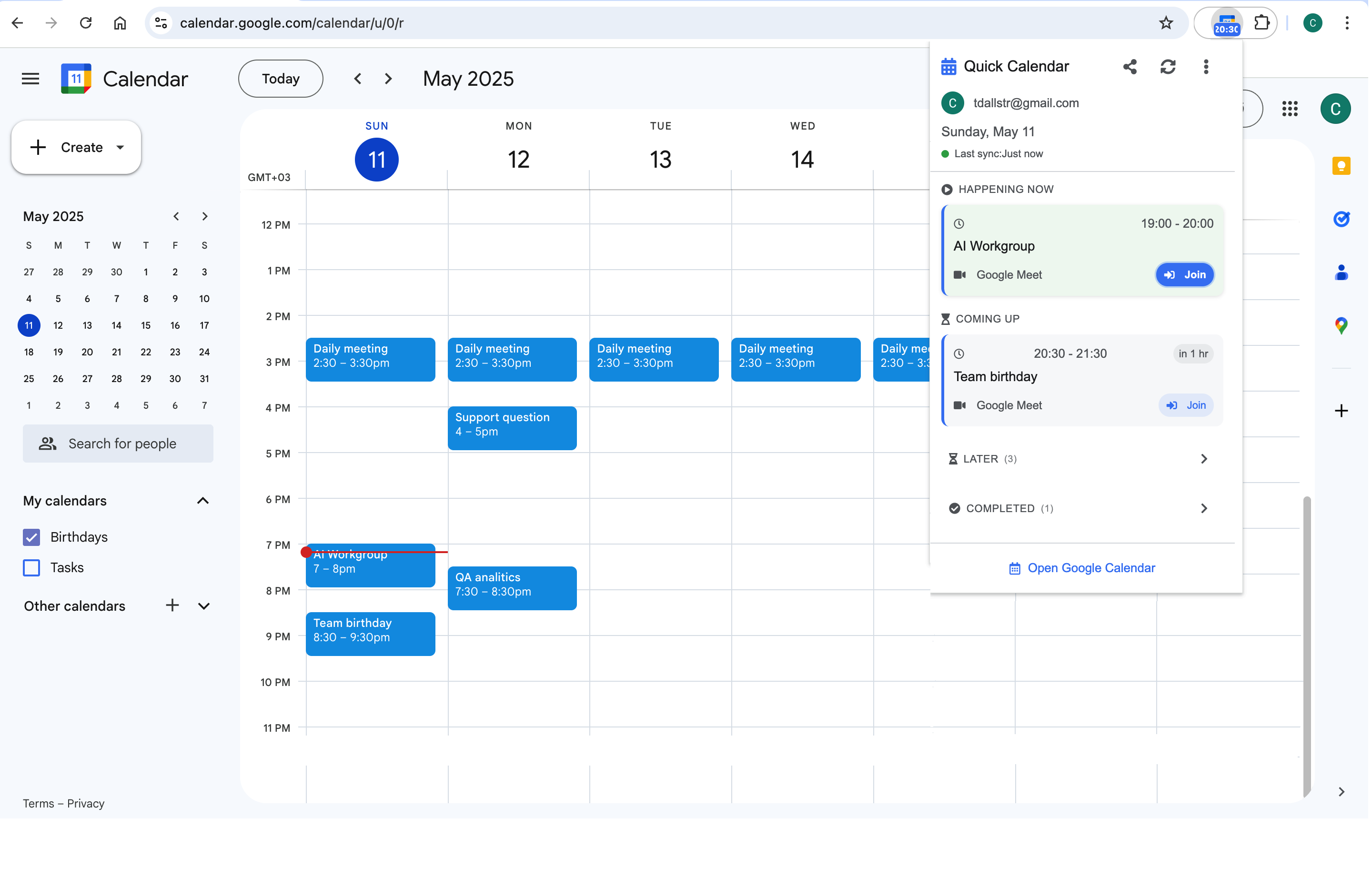
Mid-flow, the question "how long until critique?" must cost a glance, not a context switch — the switch is precisely what the block protects against. The countdown chips in Calendar Extension for Google Calendar™ keep it peripheral: the block’s remaining time in the corner of the screen while the canvas keeps the center.
Frequently asked questions
Give it a better home, not a refusal: "In a flow block till 12 — post it in the crit thread or catch my 16:00 window and I’ll give it real attention." The offer of better attention later reads as care, not preciousness — and it is true.
The structures survive if they’re visible to AMs: critique slots and flow blocks on a shared team calendar, with the standing agreement that client fire-drills route to the drop-in window first. Agencies run on responsiveness, but most "urgent" client feedback is Thursday-urgent, not now-urgent — the window absorbs it.
As a declared season: the sprint week overrides the standing structure (blocks, crits suspended), gets its own five-day event skeleton, and — the part teams skip — a recovery day after, because a sprint is a flow-marathon and the following Monday’s calendar should know it.
The critique and review structures transfer whole; the flow blocks shrink to one 90-minute craft block weekly (kept, visibly, or the team learns craft dies at promotion). The manager’s additional layer is the 1:1 corridor and office-hours pattern — the general management toolkit, with critique slots as the design-specific addition.