Start from allocation, not requests
Unmanaged executive calendars are auctions — whoever asks first or loudest gets the hours, and the resulting week is a map of other people’s urgencies. Managed ones run backward from targets: the executive (with EA/CoS) sets a quarterly allocation — e.g., 30% external, 25% direct reports, 15% strategy/deep work, 15% skip-levels and culture, 15% slack — and the calendar gets audited against it monthly (Time Insights or a manual pass). The numbers surface drift while it is correctable: "externals crept to 45% this month" is a steering conversation; discovering it at year-end is archaeology.
The triage protocol (what the EA actually runs)
Every meeting request hits the same gate, in order: Does this need the exec at all? (A third don’t — delegate downward with authority: "Dana owns this decision and can close it with you.") Does it need the full asked length? (Default counter: 25 minutes; requesters expand to what is offered.) Which allocation bucket pays for it? (A bucket at its monthly cap means the request trades against something in-bucket — the protocol makes the trade explicit instead of silent.) When? — batched with its kind: externals on external days, 1:1s in runs with buffers. The gate’s value is consistency; requesters learn the system and self-filter within a quarter.
Defending the two assets meetings always eat
Strategy blocks: the 15% thinking allocation survives only as concrete, recurring, titled blocks ("Q3 narrative — draft") defended at board-meeting rank. The tell of a failing executive calendar is zero blocks with the exec’s own name on the output — all conducting, no composing. Recovery seams: executives run 8–10 meeting-hours daily without buffers unless someone builds them; the EEG evidence on consecutive-meeting stress applies to principals doubly, since their degraded fourth-meeting judgment is expensive. Mechanics: speedy-meeting defaults, 10-minute seams after every external, and a hard 25-minute midday hold that is not lunch-optional.
The EA–principal operating agreement
Calendar delegation fails on ambiguity, so the working agreement is explicit: the EA holds "Make changes" (not manage-sharing) on the primary calendar; a written triage rubric covers 90% of requests without consultation (the rubric is the allocation table plus the delegate list); a daily 10-minute sync (or async note) handles the exceptions; and event descriptions carry the EA’s prep notes — the exec walks into every meeting with the one-paragraph brief in the event itself. Privacy line: personal events live on a separate calendar the EA sees as busy-only, by explicit choice rather than accident.
Signals the system is working
Three observable outcomes within a quarter: the allocation audit shows drift corrected month over month (not perfection — correction); requesters arrive pre-shrunk ("15 minutes with the exec" becomes the norm ask); and the principal can name what their strategy blocks produced. The counterfactual is visible too: executives who skip the system don’t get fewer demands — they get the same demands arranged by auction.
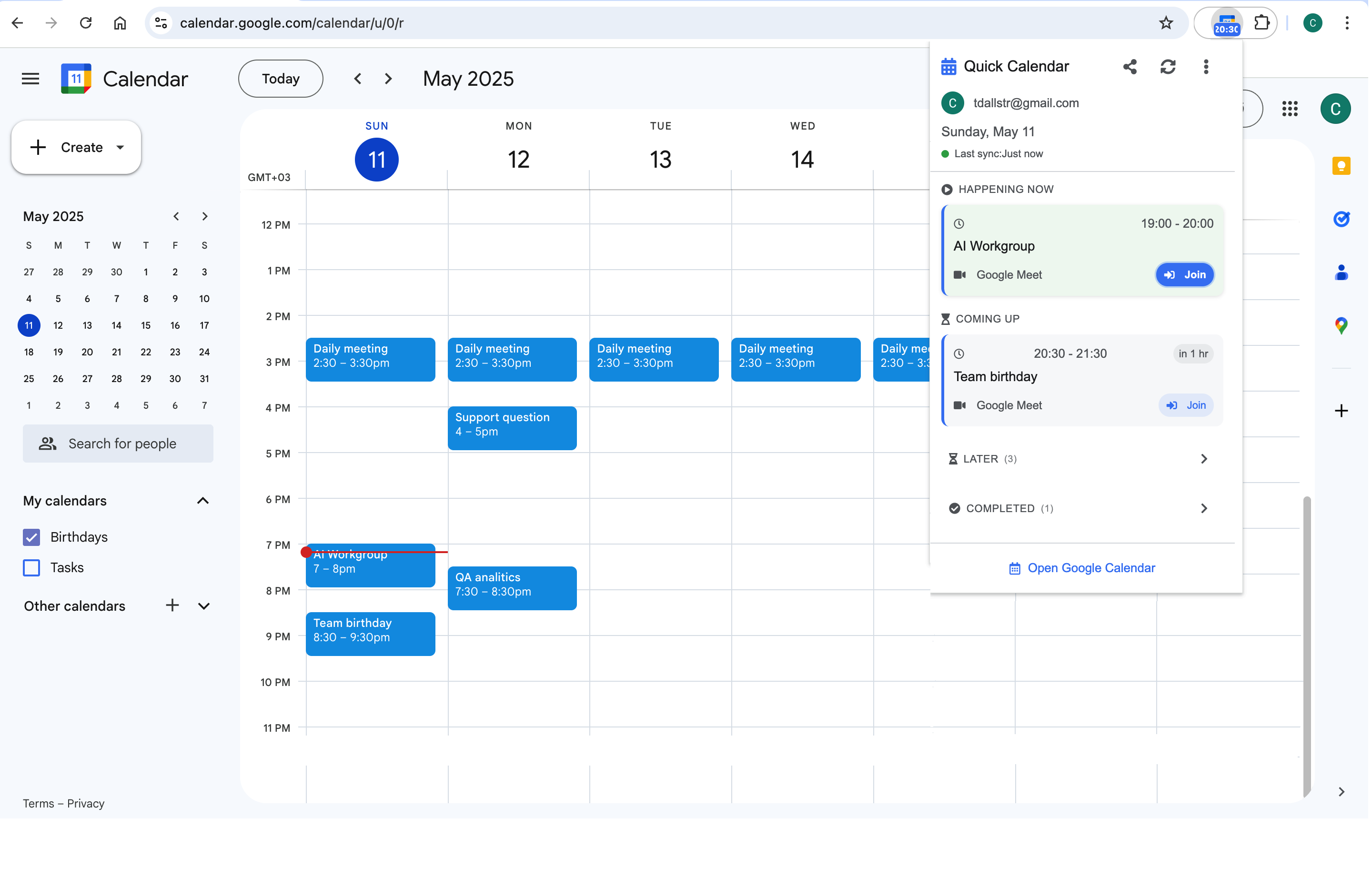
Between-meeting seams are where executive days are won, and they are glance-length: the next commitment, its brief, the join link. A toolbar strip like Calendar Extension for Google Calendar™ gives principal and EA the same two-second view of the day’s state — one click, no tab, mid-corridor.
Frequently asked questions
Same architecture, cheaper parts: the allocation table (30 minutes quarterly), a personal triage rule applied at invite-arrival, batching by day-theme, and the strategy blocks defended by auto-decline. The monthly audit is the piece solo execs skip and shouldn’t — drift is faster when nobody else is watching the buckets.
Explicit and public: the exec announces the delegate list once ("for X-class decisions, Dana closes") and then doesn’t take the meetings anyway. EAs can route; only the principal’s consistency makes routing real. An exec who overrides their own delegate list weekly is running an auction with extra steps.
10–20% unallocated, deliberately — the slack absorbs the genuinely urgent without cannibalizing strategy blocks, and its usage rate is itself a signal (slack consumed weekly means the allocation under-provisions reality). Zero-slack executive calendars convert every surprise into a strategy-block casualty.
One paragraph, three parts: why this meeting exists now, what the counterpart wants, what the exec should decide or extract. Longer briefs migrate to linked docs; the description version is what gets read in the 90 seconds before the door opens — write for that moment.